
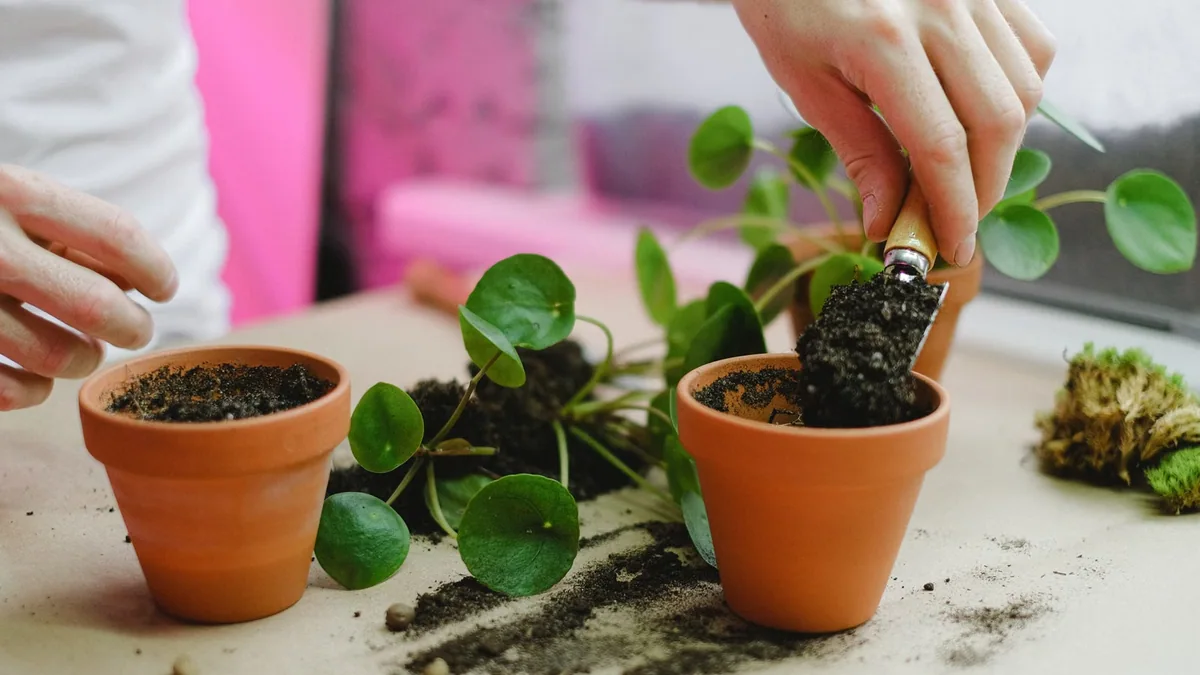
The most common repotting mistake is thinking that a bigger pot is always better. Put a small houseplant into a huge container and the extra compost can stay wet for too long, leaving its roots short of air.
Most plants are happier moving up one pot size at a time, generally around 2–5cm wider than the old one for smaller pots. And some plants don't need repotting at all yet.
Here's how to tell when a houseplant needs more room, choose the right growing medium and move it without unnecessary damage.
Does your houseplant actually need repotting?
Check for several signs rather than following a fixed annual schedule.
- Roots are densely circling the inside of the pot.
- There are many roots growing out of the drainage holes.
- Water runs straight through because the rootball is packed tightly and difficult to wet.
- The plant dries out much faster than it used to.
- Growth has noticeably slowed during the growing season despite appropriate light, water and feeding.
- The potting mix has broken down into a dense, compacted mass.
One root peeking through a drainage hole isn't always an emergency. The best test is to lift the plant out gently and inspect the rootball.
If there is still plenty of growing medium around healthy roots, put it back and leave it alone. A plant growing well is not improved by unnecessary disturbance.
When is the best time to repot houseplants in the UK?
Spring and early summer are ideal for most common foliage houseplants. Increasing daylight and active growth help roots establish in the fresh mix.
Repotting in November or December isn't automatically fatal, but plants use less water in darker months. Fresh compost can remain damp for longer and increase the risk of root trouble.
An exception is an urgent problem such as rotting roots, a completely broken pot or contaminated, badly degraded compost. In that case, act when needed, then adjust watering and warmth carefully.
Flowering plants may also prefer to be moved after their main bloom. Check the needs of the particular species.
What pot size should you use?
| Current pot diameter | Sensible next step |
|---|---|
| 10cm | Around 12–13cm |
| 12cm | Around 14–15cm |
| 15cm | Around 17–20cm, depending on root growth |
| 20cm | Around 22–25cm |
| Very large specimen | Consider freshening the mix or specialist root pruning instead of endlessly increasing size |
These are guides, not strict measurements. The amount of healthy root growth matters more than the plant's foliage height.
Always choose a pot with drainage holes. A decorative outer pot is fine, but place the plant inside it in a proper nursery pot and tip away any excess water after watering.
Don't rely on a layer of stones at the bottom to fix poor drainage.
Which compost is best for repotting?
Use a good-quality, peat-free houseplant potting mix suited to the species.
- Most ordinary foliage plants: A good general peat-free indoor potting mix with suitable drainage.
- Cacti and succulents: A freer-draining cactus/succulent mix.
- Orchids: A specific orchid medium appropriate to the type, usually with much coarser structure than ordinary compost.
- Moisture-loving tropical plants: A mix that holds reasonable moisture but still allows air around the roots.
Don't dig up garden soil and put it straight into a houseplant pot. It can compact badly in a container and introduce pests or disease organisms.
If a plant has been growing well in a specialist mix, avoid changing it to something completely different simply because a cheap bag is available.
How to repot a houseplant: step by step
1. Prepare the new pot
Clean a reused pot and check drainage holes. Add enough fresh compost to the bottom so the top of the existing rootball will sit at roughly its old depth.
Leave a little space below the rim for watering.
2. Remove the plant gently
Support the plant at the base, tip the pot and ease the rootball out. If it's stuck, squeeze the sides of a flexible nursery pot or tap around the edge.
Don't pull hard on delicate leaves or stems. For a badly congested plant in a cheap plastic pot, cutting the pot may be safer than tearing the roots.
3. Inspect the roots
Healthy roots vary in colour by species but should generally feel firm. Very soft, mushy, foul-smelling roots are a warning sign.
If roots are circling tightly, gently tease the outside apart. Trim only what is necessary using clean scissors or secateurs. Avoid tearing away a large proportion of healthy roots during a routine move.
If the rootball is loose and healthy, keep it mostly intact.
4. Set the plant into the new container
Place it centrally and backfill the sides with fresh mix. Firm gently with your fingers to remove large air gaps, but don't ram the compost down hard.
Keep the plant at its previous growing depth. Burying the crown or stems deeply can encourage rot in some species.
5. Water properly
For a healthy plant repotted into an ordinary moist potting mix, water through the rootball and let the excess drain. Empty the saucer or outer pot.
For species with specific care requirements—particularly some succulents, newly cut roots or orchids—adjust this first watering to their needs rather than following a universal routine.
6. Give it suitable aftercare
Return it to bright, indirect light appropriate for the species, away from intense sun and cold draughts while it settles.
Avoid giving a strong fertiliser dose immediately. Fresh potting compost often already contains nutrients, and damaged roots don't benefit from being pushed.
Check moisture with a finger or by lifting the pot; don't water on an automatic daily schedule.
What if the roots are brown or rotten?
Root rot is not simply being rootbound. Roots affected by rot may be soft, mushy or smelly. The potting medium may be saturated, and the plant can wilt despite wet compost.
Remove clearly rotten roots with clean tools and discard affected growing medium. Choose a pot only large enough for the remaining healthy root system and use an appropriate free-draining mix.
Severely affected plants may not recover. Where healthy stems remain, species that root readily from cuttings can sometimes be saved that way.
Keep any plant with damaged roots warm enough for its species and out of harsh sun while you monitor the remaining healthy growth.
How do you repot a plant that's too big for another pot?
A mature houseplant may already be in the largest container you can manage. You don't have to buy an even bigger one.
For suitable species, carefully remove some old, loose compost from the edges and replace it with fresh mix. Experienced growers may trim a modest amount of roots and return the plant to the same pot, but root pruning is not suitable for every plant and can seriously stress sensitive species.
With a very large, valuable specimen, research its species-specific care before cutting its roots.
Why is a plant drooping after repotting?
A plant may droop temporarily because some fine roots were disturbed and water uptake has changed. But don't automatically water again: drooping can also come from overly wet compost.
Check the pot's weight and moisture, the room temperature and whether leaves are getting direct sun. Give the plant stable conditions rather than repeatedly moving it or adding fertiliser.
If the pot remains wet and the stems soften, investigate root problems promptly. If the mix is bone dry, water properly and let it drain.
Common repotting mistakes
- Jumping several pot sizes at once.
- Choosing an attractive outer pot without a draining inner pot.
- Repotting every year regardless of root growth.
- Pulling the plant out by fragile stems.
- Putting orchids or cacti into unsuitable general compost.
- Burying the crown below its original level.
- Leaving water permanently in the decorative pot.
- Assuming every yellow leaf means the roots need more space.
How often should you repot?
Many typical houseplants need attention every two or three years, but there is no reliable timetable for every species. A fast-growing monstera may need more frequent potting on; a mature snake plant or ZZ plant may be content in its container much longer.
Inspect rather than guess. Healthy, actively growing roots and a pot that holds moisture sensibly are better signs than the date of the last repot.