
By November, most UK lawns are slowing down. The mower might not have moved for weeks, leaves keep covering the grass, and every trip across the garden seems to leave muddy footprints. It's tempting to give everything one last treatment before winter, but November lawn care is mostly about knowing when to leave the ground alone.
You can still mow in mild weather, remove fallen leaves and deal with obvious drainage problems. What you shouldn't do is scarify a sodden lawn or try to force fresh growth when the weather is turning cold.
Here's how to judge what your grass needs this month.
Can you cut grass in November?
Yes, if it's still growing and the ground is firm and dry enough. There isn't a date when every lawn in Britain has to stop being mown.
Grass may keep growing during mild spells, particularly when temperatures stay above about 7°C. A sheltered garden in southern England may need an occasional November cut; a lawn in a colder northern or upland area may be finished much earlier.
Before getting the mower out, check the conditions rather than the calendar:
- The grass should be reasonably dry, not wet enough to clump beneath the mower.
- The soil should support your weight without leaving deep footprints.
- There should be no frost or snow on the blades.
- The grass should have grown enough to justify taking a little off.
Keep the cutting height slightly higher than your usual summer setting. Raise it by around 5mm. Avoid scalping long grass down to a short winter finish, especially when growth has almost stopped.
If the lawn is wet or frozen, wait. An uneven, muddy cut isn't doing it any favours.
Clear thick layers of fallen leaves
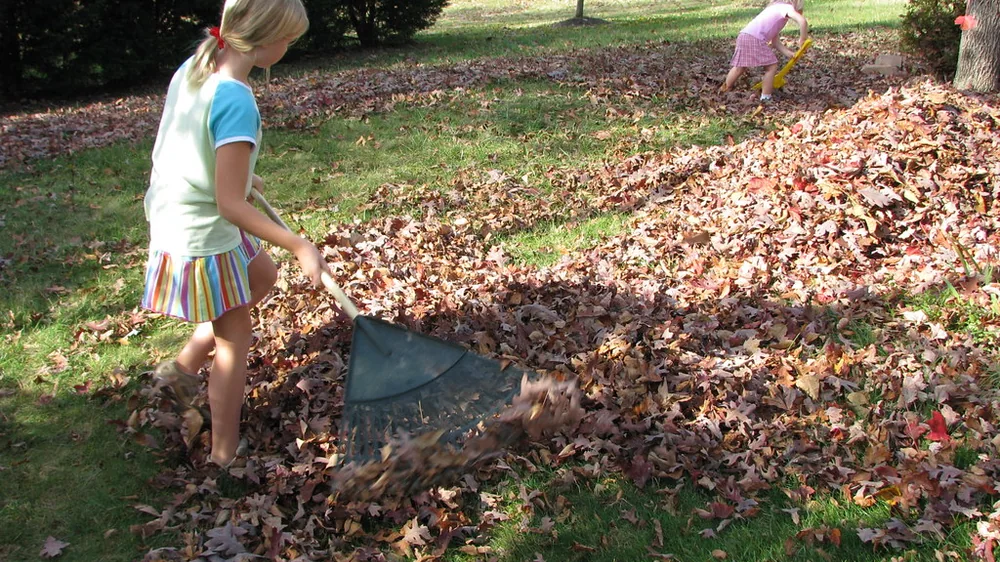
If you do only one lawn job regularly this month, make it collecting the leaves that are blanketing the grass.
A scattered handful won't cause a disaster. But a thick, wet mat of leaves shuts out light and traps moisture around the blades. Leave it there for weeks and you'll often find yellow, flattened patches underneath.
A spring-tined rake works well on smaller lawns. On a large area, a mower with a collection box can pick up dry leaves during a suitable mild spell, though it's not worth dragging heavy machinery over wet ground simply to clear them.
Don't throw useful leaves away automatically. You can make leafmould by gathering them into a ventilated bin or leaf bag and allowing them to break down. Leaves can also be left in appropriate borders where they protect soil and provide habitat. The important distinction is where they're left.
Keep paths and steps clear as well. Wet leaves on smooth paving can be surprisingly slippery.
Should you scarify the lawn in November?
This is where conditions matter more than enthusiasm.
Early autumn is generally the better time for major scarifying because grass has a reasonable chance to recover. In a mild early November, light autumn maintenance may still be possible if the turf is actively growing and the soil isn't wet, frosty or waterlogged.
But heavy scarifying in late November can leave the lawn open and ragged through winter. If the soil is saturated or you can feel it squelch underfoot, put the scarifier away.
For a mossy lawn, work out why moss is doing well. Shade, compaction, poor drainage and sparse grass frequently play a part. Ripping moss out without correcting the cause tends to buy you a temporary improvement rather than a solution.
A gentle rake may remove some moss in suitable conditions. A bigger renovation is often better planned for spring or early autumn, when the grass can fill the gaps.
What to do about a waterlogged or muddy lawn
Standing water after heavy rain doesn't always mean you need to install drains. It may be caused by compacted soil, a low point in the lawn, runoff from paving or a combination of problems.
Look at where the water collects and how long it remains. If the same patch stays boggy while the rest drains normally, the local level or soil structure may be the problem.
There are several practical options:
- Keep off the wettest areas. Repeated walking squeezes air out of saturated soil and churns the surface into mud.
- Redirect foot traffic. Stepping stones are often a more useful fix for a regularly used route than repeated reseeding.
- Check where surface water arrives. A downpipe discharging towards the grass or a higher patio sloping into the lawn may be making things worse.
- Aerate only when the ground is workable. A garden fork or hollow-tine aerator can help suitable compacted areas, but forcing tools into waterlogged soil is counterproductive.
- Plan substantial drainage work properly. Persistent flooding may need changes to levels or drainage rather than another lawn treatment.
If the lawn has already become a muddy track, protecting it now and repairing the damage when growth returns is often the sensible approach.
Should you feed your lawn before winter?
Don't apply fertiliser simply because there's an unopened bag in the shed.
If grass is growing poorly and you haven't already carried out autumn lawn maintenance, an appropriate autumn feed may be useful while conditions allow. These products are normally lower in nitrogen than summer feeds and are designed for autumn use.
Follow the product label and avoid applying lawn feed to frozen, saturated or snow-covered ground. Nutrients that wash away don't benefit the lawn and can contribute to water pollution.
A lush, soft flush of new growth is not what you're aiming for in November. If the lawn is generally healthy, there is no obligation to feed it again.
For lawns that need renovation, soil condition and timing often matter more than another treatment.
Can you sow grass seed or lay turf in November?
Early November can still work for new grass seed in milder UK locations, provided soil temperatures and moisture are suitable for germination. As the month goes on, it becomes less reliable, especially in colder regions.
Seeds sown into cold ground may sit there for a long time, leaving them exposed to birds, washouts and uneven establishment. If conditions are against you, March or April is often a better bet.
Turf is different. It can be laid during suitable mild spells through autumn and into winter, as long as the soil isn't frozen or waterlogged and the site is prepared. Fresh turf needs to be laid promptly after delivery, not stored in rolls while you try to level muddy ground.
Our ground preparation guide explains what should be finished before the turf turns up. For seed versus overseeding, see our new lawn or overseeding guide.
What about worm casts, fungi and yellow patches?
You may notice more worm casts after damp weather. Worm activity is generally a good sign for soil health. Allow the casts to dry, then brush them off if they're making the surface uneven. Smearing wet casts across the grass creates more mess.
Toadstools also appear frequently in autumn lawns. Many are fungi feeding on decaying organic material and don't damage the grass. Remove them where young children or pets might come into contact with them, but don't assume every mushroom indicates a diseased lawn.
Yellow or brown patches can have several causes. Waterlogging, shade, smothering leaves and fungal diseases such as fusarium patch are possibilities. Diagnose the cause before applying a treatment. Large areas of damaged grass may need repair once conditions improve.
A straightforward November lawn checklist
Clear heavy leaf cover, mow only if growth and ground conditions justify it, and keep traffic off frost or saturated soil. Check drainage problems, tidy edges if you like, and leave major scarifying and reseeding for a period when the lawn can recover.
The best November lawn isn't necessarily the one that's had the most work. It's the one you've helped get through winter without unnecessary damage.