
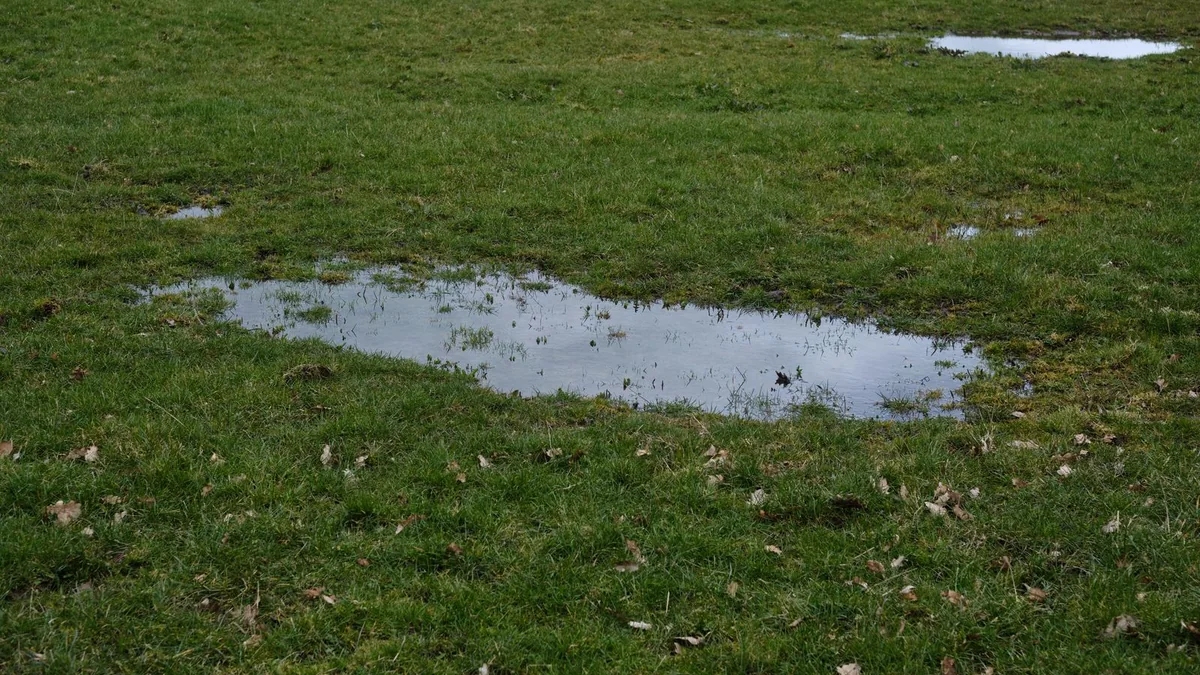
By February, the path to the shed has turned into a muddy strip. The dog runs the same route every morning, rainwater sits in the low corner and what used to be grass now looks like a patch of churned soil.
The first instinct is to spread more seed or rake everything flat. Unfortunately, most repairs to a muddy winter lawn work better after the ground has dried sufficiently. Working on saturated soil can compact it further and make next winter's problem worse.
There are useful things you can do now, though. Start by finding out whether the trouble is persistent waterlogging, too much foot traffic or a combination of both.
Why does the lawn turn to mud every winter?
A muddy lawn usually has two linked problems: the soil stays wet and the grass can't cope with the conditions.
Heavy clay can hold water for a long time. Compacted soil has fewer air spaces, so rain drains away more slowly. A lawn that's walked over repeatedly, especially while saturated, can become even more compacted.
Heavy and compacted soils are common causes of winter waterlogging. Poor preparation before the lawn was laid can be another factor.
Look for clues around the garden. If the worst area is beside a gate, it's probably receiving concentrated foot traffic. If water always gathers in the same low corner, the surface level or underlying drainage may be involved.
If the entire garden is wet, including beds and borders, fixing the grass surface alone is unlikely to solve the problem.
What should you do with a muddy lawn right now?
Reduce traffic across the affected area. This sounds obvious, but it makes a real difference.
Walking on saturated soil squeezes out air and breaks down its structure. The resulting compaction means water has an even harder time draining next time it rains.
Use an existing path if you have one. For a regularly used route, temporary boards or a suitable stepping-stone path can spread or redirect traffic until conditions improve.
Install stepping stones on routes across the lawn that become muddy from repeated winter foot traffic. Set them level with the surrounding soil if you want to mow comfortably later.
If the dog runs the same circuit every day, it may be more practical to create a proper hard-wearing route than to keep replacing the same strip of turf.
Don't spend money on grass seed yet if people or pets will walk over it the following morning.
How do you tell waterlogging from an ordinary wet lawn?
A lawn can be wet after prolonged rain without having a serious drainage problem.
Waterlogging is more likely if puddles remain for days, the ground squelches when you stand on it or algae and moss repeatedly take over the same places.
Persistent waterlogging can kill some finer turf grasses, leaving bare patches where moss, algae and tougher weeds establish.
Check the area after rain stops. Does surface water disappear within a reasonable period, or is there still a pool long after neighbouring ground has drained?
You may also notice a smooth, glue-like surface on heavy soil where repeated footsteps have smeared wet material together.
Take photographs after heavy rain and again a few days later. That simple record can be useful if you eventually need drainage advice.
Should you aerate a lawn in winter?
Sometimes, but not while there's standing water or deep mud.
Aeration introduces holes into compacted soil to improve the movement of air and water. Use a garden fork, suitable aerator or hollow-tine machine once surface water has drained sufficiently.
For compacted areas, holes around 10–15cm deep may be useful. Hollow-tine aeration removes plugs of soil rather than pushing material sideways.
On a small problem patch, a garden fork may be enough. A heavily compacted lawn can need more systematic work.
However, trying to aerate a saturated lawn while your boots sink into the ground can simply produce smeared holes and additional damage.
Wait for a workable spell. If the ground is still sticky and unstable, leave it alone.
Does putting sand on a muddy lawn help?
Not automatically.
You'll often see advice to tip sand over a muddy lawn. A little sand scattered on saturated turf does not resolve deep compaction, a high water table or a badly designed drainage system.
After aerating, brush a suitable free-draining top dressing into the holes where appropriate. That's different from covering wet grass with random bags of builders' sand.
The correct dressing depends on the existing soil and the depth and extent of the problem. Material applied incorrectly can create an uneven surface or a layer that behaves differently from the soil beneath.
If the lawn is constantly flooded, first establish where the excess water is coming from and where it could go.
Sand is not a universal substitute for proper drainage.
What if the mud is caused by dogs?
Dog traffic is often concentrated in predictable routes: the straight line to the gate, the turn around a shrub and the path from the back door to the lawn.
Repeated running on wet grass wears away the blades and compacts the soil. Once the grass is gone, exposed soil becomes mud much more quickly.
Try to redirect that traffic during the wettest months. A practical path of paving, gravel contained by suitable edging or another hard-wearing surface may be a better long-term solution.
If the dog uses the garden daily, plan the route for the dog you actually have. A delicate strip of fine ornamental grass won't withstand continuous winter running.
Don't automatically blame dog urine for every bare patch. Urine damage, wear and waterlogging have different appearances and may require different action.
For a patch worn down to bare soil, plan to repair it once growth and drainage conditions improve.
Can you use grass seed on a muddy patch in December?
Usually it's better to wait.
Grass seed needs suitable soil temperatures and enough air and moisture to germinate well. In a waterlogged winter bed, seed may rot, wash away or sit dormant for weeks.
Even if it germinates during a mild spell, the young seedlings won't tolerate repeated foot traffic.
Repair bare lawn patches when growing conditions improve. Mid-spring or early autumn generally provides a more dependable sowing window.
Our guide to grass seed in winter explains why air temperature on a sunny afternoon isn't the same as soil conditions.
If you need a more immediate grass surface, turf can sometimes be laid during mild winter spells, but it also needs a firm, drained seedbed. Turf laid over deep mud won't fix the underlying problem.
How do you fix a low spot that always floods?
First check where the water is coming from.
Perhaps rain runs directly from paving into the lawn. Maybe a downpipe discharges nearby, or the area sits below the rest of the garden.
Where runoff from hard surfaces is part of the problem, a rain garden or suitable planted area may intercept some water before it reaches the lawn.
Small depressions can sometimes be corrected when the ground is workable, but repeatedly tipping soil into standing water may simply bury the grass and create another saturated layer.
For substantial drainage work, you'll need a safe outlet for the water. An underground drain leading nowhere doesn't solve anything.
If waterlogging affects the whole plot or nearby buildings, get appropriate professional advice before excavating or diverting flows.
What about moss and algae?
Moss and algae favour the damp, shaded or compacted conditions in which lawn grass struggles.
Removing them can improve the appearance temporarily, but they'll often return unless drainage, light or soil condition improves.
Tackle the underlying problems, then repair bare patches in spring. In a persistently dark, damp corner, suitable groundcover planting may make more sense than repeatedly sowing grass seed.
When should you start proper repairs?
Once the surface is sufficiently firm and the grass begins growing again, you can inspect the remaining damage.
Aerate compacted areas where appropriate. Rake out dead material, level small hollows with a suitable dressing and reseed bare patches during a suitable sowing period.
Choose a grass mixture that matches the site's light and wear conditions. A hard-wearing family lawn needs a different blend from a fine ornamental lawn.
Keep off the newly repaired areas until the seedlings have rooted properly. If the site remains wet, identify the drainage problem before spending money on another seed mix.
For guidance on deciding between seed and replacement turf, see new lawn versus overseeding.
What should you avoid doing?
Avoid making four common mistakes: walking repeatedly over saturated ground, sowing seed into standing water, covering wet soil with random bags of sand, or mowing while the wheels leave ruts.
If a muddy strip is a permanent route to the shed or gate, a proper path may be more practical than another lawn repair.
A realistic plan for this winter
For now, protect the remaining grass from excessive traffic, check where rainwater collects and keep an eye on how quickly the soil dries.
When conditions are workable, address compaction and drainage. In spring, repair the bare patches and give the new grass time to establish.
A muddy lawn is often telling you something useful about the way the garden is used or drained. Deal with that cause and you'll spend far less time repairing it next winter.