
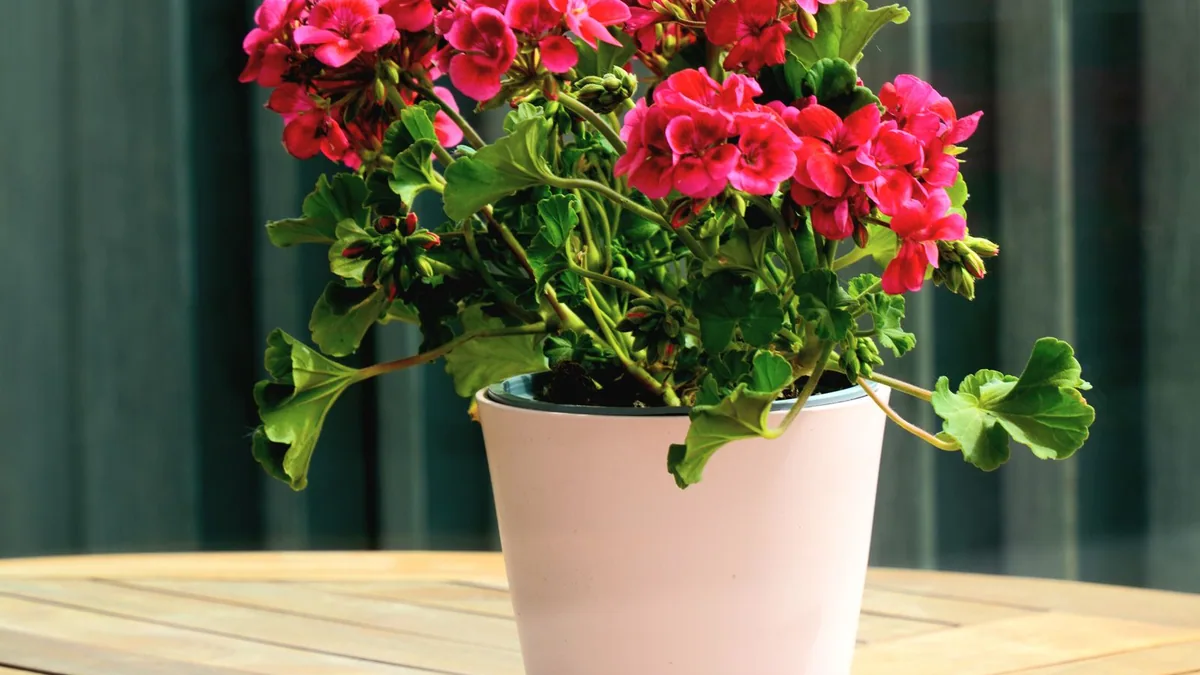
Those bright red, pink and white 'geraniums' that fill summer pots are often too good to throw away when autumn arrives. Many can be kept for another year, provided they are brought in before frost and given the right conditions through winter.
There is one important distinction: most summer bedding geraniums are actually pelargoniums, which are tender plants. Hardy geraniums, also called cranesbills, are different and can usually stay in the garden. If your plant came from a summer hanging basket or patio display and has rounded clusters of colourful flowers, this guide is probably for you.
The easiest way to save a few plants is to overwinter them in pots in a bright, cool, frost-free place. But you can also grow cuttings, or try storing older woody plants in a more dormant state.
When should you bring geraniums indoors?
Bring tender pelargoniums under cover before the first frost, rather than waiting for leaves to turn black. They can continue growing and even flowering in a bright conservatory, but the aim for most people is simply to get them safely through to spring.
In much of the UK, this means taking action during autumn. The date varies widely. An exposed garden in northern England may have frost while a sheltered coastal garden remains mild. Watch the forecast and don't rely on the month alone.
If the pot is too large to move, you can take cuttings from healthy growth as a backup. If the plant is already damaged by frost, rescue may still be possible if the stems are firm and alive, but there is no guarantee.
Method 1: Keep them in pots over winter
This is the simplest choice if you have a handful of favourite pelargoniums and room on a bright windowsill, in a conservatory or in a heated greenhouse that stays frost-free.
Start by checking each plant for pests, rotting stems and tired flowers. Remove clearly dead or diseased material. Brush away fallen leaves sitting on the compost, as they can stay damp and encourage mould indoors.
If the plant is growing in a border, lift it carefully and pot it into a container with drainage holes and suitable peat-free compost. A plant already in a manageable pot can usually remain there for winter.
You now have two options:
- Keep it growing: Place the plant somewhere bright and frost-free, water sparingly as required, and keep an eye on the leaves and stems. In good light and relatively mild indoor conditions, it may continue flowering.
- Cut it back to save space: If you need a compact plant, you can cut stems back to around 10cm. Keep it in a light, airy, frost-free position and water very little until growth resumes.
Don't put a freshly cut, wet plant into a cold, dark cupboard and assume it will be fine. Light, temperature, moisture and air movement all matter.
The biggest winter mistake is overwatering
Pelargoniums generally cope better with a little winter dryness than with waterlogged roots. In cold conditions they use much less water than they do on a sunny summer patio.
Rather than watering on a fixed schedule, feel the compost and check the condition of the plant. A pot that is still damp does not need another drink. Plants kept actively growing require more attention than those cut back and resting.
Water the compost, not a mass of leaves and flowers. Empty saucers if water collects in them. Good drainage matters particularly in cool conservatories and greenhouses.
Be wary of limp leaves as a signal to water automatically. If the compost is already wet, wilting can indicate unhappy roots rather than thirst. Remove decaying material, improve ventilation and let the pot dry appropriately.
Method 2: Take cuttings to save your favourites
Taking cuttings is a good choice if older plants have become woody or you want to keep several colours without filling every windowsill with big pots.
The most reliable time to take pelargonium cuttings for winter storage is usually late summer or early autumn, while healthy growth is available. Choose non-flowering, healthy shoots where possible, cut them with a clean sharp tool and remove the lower leaves.
Place the cuttings in a free-draining propagation compost. Keep them in bright light out of harsh direct sunlight and avoid leaving the compost saturated. Once rooted, grow them on in small containers and keep them frost-free over winter.
Rooted young plants need enough light to stay compact. A dim windowsill above a hot radiator can leave them thin and stretched.
If you're only starting in November, you can still consider healthy cuttings from a plant that has been kept frost-free, but growth and rooting will be slower under short winter days. Keeping the parent plant alive until brighter weather may be a better option.
Method 3: Store older plants in a semi-dormant state
Some gardeners remember relatives keeping geraniums wrapped in newspaper or hanging them upside down in a shed. That method exists, but it is less reliable than keeping potted plants or rooted cuttings.
Bare-root storage is best reserved for pelargoniums with tougher, woody stems. The plants are lifted before frost, excess compost is shaken off, and the material is allowed to dry in a frost-free place before storage.
The key words are frost-free. An unheated shed or garage that freezes in January is not suitable just because it has a roof. The plants must also be checked rather than forgotten until May.
In early spring, survivors can be rehydrated and potted up, then started into growth gently. Expect losses with this method and avoid using it for a rare plant you cannot replace.
Where is the best place to keep pelargoniums?
A bright, cool, frost-free greenhouse or conservatory is often ideal. A sunny indoor windowsill works for a small collection, provided the plant isn't cooked by a radiator or left against icy glass.
A cold frame or ordinary unheated greenhouse may offer some shelter but not necessarily frost protection through a hard UK winter. Check minimum overnight temperatures, particularly when several freezing nights are forecast.
A very warm room can keep plants active, which means they need enough light and occasional watering. A cooler position tends to slow growth, but it still needs ventilation to prevent mould.
If you're using a greenhouse, open vents on mild days when conditions allow. Crowding wet leaves together in still air can invite grey mould and other disease.
How to recognise trouble during winter
Yellow leaves: One or two ageing leaves aren't alarming, but widespread yellowing with damp compost suggests roots may be struggling. Check drainage before watering again.
Grey, furry mould: Remove affected material promptly, increase spacing and ventilation, and avoid wetting foliage unnecessarily.
Long, weak shoots: The plant probably needs better light. Move it to a brighter place and don't try to correct weak growth with extra fertiliser.
Soft, blackened stems: Check for rot or previous frost damage. Remove material that is clearly dead using clean tools, and assess whether healthy growth remains.
Whitefly or aphids: Examine leaf undersides regularly. Deal with early infestations before plants are packed together for the rest of winter.
It's usually more effective to correct the conditions than to reach immediately for a bottle of feed.
When to start growing them again in spring
As the days become longer, check for new shoots and gradually resume watering. Repot plants into fresh suitable peat-free compost in mid-spring if necessary and give them increasing light.
Young plants grown from cuttings can be potted on once their roots are established. Pinching out growing tips at the appropriate stage encourages bushier growth.
Don't put plants outdoors permanently after the first sunny weekend. Harden them off gradually, taking them outside for increasing periods and bringing them back under cover when necessary.
Wait until the risk of frost has passed in your area before leaving tender pelargoniums outside. In many UK gardens that's late May, and in colder areas it can be later.
Is it worth keeping geraniums from year to year?
Usually, yes, if you like the variety and have a suitable place. A healthy established plant can give you a head start over buying new bedding each spring, and cuttings can provide replacements when older plants become tired.
If you have no reliably frost-free space, though, don't spend all winter struggling with plants in unsuitable conditions. Take a few cuttings while there's time, save your favourites if you can, and be realistic about the rest.
For more winter plant care, read our frost-protection guide. If you're choosing new containers for next year's display, our compost for pots guide explains how to plan and use the right growing medium.
Sources: RHS guide to growing pelargoniums and RHS pelargonium plant guide.