
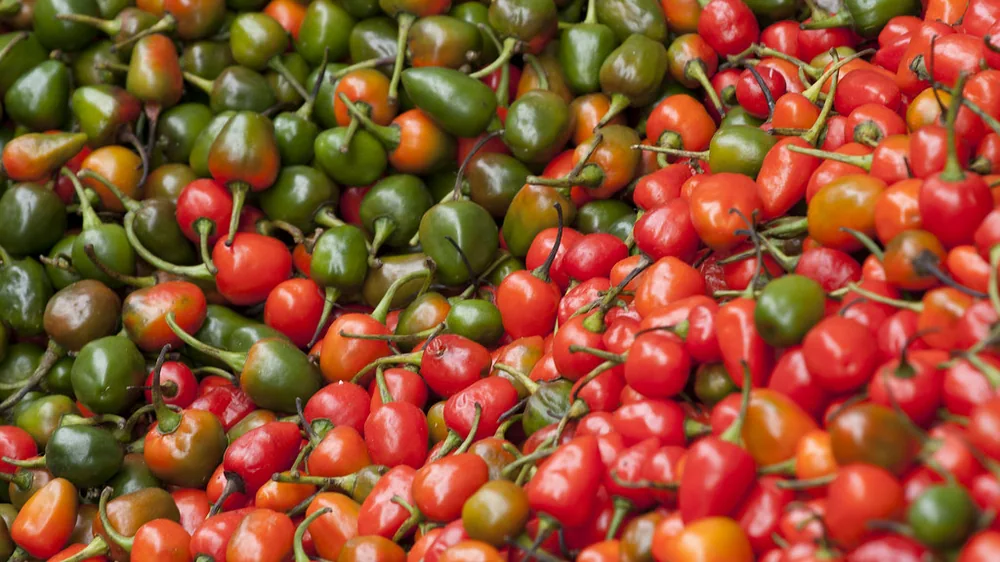
It's November, the greenhouse is cooling down and your chilli plant is still covered in little green fruits. You spent months growing it, so throwing it on the compost heap seems a shame.
Good news: many chilli plants can live for several years if you keep them warm enough through winter. Although they're commonly grown as annuals in the UK, they're perennial plants in suitable climates.
The challenge isn't simply keeping them alive. It's preventing cold, poor light, wet roots and indoor pests from weakening them before spring arrives.
You don't need to turn a spare bedroom into a tropical greenhouse, but you do need to understand what your particular plant can tolerate.
Can chilli plants survive a UK winter outdoors?
Not reliably.
Chillies are warm-season plants and are damaged by cold, particularly frost. A plant that's thriving in a greenhouse in September may collapse after an overnight freeze.
Bring plants into a heated, bright location for overwintering, rather than leaving them in an unheated greenhouse and hoping the glass provides enough protection.
That could be a sunny indoor windowsill, a conservatory that stays sufficiently warm or a properly heated growing space.
A cold shed or unheated garage isn't a safe default. Even if temperatures stay just above freezing, poor light and damp compost can cause trouble over an extended winter.
If you don't have suitable space, starting new seeds next spring may be the better option. Keeping every chilli plant isn't essential to getting a good harvest.
Which chillies are worth keeping?
Start with the healthiest plants rather than trying to save every specimen.
Choose one that has strong stems, sound roots and no obvious signs of disease. A favourite variety that took a long time to produce fruit may be especially worth keeping.
Many gardeners find that Capsicum chinense varieties, including habanero types, are worth overwintering because they can be slow to mature from spring sowings.
Some Capsicum annuum types, such as common cayennes and jalapeños, can also survive and fruit in another season. The species name doesn't mean the plant must be discarded after one crop.
The quality of your winter growing conditions matters as much as the variety. An older plant struggling with root rot or pests may not be worth the windowsill space.
If you've got three good plants and only one bright spot indoors, pick the strongest or most interesting one.
When should you bring chillies inside?
Before the first frost, preferably before nights have become consistently cold.
Watch local forecasts rather than choosing a fixed November date. An exposed northern garden may need to move plants indoors earlier than a sheltered southern one.
If your plant is in a greenhouse border, lifting it into a pot can damage roots, so plan ahead and preserve as much of the rootball as possible.
For chillies already in containers, the move is easier. Check whether the pot drains and whether the growing medium is still in good condition.
Harvest ripe fruit first. You can also pick green fruit to use in cooking. Removing a heavy crop reduces the burden on a plant you're about to ask to survive winter.
Don't leave the whole job until after the foliage has turned black in a hard frost.
Should you prune a chilli before overwintering?
Usually, some pruning helps make the plant manageable.
Cut chilli plants back to a suitable compact size, then keeping them warm and bright with sparing watering.
Remove clearly dead or damaged stems and long, weak growth that's unlikely to be useful. A large plant may be reduced more substantially if you need it to fit on a windowsill.
However, there isn't one magical pruning height that suits every cultivar or plant age. A small, healthy chilli already fitting comfortably indoors may need very little work.
Use sharp, clean secateurs and avoid stripping away every healthy growing point without a reason. A plant kept warm and actively growing with good light can retain more foliage than one resting in cooler conditions.
Don't confuse this winter tidy-up with pinching growing tips during summer to influence branching. They have different purposes.
How much light do chilli plants need in winter?
More than many rooms provide.
Chillies enjoy bright conditions. In December and January, UK daylight hours are short and the sun stays low, which means even a south-facing window gives much less light than the plant enjoyed in August.
Choose the brightest suitable place you have, without pressing leaves against freezing window glass.
A plant may naturally slow down and drop some leaves. That's not always a disaster if the stems and roots remain healthy.
But weak, stretched shoots indicate that warmth is encouraging growth without enough light to support it. You may need a cooler, still safe position or an appropriate grow light if you want active growth.
If using artificial lighting, follow electrical safety instructions and consider whether the expense is worthwhile for the number of plants you're keeping.
What temperature should you keep chillies at?
There's no single minimum suitable for every chilli, but frost-free alone isn't necessarily warm enough for healthy overwintering.
Choose a bright, heated position such as a windowsill or conservatory. Avoid freezing draughts and the intense dry heat directly above radiators. A thermometer can reveal how cold the windowsill becomes overnight.
How often should you water overwintering chillies?
Much less often than in summer, in most situations.
Water sparingly during overwintering. The plant is producing less growth and using less moisture, while compost dries slowly in cool, short days.
Check below the surface with a finger or lift the pot to judge its weight. Water lightly when needed, then let excess water drain.
Don't allow the roots to remain in a saucer full of water. Cold, saturated growing medium can quickly encourage decay.
At the same time, don't turn 'water sparingly' into deliberately letting a leafy plant shrivel completely. A chilli growing in a warm room with good light still needs moisture.
Judge the plant and compost, not a calendar reminder.
Do chillies need feeding through winter?
Usually not while growth is minimal.
Summer fruiting plants use nutrients rapidly, but a resting chilli is not trying to produce a full crop in January. Feeding heavily at that stage can encourage soft growth you may not have enough light to support.
As spring days lengthen and new shoots develop, gradually increase watering and resume appropriate feeding when active growth justifies it.
Use a high-potassium liquid feed during flowering and fruiting, following the product instructions. Follow the product instructions rather than doubling concentrations because the plant looks tired.
If roots are damaged or compost is waterlogged, fertiliser won't solve the problem.
Watch for aphids, whitefly and mites
Bringing plants indoors can bring pests inside too.
Before the move, inspect both sides of the leaves, stems and growing tips. Look for clusters of aphids, tiny whiteflies and signs of red spider mite.
Indoor warmth can allow populations to increase while natural predators are less active than outdoors.
If you find a small number of aphids, remove them by hand or wash them off carefully where practical. Isolate affected plants until you've got the problem under control.
Watch for aphids, whiteflies and glasshouse red spider mite on chillies. Avoid treating an unidentified pest with random household chemicals.
Check neighbouring houseplants as well, especially if the chilli sits on a crowded windowsill.
What if leaves fall off indoors?
Some leaf loss is common after moving a chilli into lower winter light. Firm stems and healthy roots are encouraging signs.
If branches turn soft or dark, investigate cold injury and root rot. Check for pests too, and avoid soaking a nearly leafless plant simply because its foliage has dropped. Consistent conditions are generally better than repeatedly moving it between warm and cold spots.
How do you restart a chilli in spring?
As daylight improves, look for healthy buds and fresh shoots. Increase watering gradually as the plant becomes more active.
If the roots have filled the pot, repot into an appropriately sized container with fresh, suitable peat-free compost. Don't move a small rootball into an enormous pot where unused compost stays wet.
Give the plant plenty of light. If you use grow lights, adjust them as the plant grows rather than leaving them too far away or close enough to scorch leaves.
Before taking chillies outdoors, harden them off gradually. Introduce them to outdoor conditions for increasing periods and bring them back inside if the weather turns cold.
Wait until frost risk has passed before leaving them outside permanently. In much of the UK, that means late spring or early summer depending on the location.
Will an overwintered plant crop earlier?
It can. An established root system and woody framework may allow quicker growth and flowering once spring arrives.
But a plant weakened by pests, wet compost or poor winter light might be slower than a vigorous new seedling. Overwintering is most rewarding with healthy plants and slower-maturing varieties.
Is it worth doing?
If you've got a healthy chilli, a bright indoor spot and the time to check it occasionally, yes. It can be satisfying to start spring with an established plant.
If winter space is scarce or the plant is already struggling, save a few seeds where suitable and start again instead.
The essentials are simple: move it before frost, prune sensibly, give it light and warmth, water sparingly and keep pests in check.
For other plants that need different winter treatment, read overwintering geraniums and our unheated greenhouse guide.