
A hanging basket doesn't have to disappear as soon as the summer petunias give up. A well-planted winter basket can bring colour to a front door through the dullest months, even if it doesn't look like a summer basket full of flowers every day.
The secret is choosing plants that look good when they're not flowering. Evergreens, trailing ivy, small ornamental grasses and a few cold-tolerant flowers make a more dependable combination than filling the basket entirely with winter pansies and expecting nonstop blooms.
You don't need an elaborate design either. A small selection of suitable plants, a basket that drains and a secure fixing are enough.
What are the best plants for winter hanging baskets?
Combine evergreen foliage with plants that provide colour through the colder months. These are some of the strongest options for an ordinary UK garden.
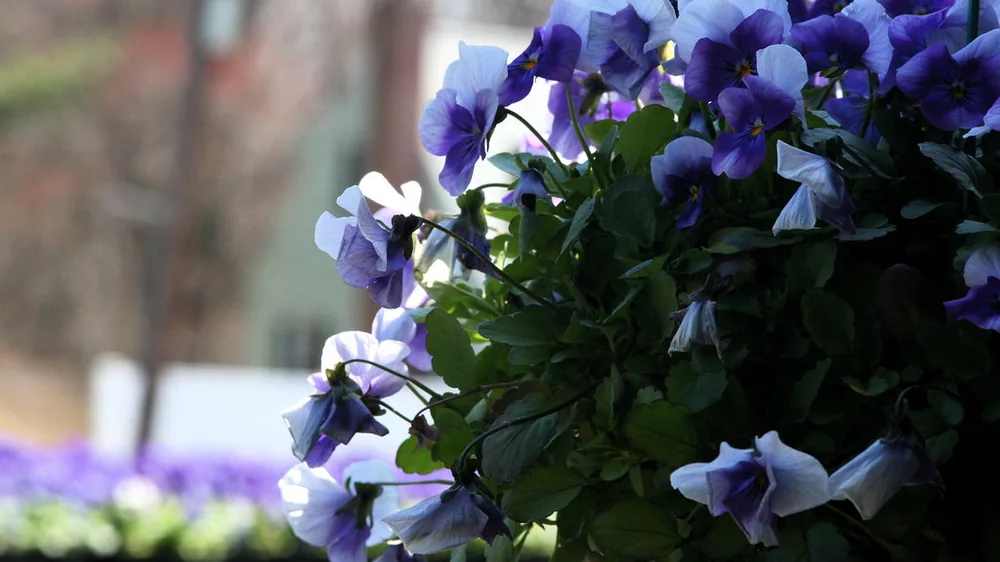
Winter pansies and violas
Pansies and violas are a familiar choice because they provide colour when conditions are mild. They can flower intermittently through winter and often put on a stronger display as days lengthen.
Choose compact, sturdy plants rather than leggy ones already struggling in tiny trays. Remove faded flowers when you can, and don't be surprised if flowering slows or stops during hard frost.
Violas often have smaller flowers than pansies, which can make them especially attractive in mixed baskets where you want lots of little spots of colour.
Ivy for trailing greenery
Variegated or plain green Hedera gives a basket structure all winter. A couple of small ivy plants around the rim can soften the basket's outline and trail down the sides.
Ivy is particularly helpful in a display that contains flowering plants which take a break during cold weather. The basket still has shape and colour.
Choose a manageable cultivar and trim it when it begins to overwhelm its neighbours.
Small-flowered cyclamen
Cyclamen can be lovely in a sheltered winter display, but it's important to buy the right kind.
Cyclamen coum is a genuinely hardy species that flowers in winter or early spring and suits suitable garden conditions. Brightly coloured florist's cyclamen, often forms of Cyclamen persicum, are much less hardy and may be damaged by severe frost.
If buying a ready-made basket from a garden centre, check the label. Don't assume every plant sold in the winter bedding section will survive outdoors through a cold UK January.
Heathers, sedges and other foliage plants
Winter-flowering heathers such as Erica carnea add low-growing texture and pink or white flower spikes. They are useful when you want a softer, more natural appearance.
Small Carex sedges provide movement and fine foliage. Gaultheria can supply neat leaves and red berries, although it generally prefers acidic growing conditions, so don't treat it as an interchangeable companion for every compost mix.
Compact primulas, polyanthus and suitable hardy evergreens can also work well. The best plant isn't simply the prettiest one on the shop shelf; it's one that suits your basket's light, compost and exposure.
Three winter basket combinations that work
1. Colour by the front door
Choose several compact violas, one small variegated ivy and a little evergreen foliage for the centre. The ivy spills over the rim while the violas provide flower colour during milder spells.
This is a straightforward option for a bright, reasonably sheltered entrance. It also makes faded flowers easy to spot and remove.
2. A quieter evergreen basket
Use a compact sedge or small evergreen in the middle, ivy around one edge and a few hardy bulbs tucked between them. Small crocus or dwarf iris can offer an extra burst of colour as the season moves on.
The basket's main appeal is its foliage and shape. It won't look empty when the flowers finish.
3. A soft pink winter display
Combine a compact suitable winter heather with pale violas and a small trailing evergreen. Check the heather's soil requirements and select plants that can live happily in the same compost.
In a very exposed spot, favour the hardiest plants over tender decorative additions. A sheltered porch basket and one hanging out in an open north wind are not equivalent.
When should you plant winter hanging baskets?
Early to mid-autumn is usually easiest, as roots have time to settle before winter weather arrives. But you can still plant a basket in November using established nursery plants if the conditions are suitable.
Late autumn isn't a good time to start a basket from tiny seeds and expect an immediate display. Buy healthy, rooted plants that are already large enough to make the arrangement look balanced.
Choose a calm, frost-free day for planting. If the compost is frozen solid or you're expecting severe frost that night, keep the plants in suitable shelter until the conditions improve.
For spring-flowering bulbs, timing depends on the type. Tulips are often planted in November; many other spring bulbs are better planted earlier in autumn.
How to plant a winter hanging basket
- Check the bracket and chain. Wet compost is heavy, especially in a large basket. The fixing must support the full loaded weight, not just the empty frame.
- Use a secure liner. A suitable liner helps retain compost while allowing excess water to escape. Don't create a watertight bowl.
- Fill with peat-free compost. A good general-purpose mix is fine for a seasonal display, although plants with specialist pH requirements need a matching compost.
- Arrange the plants before planting. Put upright or bushier plants towards the middle and trailing plants near the edge. Check that leaves aren't completely crowding one another.
- Plant at the correct depth. Keep the top of each rootball level with the surrounding compost unless the specific plant requires otherwise.
- Water to settle the compost. Give it a gentle drink and allow excess water to drain away before hanging it in position.
Leave a little space beneath the rim for watering. Packing compost right to the top makes every watering a messy job.
If you want to estimate how much compost several baskets will take, our pot and container compost guide explains the basic measurements.
How often should you water a winter hanging basket?
Less often than a summer basket, but not never.
A basket under a porch may stay surprisingly dry because it receives almost no rain. One exposed to persistent winter showers may stay too wet. Check the compost with a finger rather than following a fixed weekly routine.
Water when needed during a frost-free spell, preferably early enough that the surface isn't left soaked just before a freezing night. Make sure excess water can drain freely.
If foliage is yellowing or plants are wilting while the compost is wet, don't automatically add more water. Poor drainage and damaged roots can create similar symptoms.
Winter hanging baskets generally don't need feeding. Pushing soft new growth with fertiliser during cold weather is unlikely to help.
Protect the basket from frost and wind
A winter basket can withstand some bad weather if you choose suitable plants, but an exposed hanging position is harsher than a sheltered border.
Strong wind dries foliage and can batter a basket against a wall. Persistent freezing affects roots more quickly in a small container than in open soil.
For severe weather, move a basket into suitable temporary shelter if it's practical and safe. If it can't be moved, choose hardier planting and make sure the fixings, liner and drainage are in good order.
Avoid wrapping a basket tightly in plastic and leaving it there for weeks. Trapped dampness and poor airflow can cause fresh problems.
Our frost-protection guide covers the difference between a light frost and weather that calls for proper shelter.
Why do winter baskets sometimes look disappointing?
Usually because they're planned as though it's June.
Pansies aren't guaranteed to flower every week in December. Tiny plugs don't establish quickly in cold, short days. A basket with no evergreen foliage looks sparse when flowers pause.
Another frequent mistake is buying tender cyclamen and placing them in an exposed spot without checking their hardiness.
Build around foliage first, add colour where you can, and accept that a winter basket is more restrained than a summer one. It will look better for longer.
The simplest winter basket of all
For a low-fuss display, start with ivy, several well-rooted violas and one compact plant with attractive foliage. Give them drainage, an appropriately secure hanging point and occasional checks for dry or waterlogged compost.
That's enough to brighten a doorway without turning basket maintenance into another winter chore.