
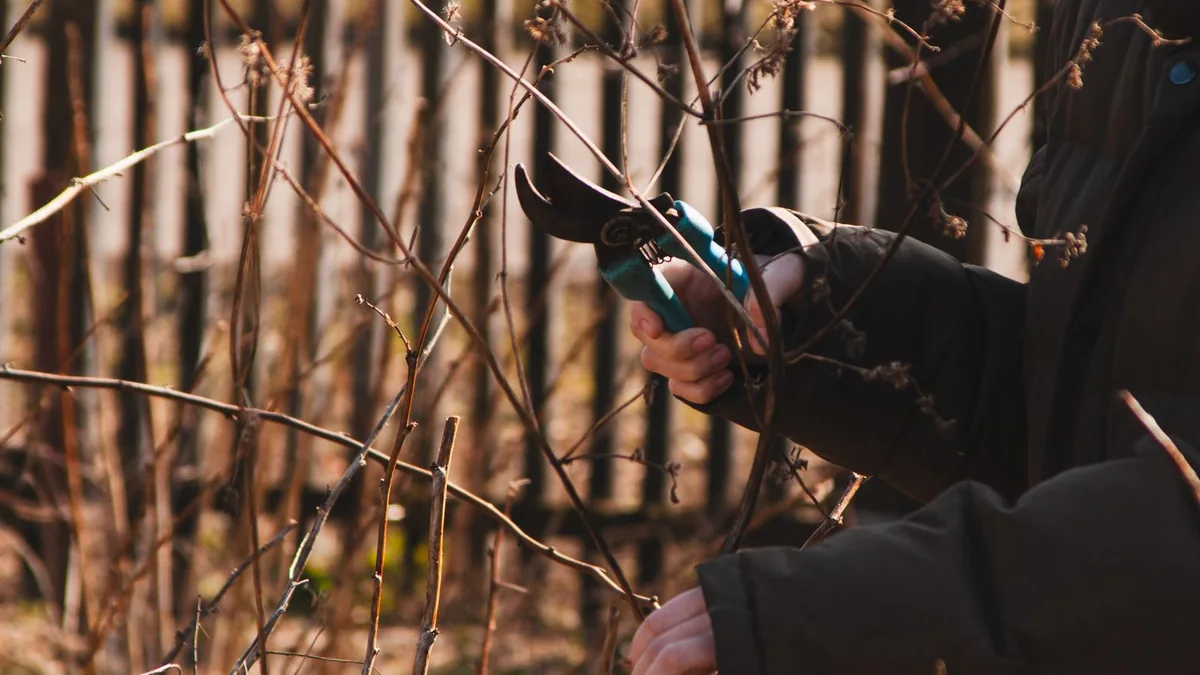
The leaves are off the shrubs, you can finally see the branches properly, and the secateurs are ready. It feels like the perfect time to tidy everything up.
But winter isn't a universal pruning season. Cut the wrong shrub now and you could remove the very shoots that would have flowered next spring.
The first thing to establish is whether your shrub flowers on last year's growth or on new growth made this coming spring. That distinction matters much more than whether it's November, January or March.
Some shrubs benefit from hard pruning towards the end of winter. Others are best left alone until they've finished flowering.
A quick guide to winter shrub pruning
| Shrub | Best pruning approach |
|---|---|
| Buddleja davidii | Prune hard in early to mid-spring, after severe frost |
| Cornus grown for colourful stems | Cut back in late winter to mid-spring once established |
| Spiraea japonica | Prune in early to mid-spring |
| Hardy fuchsia | Leave top growth through winter; cut back in spring |
| Forsythia | Prune after its spring flowers finish |
| Weigela and mock orange | Prune after flowering, usually late spring or summer |
| Camellia and rhododendron | Generally little pruning; shape after flowering |
| Large overgrown deciduous shrubs | Renovation may be possible during dormancy, with care |
This isn't an instruction to prune every plant listed. It's a way to avoid confusing different flowering habits.
This is why shrubs are grouped by their pruning needs. Even within one genus, different species can behave differently.
Why pruning time affects flowering
Many spring-flowering shrubs have already formed their flower buds by the time their leaves fall.
Forsythia, flowering currant, weigela and mock orange usually flower from shoots grown the previous season. If you shorten everything in January, the plant may survive perfectly well but produce few flowers.
Summer-flowering shrubs are often different. Many, including Buddleja davidii, produce their flowers at the ends of fresh shoots grown during spring and summer. Pruning in early spring encourages new growth that can flower later in the same year.
Prune early-flowering deciduous shrubs after flowering, and later-flowering kinds in spring.
Look at when the plant normally flowers. If it gives its main display before June, don't assume winter is the right time to reduce it.
Is January a good month for pruning shrubs?
For some dormant shrubs, it can be a suitable time to remove clearly damaged or dangerous branches. It's also within the renovation window for certain overgrown deciduous plants.
But routine hard pruning of many summer-flowering shrubs is better left until early spring, when the worst of the weather has passed and buds are beginning to swell.
For example, buddleja is best pruned in early to mid-spring, often late March to mid-April. Cutting it hard in the middle of a cold January can expose vulnerable growth and leave the plant with little protection during severe weather.
A mild sheltered garden might allow slightly earlier work than an exposed site further north.
The sensible question isn't 'Can I prune something in January?' It's 'Is this particular plant at the right stage for the cut I intend to make?'
Buddleja: usually wait until spring
The familiar butterfly bush, Buddleja davidii, is often cut back hard each year.
It's vigorous and flowers on new shoots, so a spring prune helps keep it compact and encourages strong flowering growth.
Cut previous growth back to a short, sturdy framework in early spring, leaving healthy buds from which new shoots can grow.
Don't assume every buddleja follows this routine. Buddleja alternifolia, with arching sprays of flowers, blooms on older wood and should generally be pruned after flowering.
Check the species name before cutting. Two shrubs sold as butterfly bushes can need different treatment.
Dogwoods: prune for colourful winter stems
Some dogwoods are grown primarily for their bright red, orange or yellow young stems.
These plants can be cut back hard to encourage fresh shoots that will have stronger colour the following winter. Do this in late winter to mid-spring, with early to mid-April often giving a good balance between enjoying the display and encouraging next year's growth.
For a well-established stool, shoots can be cut to around 5–7.5cm above the base.
But don't do that to a dogwood you've planted only a few months ago. Allow at least two years for establishment before hard annual coppicing.
And don't confuse colourful-stem dogwoods with large flowering dogwood trees. Their growth habit and pruning needs are very different.
Spring-flowering shrubs: put the secateurs away
Forsythia can look like a mass of bare sticks in February. That's exactly how it should look before its yellow flowers appear.
The flower buds are waiting on the older shoots. If you cut them off now, you've removed the display.
Wait until after flowering to prune plants such as forsythia, flowering currant, weigela and mock orange.
At that stage, you can remove some older stems near the base, thin crowded growth and give fresh shoots the summer to develop buds for next year.
For an established, congested shrub, renewal often means taking out a few old branches rather than reducing every stem to the same height.
A plant that flowers beautifully every spring and isn't obstructing anything may need no pruning at all.
What about evergreen shrubs?
Most established evergreens don't need heavy winter cutting.
Unlike deciduous shrubs, they keep their leaves and generally have less capacity to replace lost foliage during cold weather. Severe pruning at the wrong time can leave an unattractive or damaged plant for months.
Give many evergreen shrubs light shaping after flowering, including camellia, rhododendron, choisya and some viburnums.
There are exceptions, particularly for renovation of large overgrown shrubs, but that is a specific job rather than normal winter maintenance.
If an evergreen hedge or shrub has been damaged by wind, you can remove dangerous or broken growth as necessary. Otherwise, don't cut simply because the rest of the garden looks bare.
What can you safely remove during winter?
Even when a shrub isn't due for its main prune, some work may be worthwhile.
Check for dead branches, splits caused by storms and stems rubbing badly against one another. Where action is necessary, make a clean cut at a suitable junction rather than leaving a long stub.
Be cautious with material that only looks dead because the plant is dormant. A leafless branch can be perfectly healthy.
For uncertain woody stems, a tiny scratch to check for green tissue can help, but don't strip bark off numerous branches.
If a tree or large shrub has a hanging limb or needs work at height, get an appropriately qualified professional. Garden pruning isn't worth a fall from a ladder.
How to make a good pruning cut
Sharp bypass secateurs are useful for young shoots, while loppers or a pruning saw are better for thicker branches.
Cut just above a suitable healthy bud when shortening a shoot, taking care not to damage the bud itself.
When removing a whole branch, cut back to its point of origin or an appropriate junction without slicing into the branch collar.
Avoid leaving tall stumps, particularly on a plant you're renovating. They can die back and make the framework awkward.
Keep tools clean, especially after cutting obviously diseased material. On a cold day, there's no need to remove more than the plant can reasonably replace.
Can you renovate a shrub that's grown enormous?
Sometimes, but don't assume every large shrub will recover from being cut to the ground.
Dormant-season renovation can work for several deciduous shrubs, including overgrown forsythia, lilac and smoke bush. The details vary by species.
Some respond well to strong cuts near the base. Others are safer to renew over two or three seasons by removing selected older stems.
Consider the effect on flowering. A hard prune can sacrifice one or more seasons of flowers while the framework rebuilds.
Check for nesting birds before carrying out significant work, whatever the month. Active nests must not be disturbed.
A shrub that's simply too big for the position may be better replaced with a variety whose mature size suits the space.
Why does pruning sometimes make shrubs grow faster?
Cutting back shoots can stimulate dormant buds lower on the plant, producing vigorous replacement growth.
That can be useful on buddleja or colourful-stem dogwoods. It's less helpful if you remove half a mature spring-flowering shrub and it responds with long leafy shoots but few flowers.
The amount and timing of the cut influence the response. Heavy pruning isn't automatically a more effective version of light pruning.
Decide whether you want more flowers, coloured stems, a better shape or simply fewer branches in the way. Then prune to achieve that result.
The rule that saves the most mistakes
Know when the shrub flowers before cutting it. Late-summer flowerers often benefit from pruning as spring begins. Spring flowerers usually wait until they've finished blooming.
Colourful-stem dogwoods have their own late-winter or spring routine, while evergreens generally need a lighter touch.
For specific pruning methods, see our bush rose pruning guide and hydrangea winter care guide. This article is the starting point for deciding which other shrubs should be left alone.