
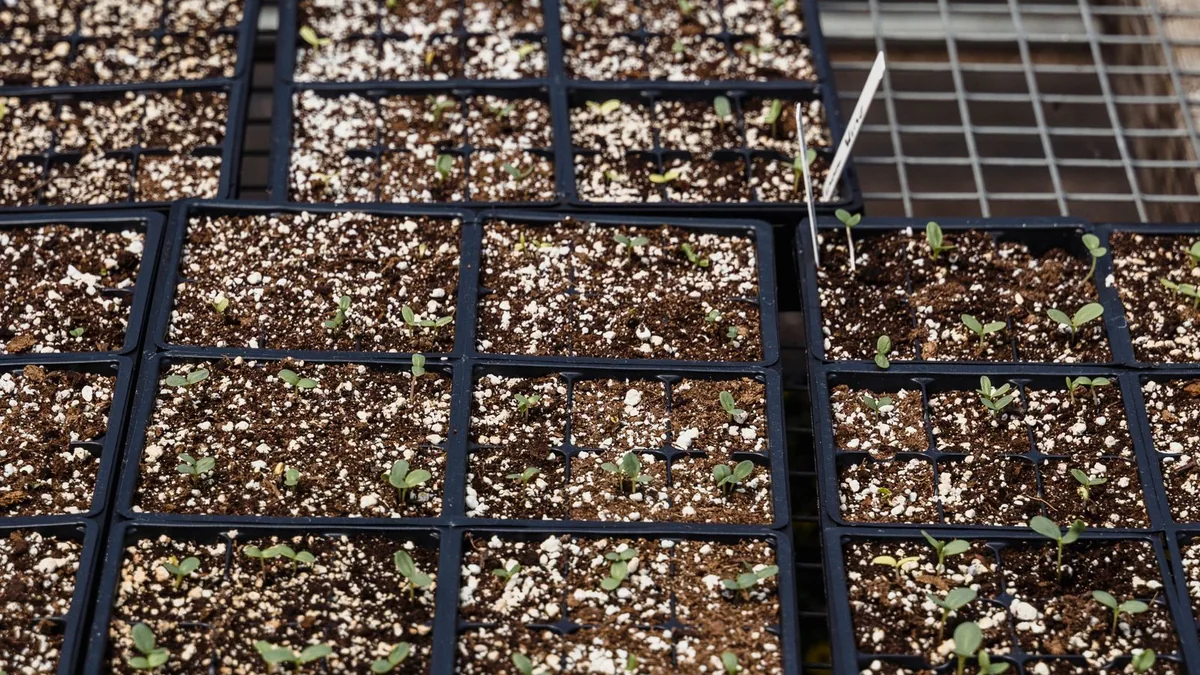
The gardening calendar makes December sound like an exciting month to start dozens of new crops. The reality is more selective.
Most seeds make little progress in December because the days are short and outdoor soil is cold. But there are worthwhile exceptions: hardy broad beans in suitable conditions, microgreens on a bright indoor windowsill, and a few specialist seeds under the right protection.
It's also a good time to plant dormant fruit and ornamental plants. Planting a bare-root raspberry cane in December is quite different from trying to germinate carrot seed in winter soil.
Here's what is genuinely worth doing — and what is better left until conditions improve.
December sowing and planting: the short answer
| Plant or crop | December advice | Best place |
|---|---|---|
| Hardy broad beans | Possible in mild areas; protect from prolonged cold and waterlogging | Free-draining ground under cloches or pots under cover |
| Garlic cloves | Possible in mild, reasonably dry areas; avoid soaked soil | Outdoors or modules in a sheltered cold frame |
| Shallots | Some suitable varieties can be planted in mild areas | Well-drained ground, following supplier guidance |
| Microgreens | Yes, with good indoor light and a clean growing setup | Bright windowsill or under a suitable grow light |
| Winter lettuce | Better sown in late summer/autumn; protect existing plants now | Cold frame or unheated greenhouse |
| Onion seed | Usually better started in January or later, with warmth and light for early crops | Indoors under controlled conditions |
| Bare-root fruit trees and bushes | Yes, while dormant if soil is workable | Final outdoor planting position |
| Bare-root roses and hedging | Yes, if the ground isn't frozen or waterlogged | Borders, beds or hedging lines |
| Tulip bulbs | Late, but sound bulbs can still be planted | Well-drained pots or workable soil |
| Tomatoes, cucumbers and most tender annuals | Wait; winter seedlings often become weak without sufficient light | Later indoor sowing |
Can you sow broad beans in December?
In a sheltered garden with free-draining soil, you can try a hardy variety such as 'Aquadulce Claudia' or 'The Sutton'. The timing is much less forgiving in a cold, wet area or an exposed allotment.
Broad beans generally perform best from autumn sowing or an early-spring start. December sowing is a calculated option, not a reliable rule for every UK garden.
If the soil is wet and sticky, sow into deep pots or modules using peat-free seed compost and keep them in an unheated greenhouse or cold frame. The aim is to establish manageable young plants, not force rapid growth in a warm room.
If sowing outdoors, use a suitable cloche and protect young plants from mice and other pests. A cloche can moderate conditions but won't make waterlogged soil usable.
In a colder garden you may get an equally useful crop from a February sowing without the plants enduring weeks of winter stress.
For variety choices and timings, read when to plant broad beans in the UK.
Plant garlic only if the soil suits it
Garlic often benefits from a period of winter cold, and some varieties are planted in autumn. December can still be useful for planting sound cloves, particularly in mild, relatively dry areas.
The bigger problem isn't a little frost; it's leaving cloves in cold, sodden ground where rot is more likely.
Split healthy bulbs into individual cloves shortly before planting, keeping the papery skins intact. Plant with the pointed end up, at the depth and spacing recommended for the variety. Avoid using supermarket garlic whose suitability for growing isn't clear.
If your beds hold water, plant cloves into modules in a cold frame instead. They can be planted out when conditions improve, without forcing them into mud now.
Our UK garlic planting guide covers cultivar differences and later planting options.
Are shallots and onion sets worth planting?
Some shallot varieties are intended for autumn or winter planting in well-drained soil. Check the packaging, because spring-planting varieties follow a different calendar.
Ordinary onion sets are less straightforward. Many are planted in spring, while specific overwintering sets are planted in autumn. December is late for establishing them in cold ground.
If you missed autumn planting, store suitable sets as instructed and wait for the correct window rather than gambling on a saturated bed.
For more detail, see growing onions over winter.
Microgreens are the easiest December seed project
If you want to sow something this week, microgreens are one of the most practical choices. They grow quickly compared with full-sized vegetables and don't need outdoor beds.
Use seeds sold for microgreen production, clean shallow trays with drainage, and fresh suitable growing medium. Follow the packet's sowing density and hygiene instructions.
Position the tray where seedlings receive plenty of daylight. A south-facing window can help, though low winter light may mean supplementary grow lighting is useful.
Keep the medium evenly moist without leaving the roots sitting in water. Good airflow matters; a constantly wet, sealed tray can encourage mould.
Harvest the shoots at the stage recommended for the crop, using clean scissors. Some types, such as peas, are grown for shoots; others are cut at their first true leaves. Use suitable edible species and clean seed rather than assuming every packet of ornamental seed is safe to eat.
Microgreens are a way to grow fresh leaves indoors, not proof that ordinary garden vegetables can be sown outside in December.
Can you sow lettuce indoors?
You can start lettuce under suitable light and temperature conditions, but this isn't the easiest time of year to raise strong plants. Seedlings on a dim windowsill often grow thin and stretched.
For genuine winter lettuce harvests, the better approach is to sow cold-tolerant varieties in late summer or autumn so they are established before day length collapses.
If you already have young lettuce in a greenhouse, keep it ventilated on mild days and watch for slugs and rot.
Our winter lettuce guide covers the sowing calendar, varieties and crop protection.
Plant bare-root fruit now, not just seeds
December is often a much better planting month than a sowing month.
Fruit trees, currants, gooseberries and raspberry canes are commonly sold bare-root during dormancy. Bare-root roses and deciduous hedging are also available.
The practical advantages are straightforward: plants are dormant, roots can establish in suitable soil, and bare-root stock is often less expensive than equivalent container-grown plants.
Inspect the roots before planting. They should not be allowed to dry out, nor should they sit exposed to frost while you prepare the site.
Choose the final position carefully. Consider the plant's mature size, required sunlight, drainage and, for fruit trees, whether a compatible pollinating partner is needed.
If the ground is frozen or waterlogged, wait. Keep the roots protected for the short term using the supplier's directions. Don't create a planting hole full of standing water just because the calendar says 'plant in winter'.
How to plant bare-root roses explains the steps for one of the most popular December choices.
Can you plant flower bulbs in December?
Tulips are normally planted in autumn, often November. Healthy leftovers can still be planted during a suitable December spell, but late planting is more of a rescue attempt than ideal timing.
Daffodils, crocuses and most other spring-flowering bulbs prefer earlier planting. If you're buying them now, check that they're still firm, sound and suitable for planting rather than soft or badly sprouted.
Lilies can have a broader planting window depending on the type. Tender gladioli and dahlias do not belong in cold, wet December soil.
Our winter bulb planting guide explains what to do with different bulbs.
What about flowers from seed?
Most annual flower seeds need better light and growing conditions than a normal December windowsill provides.
A few specialist seeds, including certain alpine plants, benefit from cold exposure and may be sown for natural winter stratification. This is very species-specific: use the individual seed packet's instructions, and prevent pots from becoming waterlogged.
Some gardeners start long-season bedding plants under controlled warmth and supplementary light in winter. That's worthwhile only if you can provide the environment the seedlings need after germination.
Otherwise, wait. A sturdy plant sown at the right time often catches up with an early, weak one.
What not to sow outdoors in December
Don't waste ordinary seed on carrots, parsnips, runner beans, courgettes, sweetcorn or most summer vegetables in cold, saturated December soil.
Avoid starting tomatoes and cucumbers in a warm room unless you have a realistic plan for sufficient light and protected growing space for the following months. They cannot simply be planted into an unheated greenhouse during a UK winter.
Nor is December an ideal month for laying down grass seed and expecting quick, even germination. Can you plant grass seed in winter? covers that separately.
A sensible plan for December
In a mild, free-draining garden, consider garlic and a limited broad-bean sowing under protection. Plant bare-root stock whenever the ground is workable.
In a cold, exposed or waterlogged garden, postpone outdoor sowing. Use a greenhouse or cold frame for suitable young plants, start a small tray of indoor microgreens, and concentrate on soil preparation and planning instead.
In a small urban garden, bare-root roses or a new fruit bush may give you more value next year than a tray of tired seedlings on a dark windowsill.
December isn't a wasted gardening month. It's simply a month when choosing what not to sow is just as important as knowing what you can.