
Clay soil gets a bad reputation because it can be sticky in winter and hard as a brick in summer. Yet it also holds nutrients and moisture well, which many flowering plants appreciate. The trick is not to treat every clay bed as permanently wet or unsuitable.
Choose plants for both the soil and the sunlight. A plant that tolerates clay in an open sunny border may struggle in cold shade where water stands for days.
How to tell whether clay soil is your main problem
Take a small amount of damp soil and roll it between your fingers. Clay-rich soil often feels smooth, holds together and can form a ribbon when squeezed. It usually becomes harder to work when very wet or completely dry.
But texture alone doesn't tell you whether the bed drains. Watch after prolonged rain. If water remains pooled and roots stay submerged, improve drainage and avoid plants that dislike waterlogging.
If soil dries and cracks in summer, mulch can help reduce moisture loss. Avoid digging or stepping on sodden clay, which compacts it further.
Flowers and flowering shrubs worth considering
| Plant | Sun preference | Why it can work |
|---|---|---|
| Hardy geranium | Sun to partial shade by cultivar | Dependable flowering ground cover in reasonably drained fertile clay |
| Hemerocallis (daylily) | Sun or light shade | Robust clumps and summer flowers; dislikes persistent stagnation |
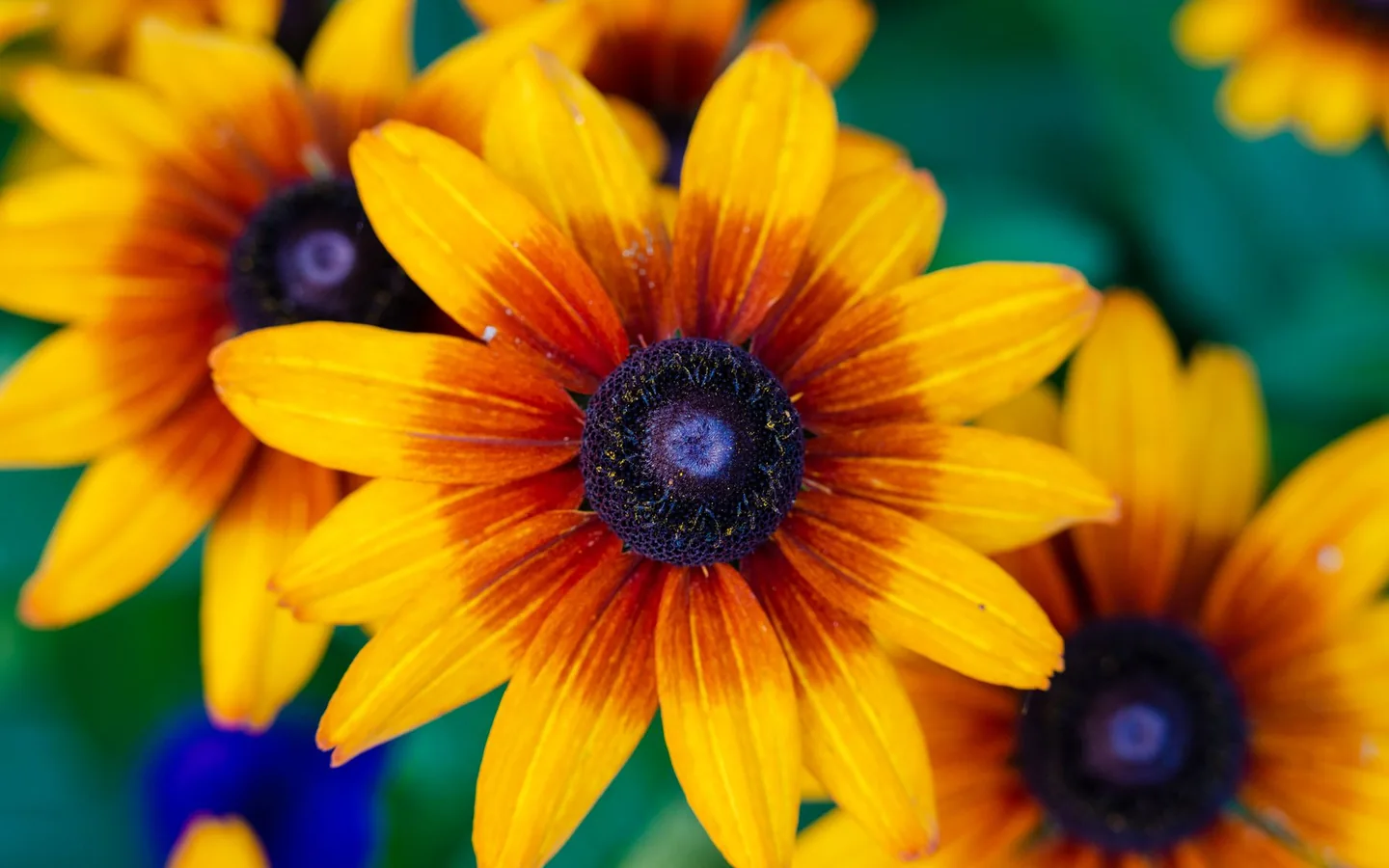
| Rudbeckia | Mainly sun | Bright late-summer flowers in moisture-retentive soil |
| Hydrangea | Light shade or sun with moisture | Many types appreciate fertile moisture-retentive conditions |
| Astilbe | Partial shade | Suits reliably moist soil; unhappy in prolonged drought |
| Hellebore | Partial shade | Early flowers; good structure in suitable, well-drained clay |
| Persicaria | Sun or part shade by type | Many tolerate fertile moisture-retentive soil |
| Aster and related autumn daisies | Sunny positions | Late-season colour, with cultivar-dependent preferences |
No plant enjoys having its roots suffocated indefinitely. “Clay tolerant” is not the same as “suited to a flooded bed”.
Hardy geraniums for a mixed border
Hardy geraniums are a useful starting point because many cope with ordinary garden soil, flower over a good period and suppress some weeds once established.
Check the variety's mature spread. A strong-growing geranium can cover a large area and swallow smaller neighbours; a compact one may fit a narrow border.
In a shaded location, choose a cultivar known to tolerate reduced light instead of assuming all geraniums are interchangeable.
Daylilies for sunny clay
Hemerocallis produce grass-like leaves and stems of trumpet-shaped summer flowers. Individual flowers are short-lived, but established clumps may produce many buds.
They tend to suit fertile, moisture-retentive soil with drainage and plenty of light. Divide crowded clumps when flowering declines, and keep new plants watered until roots establish.
Safety note: daylilies are highly toxic to cats, including pollen and plant parts. If cats have access to the planting area, choose a different species.
Rudbeckias and autumn colour
Suitable hardy rudbeckias offer yellow flowers with dark centres in late summer and early autumn. They appreciate sunlight and reasonably moisture-retentive soil.
Choose a perennial species or cultivar if you want the plants to return; some rudbeckias sold as seasonal bedding may be short-lived or grown as annuals.
Leave some seedheads for garden wildlife if they won't cause a problem, and cut back old stems when appropriate.
Astilbe and hydrangea for damp partial shade
Astilbes have feathery flower plumes and perform best where soil doesn't dry out severely. They can be useful in a moisture-retentive clay border that drains well enough to keep roots aerated.
Hydrangeas also often suit clay with a good organic structure and adequate drainage. They need room for mature growth and are not ideal in a tiny strip that bakes in full sun without watering.
When planning hydrangeas, choose by mature shrub size and light conditions. Leave enough room for growth, especially along a narrow border.
What about lavender on clay?
Lavender prefers free-draining soil and is a poor choice for a wet, heavy clay bed without substantial improvement. If you want lavender, a raised mound or large pot with suitable mix may be more practical.
Don't buy it just because it appears in a generic list of drought-tolerant flowers. A plant may endure summer drought but still die when its roots remain wet in winter.
Lavender needs full sunshine and fast drainage, so a wet clay position is better left to more suitable flowers.
How to improve clay soil for flowering plants
- Work on the bed when soil is moist enough to crumble, not sodden.
- Remove perennial weeds without unnecessarily disturbing nearby established roots.
- Spread well-finished garden compost or another suitable organic amendment over the planting area.
- Incorporate where practical without excessively breaking the soil or compacting it.
- Mulch around plants to protect the surface from baking hard and improve soil over time.
- Avoid routinely adding small amounts of sharp sand to clay. In the wrong proportions it may make the structure worse rather than improve drainage.
For more detail, see our guide to improving garden soil naturally.
If a bed stays severely waterlogged for long periods, address that problem first. Consider whether nearby paths, compacted subsoil or poor site drainage are responsible.
A planting idea for a sunny clay border
Repeat small groups of hardy geraniums near the front, with daylilies for summer structure and hardy rudbeckias for later colour. Keep sufficient gaps for mature widths and the route for watering and weeding.
Where clay tends to dry hard in summer, mulch after planting and monitor new roots through dry spells. Established plants usually cope better than newly purchased pots.
Use the plant spacing calculator to avoid a border that looks empty for one month and becomes overcrowded for years.
A planting idea for partial shade
Choose suitable hellebores for early colour, astilbes where soil stays moist and a hydrangea only if there is room for its mature shape. Repeat foliage plants to bridge gaps between flowering seasons.
A dry strip under a tree isn't the same as an open moisture-retentive clay bed. Tree roots may make the soil surprisingly dry in summer.
Common mistakes
- Planting into saturated soil and compressing it around roots.
- Assuming clay is always wet, even during drought.
- Choosing a plant for soil tolerance but ignoring sunlight.
- Adding a shallow pocket of loose compost into a waterlogged clay basin.
- Crowding vigorous perennials before their mature width is known.
- Planting lavender or similarly drainage-sensitive herbs in a cold wet bed.
Will flowers grow in heavy clay soil?
Many will, especially hardy geraniums, suitable hydrangeas and daylilies, provided the bed drains and light conditions suit the species.
Can I use raised beds on clay?
Yes. Raised beds may improve root-zone drainage and make planting easier, though they still need suitable construction and an appropriate growing medium.
What is the easiest clay-soil flower?
There is no single best flower for every garden. A suitable hardy geranium often makes a good starting plant in ordinary, reasonably drained clay.