
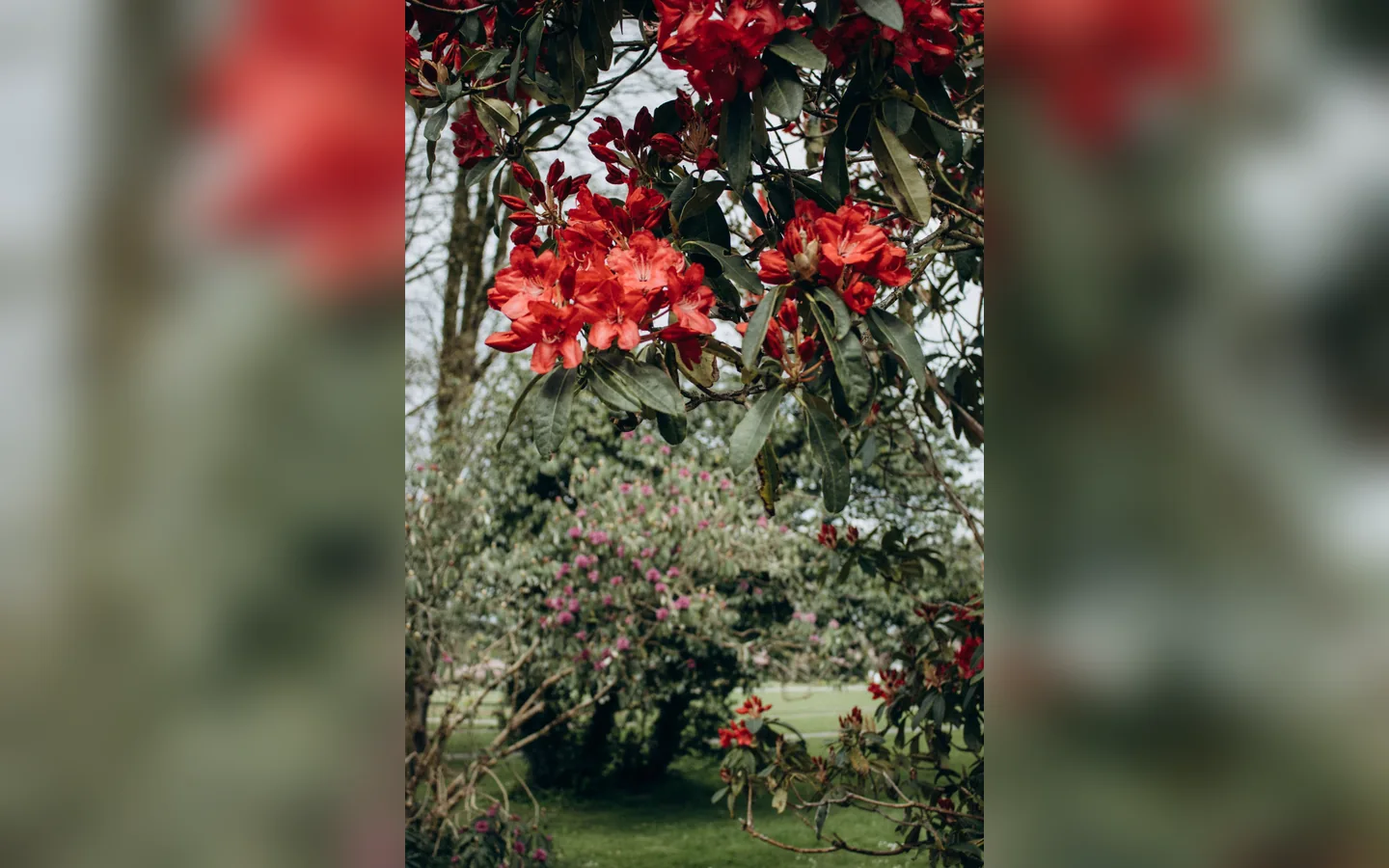
If your garden has naturally acidic soil, you've got an opportunity to grow plants that struggle on chalky ground. Rhododendrons, azaleas, camellias and blueberries can all do well in appropriate conditions.
But not every acidic garden is a damp woodland, and soil pH alone doesn't tell you whether a plant will thrive. You still need to consider drainage, light, wind and available root space.
What counts as acidic soil?
Soil with a pH below 7 is acidic. Many classic ericaceous plants prefer distinctly acidic conditions, often around pH 4.5–6.0, although exact requirements vary.
A pH of 6.5 is slightly acidic and suits a wide range of ordinary garden plants. It doesn't mean every specialist acid-loving plant will automatically thrive.
Use a soil testing kit in several positions rather than treating the entire garden as identical. Soil close to a wall, a path or imported hardcore may be different from the rest of the plot.
Best plants for acidic UK soil
| Plant | Ideal role | What it needs besides acidity |
|---|---|---|
| Rhododendron | Evergreen flowering shrub | Sheltered light shade, moist but drained soil |
| Azalea, evergreen type | Compact spring flowers | Suitable cultivar, light shade and moisture |
| Azalea, deciduous type | Scented seasonal flowers | Good light, suitable moisture and space |
| Camellia | Winter or spring flowers | Shelter from cold morning sun and summer drought |
| Pieris japonica | Evergreen spring interest | Sheltered acid soil, good drainage |
| Skimmia, suitable cultivar | Winter buds and neat foliage | Moisture and shade |
| Heather (Calluna vulgaris) | Low flowers and ground cover | Sun and free-draining acidic soil |
| Erica, suitable species | Seasonal heather flowers | pH preference varies by species |
| Blueberry | Edible fruit | Plenty of light and constant suitable moisture |
| Leucothoe | Evergreen foliage colour | Moist but drained soil, partial shade |
Some of these are closely related in their demands; others are quite different. A sunny dry heather bed and a cool moisture-retentive rhododendron bed should not be managed identically.
Rhododendrons and azaleas
These are classic acid-loving shrubs, with spring flowers and a range of mature sizes.
Most rhododendrons prefer partial shade and shelter from drying winds, while some deciduous azaleas can enjoy more sunshine when moisture is reliable.
Avoid planting a vigorous rhododendron just beneath a window because it looks small in its nursery pot. Some become substantial shrubs.
For compact varieties, choose a site with enough room for maintenance and root growth. Deep shade can reduce flowering even when the pH is perfect.
Camellias for winter and spring interest
Camellias appreciate acidic soil, sheltered conditions and reliable summer watering while next year's flower buds are developing.
A camellia that suffers severe drought in August may drop its buds months later, despite appearing healthy through the autumn.
Avoid harsh early morning sunshine on frozen flower buds, particularly in an exposed position.
Young camellias need water while establishing, and mature shrubs may still suffer on very dry sandy acidic soils.
Blueberries: productive fruit on acid soil
Blueberries need distinctly acidic conditions, typically around pH 4.5–5.5, and prefer a sunny or lightly shaded position with adequate moisture.
An ordinary acid garden may still be too dry or insufficiently acidic for heavy cropping. Test the soil rather than relying on nearby rhododendrons as proof.
Container growing in peat-free ericaceous compost can work well, especially with a large pot and rainwater where possible.
Blueberries often crop better with more than one compatible cultivar, although pollination needs depend on variety.
Heather and plants for a sunny acid border
Calluna vulgaris is useful for a sunny free-draining acidic bed. It dislikes rich soggy ground and requires far less shade than many rhododendrons.
Some Erica species also suit acid soil; others tolerate neutral or alkaline soil, so check the specific species rather than assuming all heathers have identical pH needs.
Combine low heathers with suitable grasses or compact shrubs to create year-round structure.
Plants for acidic shade
Leucothoe, pieris and suitable rhododendrons can provide foliage structure in sheltered partial shade. Skimmia may also work where the soil remains moist enough.
A deep dry area beneath conifers is difficult even when the soil is acidic. Shade-tolerant plants generally require more water during establishment than their labels suggest.
Plant smaller specimens between roots without cutting substantial tree roots.
How to test and improve acidic soil
A simple pH test helps identify the starting conditions. Check drainage and soil texture at the same time.
- Test soil from representative positions before choosing plants.
- Feel the soil beneath the surface after rain and during dry spells.
- Improve structure with suitable well-rotted organic matter where needed.
- Choose species already suited to the pH rather than changing it unnecessarily.
- Water new shrubs consistently as roots establish.
- Mulch appropriately without burying crowns or woody stems.
For general structure improvements, see how to improve garden soil naturally.
Should you acidify a neutral or chalky garden?
Changing a small amount of potting compost is much easier than permanently acidifying an entire chalky border.
Adding ericaceous compost to one planting hole in alkaline ground is not usually a long-term fix, because roots eventually grow into the surrounding soil.
If your site is naturally chalky, grow acid-loving plants in containers rather than repeatedly attempting to change the underlying geology.
For choosing growing medium in pots, see our compost for pots and containers guide.
Why do acid-loving plants have yellow leaves?
When pH is unsuitable, nutrients such as iron may become less available, leading to interveinal yellowing.
But overwatering, root disease, drought and normal leaf turnover can cause similar symptoms. Test the pH and check moisture before introducing fertiliser.
An ericaceous feed may help where nutrients are genuinely deficient, but feed cannot rescue roots sitting in stagnant water.
Rainwater and watering
Hard alkaline tap water may gradually raise the pH of small containers, especially over long periods. Rainwater is often preferable for rhododendrons, blueberries and camellias.
It still matters more to water adequately than to allow a plant to suffer severe drought while waiting for rainwater.
A water butt can help with storage. Our water butt sizing guide provides a starting point.
A simple acid-garden planting plan
In sheltered partial shade with moist but drained acid soil, position one appropriately sized rhododendron or camellia as the main shrub, repeat pieris or skimmia where space permits and use compact evergreen ground cover in front.
On an open sunny acidic bed, consider heathers instead and reserve sheltered moist corners for larger shrubs.
Plan for mature size; our plant spacing calculator can help estimate plant numbers.
Will roses grow in acidic soil?
Many roses tolerate slightly acidic to neutral soil. Strongly acidic conditions may require different plant choices or correction.
Are hydrangeas acid-loving?
Many grow over a fairly broad pH range, although flower colour in some cultivars can be influenced by soil chemistry. They aren't a substitute for a pH test.
Can I grow rhododendrons in chalky soil?
Usually not reliably in the ground. A large container with suitable ericaceous compost is generally a better option.