
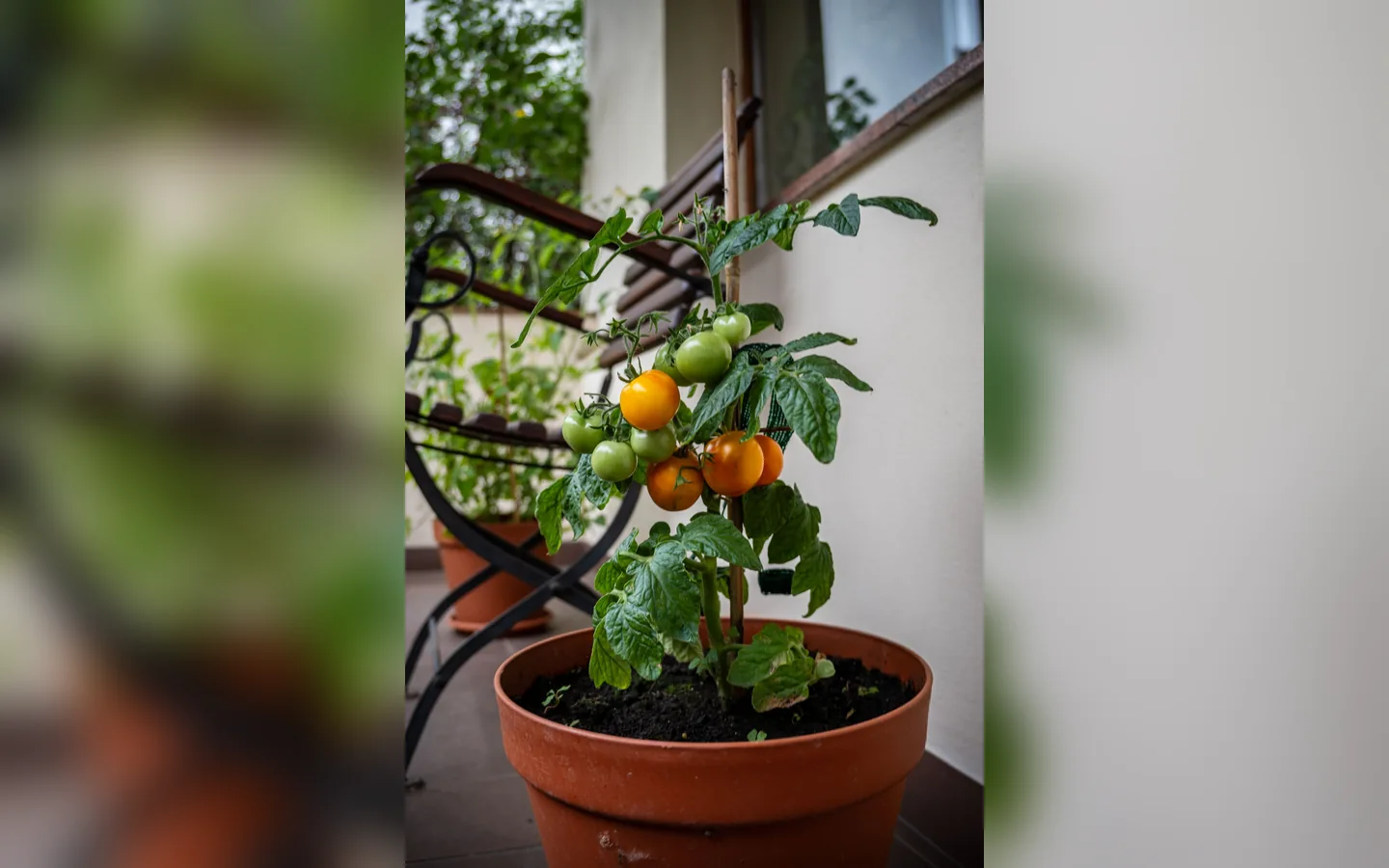
A hanging basket can produce food, but it is a harsher growing space than a large patio pot. Compost dries out faster, nutrients wash through with watering and the basket can become surprisingly heavy once it is full of wet compost and mature plants.
The most reliable edible hanging baskets in a UK garden are planted with compact crops: tumbling cherry tomatoes, cut-and-come-again salad leaves, rocket and a few compact herbs. Small chillies or peppers can work in a suitably large, sheltered basket, but they need warmth and more attention.
Don't fill a standard hanging basket with potatoes, courgettes or climbing beans because a photograph makes them look possible. A deep container on the ground is usually far better for these crops.
Which vegetables are best for a hanging basket?
| Crop | Basket suitability | Light | Key limitation |
|---|---|---|---|
| Tumbling cherry tomato | Excellent in a large, sturdy basket | Full sun | Frequent watering and feeding |
| Cut-and-come-again lettuce | Excellent in a medium or large basket | Sun to light shade | Bolting in hot, dry compost |
| Rocket | Very good in cooler spells | Sun or light shade | Fast flowering during hot weather |
| Mustard leaves and mizuna | Very good for repeated small harvests | Sun to light shade | Can become peppery or bolt |
| Baby spinach | Good in spring and autumn | Light shade to sun | Summer heat and lack of moisture |
| Compact chilli or sweet pepper | Possible in a large, warm basket | Warm, sunny shelter | Fruit load, weight and ripening time |
| Radishes | Possible in a sufficiently deep basket | Sun | Limited crop for the space used |
| Dwarf French beans | Possible but often better in a deeper pot | Full sun | Root space, support and crop weight |
Tomatoes are botanically fruits, but they're included here because they're sold and cooked as vegetables and are among the best edible basket crops.
1. Tumbling cherry tomatoes: the most productive option
A compact bush tomato bred to trail over a container is usually the strongest choice for a productive summer hanging basket. Look for a named trailing variety such as 'Tumbling Tom' rather than a tall cordon tomato.
A large, sturdy basket—around 35–40cm wide or bigger for a mature plant— is much easier to keep watered than a tiny one. It should hold enough quality compost to support roots and have a frame and fixing capable of bearing its wet weight.
Plant a young tomato centrally and let the stems trail naturally. Don't pinch the side shoots off a bush or tumbling tomato the way you would train many cordon varieties. Doing so can remove much of the cropping growth.
Place it in a sunny, sheltered spot after the danger of frost has passed. In cooler parts of the UK, don't assume a warm week in April means nights will stay warm. Harden off indoor-grown plants before leaving them outdoors.
Once flowering and cropping begin, feed according to a suitable tomato fertiliser label. Water whenever the growing medium needs it; in hot spells, that may mean daily attention, sometimes more.
Best for: someone who can check a basket regularly throughout summer.
2. Salad leaves: the easiest crops to start with
A basket of salad leaves is lighter and simpler than a heavy fruiting tomato, and you can pick a little at a time rather than waiting months for one harvest.
Good choices include loose-leaf lettuce, mixed baby-leaf lettuce, rocket and mizuna. Sow thinly across the compost surface, cover according to the packet and thin the seedlings so the roots have room to develop.
Harvest outer leaves while plants are young, leaving the central growing points intact. With a cut-and-come-again mixture, repeated harvests are possible while conditions remain suitable.
Salad leaves are particularly useful in spring and late summer. A basket against a hot south-facing wall in July can turn the compost into a dry oven. In that position, give leafy crops some afternoon shade and keep moisture consistent.
If you want a crop through the darkest months, don't count on an outdoor basket behaving like an indoor grow-light system. Growth slows markedly when days are cold and short.
For a similar small-space project indoors, see how to grow salad leaves indoors.
3. Rocket and mustard greens: good for quick pickings
Rocket and Asian salad leaves are especially well suited to smaller harvests. They don't need the substantial fruit-supporting structure that tomatoes do.
Sow a small amount every couple of weeks during suitable weather rather than using an entire packet in one basket. This spreads out the harvest and reduces overcrowding.
Keep the compost moist. When the weather becomes too hot and dry, rocket may flower early and its leaves can become stronger tasting. If that happens repeatedly, resow in a cooler spell rather than trying to force an exhausted crop to perform indefinitely.
Best for: a basket used for fresh sandwich or stir-fry leaves.
4. Compact chillies and peppers: only in a warm, sheltered spot
A compact chilli can make an attractive edible basket, particularly near a sunny south-facing wall. But it is not as forgiving as lettuce.
The plant needs a long warm growing season and enough root space to support fruit. A large basket can work if it's strong, sheltered and easy to reach for watering. A small decorative basket high in the wind is a poor choice.
Start plants under cover, move them outside only when conditions are warm enough, and allow for cooler nights that delay ripening. As fruit develops, support branches where needed and avoid overloading the hanging frame.
It is more accurate to regard peppers as a possible crop for a suitable basket, not an automatic high-yield recommendation. If maximum production is the goal, a substantial patio pot is often easier.
5. Radishes: possible, but don't expect a huge harvest
Small round radishes can be grown in deep enough hanging baskets if the compost stays evenly moist. Sow them thinly and harvest promptly before roots become tough or woody.
They are an interesting short-season crop, but not usually the best use of an expensive large hanging basket. If the basket is shallow, a harvest of tender leaves is likely to be more reliable than a crop of swollen roots.
The same caution applies to dwarf beans: they can grow in containers, but the greater weight and root-space requirements generally make a deep planter more practical than a suspended basket.
Basket size and strength: the part people forget
Choose the basket before choosing the crop.
A 30cm basket is fine for a modest display of herbs or small salad leaves, but will be demanding for fruiting tomatoes. A larger, deep basket gives more compost, more buffer against drying out and better root space.
Inspect the brackets and wall fixings. Wet compost is heavy, especially after rain, and a fruiting plant adds to the load. Don't fix a heavy basket to loose pointing or a questionable hook. If you cannot safely support and reach it, use a patio tub.
Use a basket liner suitable for edibles and water retention, but leave adequate drainage. Completely waterproofing a basket can saturate roots during heavy rain.
A peat-free multi-purpose growing medium works for most of these short-term crops. Do not fill a basket with garden soil: it may become dense, heavy and poorly aerated.
How to plant an edible hanging basket
- Choose one main crop. One trailing tomato in a substantial basket is usually better than trying to squeeze in two tomatoes, a pepper and a handful of lettuce.
- Check the hanging point and bracket. Estimate the weight when fully watered, not when empty.
- Line the basket and provide drainage. Keep water from pouring straight through, but don't trap it completely.
- Fill with suitable peat-free compost. Firm lightly without compacting it into a hard block.
- Set plants at the correct depth. Follow the crop's requirements. Don't bury the crown of a lettuce plant.
- Water thoroughly. Let excess moisture drain before hanging it high.
- Raise the basket gradually if moving plants outdoors. Harden them off to sun and wind, especially tomatoes and chillies.
Keep the basket where you can reach it. A basket that needs a stepladder every evening is much more likely to dry out and fail.
How often should you water hanging basket vegetables?
Check the basket by feeling the compost, not simply by following a fixed number of days.
In a cool spring week, a leafy basket may need little attention beyond checking after a dry spell. In hot July weather, a tomato basket can dry quickly even when it was watered earlier that morning.
Water until the root zone is properly moistened and let excess drain. If water rushes down the outside of a bone-dry root ball, take the basket down and soak the compost evenly before rehanging it.
A surprising number of poor harvests come from plants that alternate between severe drought and a sudden drenching. Consistency matters more than a fancy feed.
Feeding tomatoes and other basket crops
Fruiting plants use nutrients quickly in limited compost. Once your tomato or pepper starts flowering and producing fruit, use a suitable liquid feed at the label rate. Don't feed extra to compensate for inadequate light or chronic dryness.
Salad leaves generally need less intensive feeding during a short crop. If growth slows after repeated picking, refresh or replace the compost when replanting rather than adding fertiliser indiscriminately.
Never combine multiple strong feeds in the hope of speeding up growth. Roots can be damaged by excessive fertiliser salts in a small basket.
Common failures and how to avoid them
Tomatoes grow leaves but barely flower. Too little sun, a wrongly chosen vigorous variety or heavy nitrogen feeding may be involved. Confirm the variety and move it somewhere brighter if possible.
Salad leaves bolt immediately. The basket may be too hot or dry. Sow in cooler weather, pick young and consider a spot with afternoon shade.
The compost dries out every afternoon. The basket is too small for the crop or too exposed. Move it, increase container volume or use a suitable watering arrangement.
The basket swings hard in wind. Move it to shelter. Wind damages stems, accelerates drying and tests the fixing.
Leaves stay yellow despite feeding. Check root moisture and drainage first. Saturated, damaged roots cannot use extra fertiliser effectively.
Can you grow edible baskets through winter?
Some hardy salad leaves may grow during mild spells, especially in shelter, but do not expect summer-style harvesting in short, dark UK winter days. A hanging basket can freeze faster than a bed, and a covered basket that receives no rain can dry out unexpectedly.
Use baskets mainly for the spring-to-autumn growing season unless you have a particular hardy variety and realistic expectations.
Frequently asked questions
Can you grow carrots in hanging baskets?
Small or round carrots are possible in deep enough containers, but most baskets don't provide the depth, consistency or volume for a useful crop. A deep planter is usually better.
How many tomato plants go in a hanging basket?
For a typical large household basket, one vigorous trailing bush tomato is a practical starting point. Follow the variety's spacing guidance; overcrowding plants makes watering and feeding much harder.
Do hanging basket vegetables need full sun?
Tumbling tomatoes and peppers need plenty of direct sun. Salad leaves can tolerate light shade and may benefit from protection against the hottest afternoon sun in summer.
Can you grow vegetables in hanging baskets in the UK?
Yes. The climate is suitable for seasonal crops, provided the basket is planted at the right time and protected from frost. Choose compact varieties and allow for cold nights, wind and summer watering demands.
Where to start
If this is your first edible basket, choose a mixed salad-leaf basket for easy early results, or one trailing cherry tomato if you have a sunny wall and can water reliably. Leave climbing crops and large root vegetables for a container on the ground.
For a fruiting alternative with different seasonal care, see the companion guide to growing strawberries in hanging baskets.