
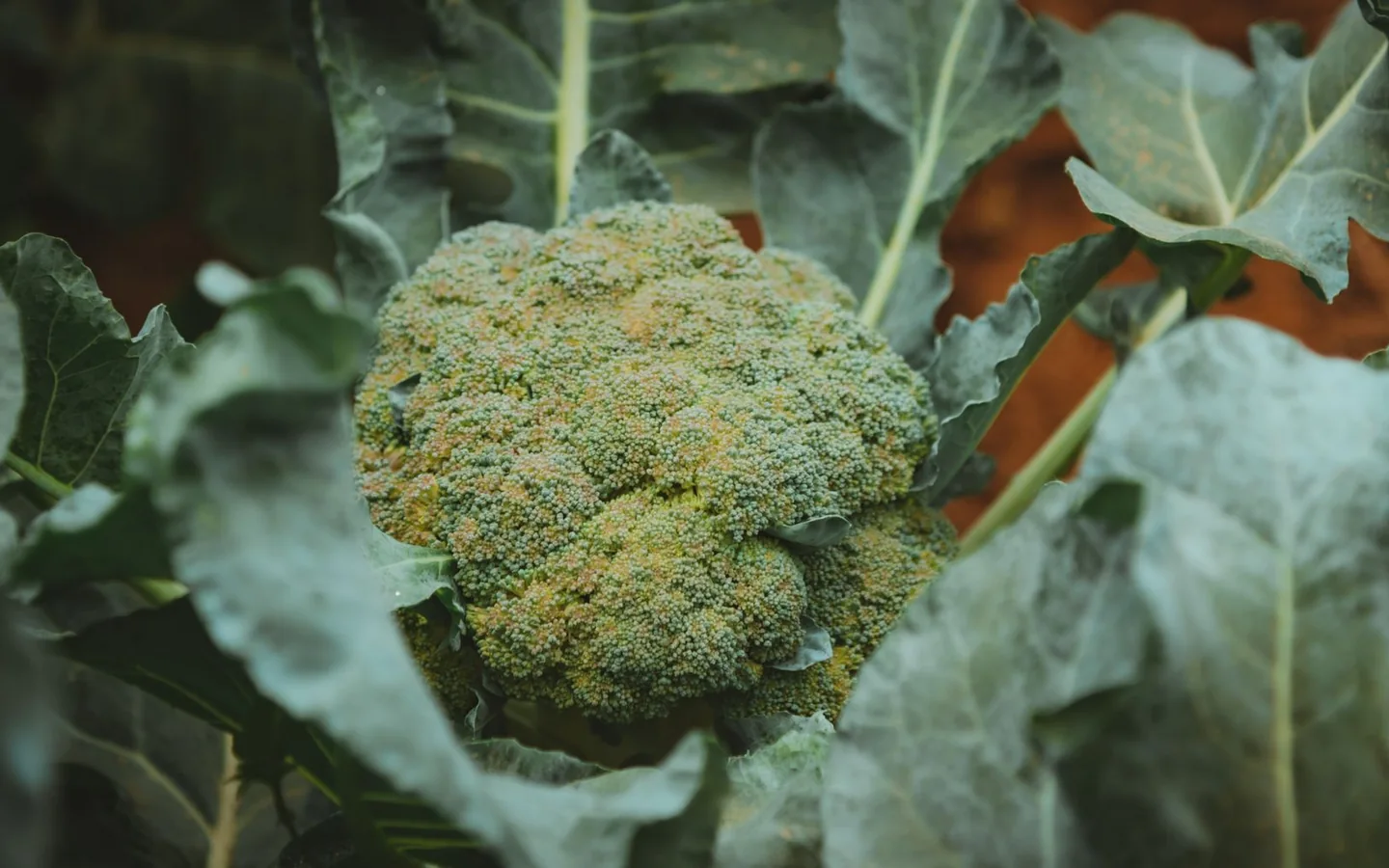
Broccoli is a useful crop for UK gardens, but the word covers two growing habits with very different calendars.
Calabrese usually produces a large central green head in summer or autumn, often followed by smaller side shoots. Traditional sprouting broccoli, including many purple varieties, often grows for much longer and may be harvested during late winter or spring of the following year.
Choose the type before you sow. Otherwise you may leave an overwintering crop in the ground expecting a September harvest.
Calabrese versus sprouting broccoli
| Feature | Calabrese | Purple or white sprouting broccoli |
|---|---|---|
| Main harvest | Summer to autumn, by variety | Often winter to spring following sowing |
| Main product | Large central head, then side shoots | Multiple small shoots or spears |
| Time to crop | Often a few months | Often considerably longer |
| Space needed | Moderate to large, variety-dependent | Frequently large and long-lived |
| Winter protection | Depends on crop and season | Hardy varieties tolerate cold |
| Best for a small bed | Quick compact cultivars | One or two plants if space allows |
The RHS notes that broccoli varieties may take four to ten months to begin cropping, with considerable variation.
Choose a suitable variety
For a small kitchen garden, a calabrese cultivar may be the most practical starting point if you want a reliable summer head.
For winter and spring harvests, choose an appropriately hardy purple-sprouting or white-sprouting variety.
Seed packets indicate the expected harvest months and plant spacing. These matter more than whether a garden centre groups every packet under “broccoli”.
A variety sold for summer harvest may not survive an exposed winter like a hardy sprouting type.
When should you sow broccoli?
Many calabrese varieties are sown from spring into early summer for summer or autumn cropping.
Sprouting broccoli is often sown in spring and planted out during late spring or early summer for later harvesting.
Sowing windows vary, so check the actual seed packet and your local climate. Very late sowing of a long-season sprouting variety may not produce a worthwhile crop.
Don't assume every broccoli seed sown in September will yield vegetables before Christmas.
A step-by-step sowing method
- Fill clean modules or a prepared seedbed with suitable growing material.
- Sow seeds at the packet depth, often roughly 2cm in outdoor seedbeds.
- Water gently and maintain reasonable moisture.
- Give emerged seedlings strong light rather than keeping them too warm.
- Thin crowded plants or pot on when roots are sufficiently developed.
- Harden off seedlings started indoors before planting out.
- Prepare their final growing space with suitable fertility and drainage.
- Transplant before plants become pot-bound.
Avoid leaving young brassicas in tiny modules for weeks after their roots have filled the compost.
How much space does broccoli need?
For many calabrese varieties, planting around 30cm apart, with approximately 45cm between rows, is a useful starting point; larger heads may need 45cm or more between plants.
Traditional sprouting broccoli can need 60–80cm spacing because plants become substantial and stay in the bed for months.
A plant bought in a small pot doesn't remain small. Check the mature dimensions before choosing its permanent place.
Use our live plant spacing guide to calculate a bed layout, then follow the cultivar's final spacing.
Site and soil requirements
Broccoli grows best in a sunny position with fertile, moist but adequately drained soil.
Brassicas generally appreciate soil that isn't extremely acidic. If clubroot has been a problem, test and manage pH rather than blindly adding lime.
Firm the soil around transplants appropriately. Some brassicas struggle in very loose soil with poor anchoring.
Our soil pH for vegetables guide explains why root health and soil chemistry matter.
Protect seedlings from pigeons
Pigeons can strip leaves from young broccoli quickly, especially when plants are small.
Fit properly tensioned bird-safe mesh on a frame, making sure birds cannot become entangled.
Check regularly and release any accidentally trapped wildlife immediately.
A few flapping CDs are not a reliable replacement for a well-designed protective cover.
Cabbage white butterflies and caterpillars
Large and small white butterflies lay eggs on brassica leaves.
Insect-proof mesh can prevent many attacks if its edges are secured and it isn't resting directly against leaves where eggs could still be laid through the openings.
Inspect the underside of leaves regularly for clusters of eggs and caterpillars.
Our pigeon and brassica protection guide covers practical physical protection.
Watering during establishment
Newly planted broccoli needs enough water while roots explore the surrounding soil.
Once established, check moisture at the root zone during dry spells, especially as heads or spears develop.
Avoid repeatedly wetting foliage with overhead irrigation where disease is a problem.
Mulch can help retain moisture, but leave plant stems and growing centres clear.
Feeding broccoli
A fertile soil containing mature organic matter is a useful start.
Depending on soil condition, hungry brassicas may benefit from suitable fertiliser applied according to label guidance.
Excess nitrogen isn't automatically helpful: it can encourage soft foliage at the expense of balanced crop development.
If heads are small, investigate spacing, water stress, variety and harvest timing before adding more feed.
When is calabrese ready?
Harvest the central head when the buds are still tight and unopened.
Use a clean sharp knife and cut the head with some tender stem attached. Avoid pulling and damaging the whole plant.
Side shoots can develop below the main head and provide further small harvests.
If the buds begin opening into yellow flowers, quality declines; regular checking during warm weather is worthwhile.
How to harvest sprouting broccoli
Sprouting broccoli is picked in several visits rather than one large central harvest.
Cut shoots when the buds are tight and before yellow flowers open, taking a portion of tender stem.
The RHS suggests shoots of around 10cm, including tender stem and small leaves, depending on the variety and maturity.
Keep harvesting young shoots; more may develop over the following weeks if the plant remains healthy.
What if broccoli flowers too early?
Hot weather, drought, cold stress at sensitive stages and simply leaving mature heads too long can all affect flowering.
A mature head that has opened isn't restored by cutting the flowers off.
Choose a suitable variety and avoid severe moisture swings. Harvest once the buds reach useful size, not when the head resembles a supermarket photograph exactly.
Rotation and clubroot
Clubroot is a soil-borne disease affecting brassicas, leading to distorted roots and stunted growth.
Avoid repeatedly planting brassicas in badly affected ground. Rotation and soil management are helpful but don't guarantee eradication.
Do not move soil from an infected bed onto clean growing areas.
If broccoli plants repeatedly wilt despite moist soil, inspect roots and investigate rather than assuming they need more water.
Common mistakes
- Confusing calabrese harvest dates with overwintering purple sprouting broccoli.
- Packing large broccoli plants too closely.
- Letting seedlings stay pot-bound.
- Ignoring pigeon and caterpillar damage.
- Harvesting after heads have opened into flowers.
- Planting into severely waterlogged soil.
- Assuming every pale plant needs another strong fertiliser dose.
Is broccoli easy to grow in the UK?
Yes, particularly calabrese, provided plants have adequate space, moisture and protection from brassica pests.
Can you grow purple sprouting broccoli over winter?
Many varieties are hardy and grown for late-winter or spring shoots; check cultivar and site conditions.
Will broccoli grow again after cutting the head?
Many calabrese plants produce side shoots after the main head is removed. Sprouting broccoli is harvested repeatedly from multiple shoots.