
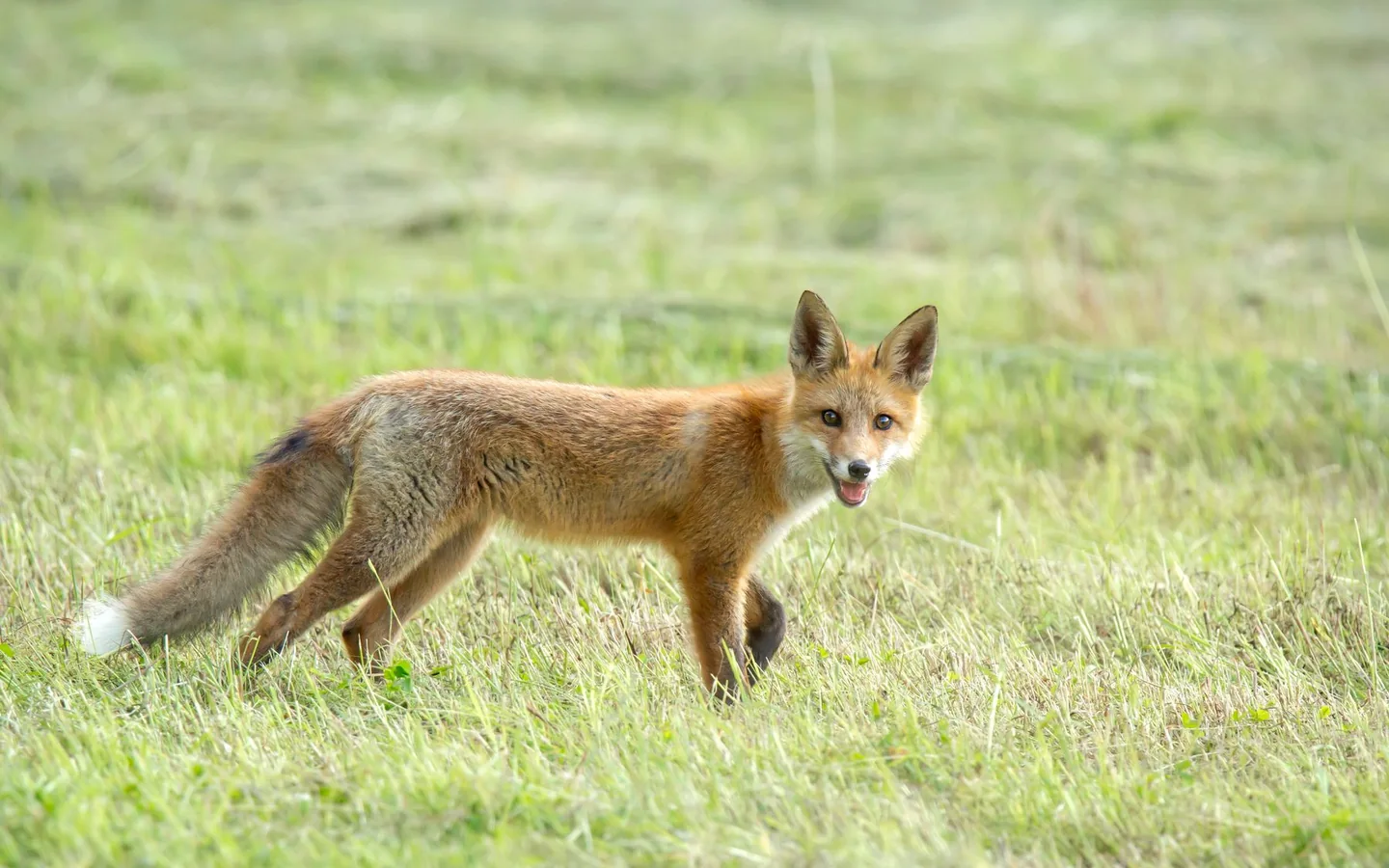
Foxes are adaptable, and an ordinary garden fence rarely stops them. They can climb, squeeze through gaps and dig underneath barriers. If they visit your garden every night, it's usually because the space offers food, shelter or an easy route through their territory.
Rather than promising to make the garden permanently fox-proof, start with the attraction that's bringing them in and protect anything vulnerable.
Why do foxes visit gardens?
Urban and rural foxes commonly investigate:
- Accessible food waste and overflowing bins.
- Pet food left outside.
- Fallen fruit, spilled birdseed and discarded scraps.
- Open compost containing food waste.
- Quiet sheltered areas under sheds or decking.
- Soft soil where they can dig, cache food or investigate insects.
- Regular paths between neighbouring properties.
A fox passing through doesn't necessarily have a den on your property. Repeated activity around a specific shed or earth mound deserves closer inspection.
What actually reduces fox visits?
| Action | What it helps with | Limitations |
|---|---|---|
| Secure food bins with robust lids | Removes an easy food source | Foxes may still pass through |
| Stop leaving pet food out overnight | Reduces repeat feeding | Other attractions may remain |
| Clear fallen fruit and edible waste | Makes foraging less rewarding | Doesn't remove natural prey |
| Protect selected beds with rigid covers | Reduces digging damage | Doesn't exclude the fox from the garden |
| Use suitable fencing for pet enclosures | Protects vulnerable animals | Needs strength and secure base |
| Assess shelter beneath sheds | Identifies possible dens | Never block a potentially occupied den |
The aim is to remove a reward for visiting without injuring wildlife.
Secure bins and compost first
Use bins with lids that close fully, and avoid leaving food waste beside them.
For ordinary home compost, follow suitable guidance on what to add. Large quantities of meat, cooked leftovers and food scraps can attract animals.
Clean up spilled bird food and fallen fruit where persistent foraging is a problem, while recognising that foxes also hunt natural prey and may visit without any human food.
How to stop foxes digging flower beds
Foxes sometimes dig shallow holes while searching for invertebrates or caching food.
Protect newly planted beds with a temporary sturdy low fence or securely supported mesh where the plants are especially vulnerable. Ensure no loose mesh can trap paws, birds or other animals.
Keep young plants well established and fill shallow holes promptly, but don't disturb a hole that may be part of an occupied den.
Don't try to deter foxes by scattering sharp objects, chilli powder or harmful chemicals across the soil.
Does ordinary garden fencing work?
Not reliably as a complete exclusion barrier. Foxes climb and can dig underneath.
Where you need to protect poultry or vulnerable domestic animals, use a properly designed predator-resistant enclosure with a strong roof or top, secure latches and a base designed to resist digging. A simple waist-high decorative fence is not enough.
For ordinary ornamental beds, protecting individual areas is often more realistic than enclosing an entire property.
Our hedge spacing guide can help plan a dense boundary planting, and the hedge planting calculator helps estimate how many shrubs to buy. Even a thick hedge isn't guaranteed to stop a determined fox.
What if a fox is living under the shed?
First establish whether the space is genuinely occupied. Foxes may use dens at different times, and cubs can be present in spring and early summer.
Do not block, fill or destroy an occupied fox earth or den. In England this is restricted, and trapping animals inside is inhumane.
If the area is unoccupied and the structure needs future proofing, seek appropriate wildlife or professional guidance before sealing access. Building work should not trap wildlife beneath floors.
If you're uncertain whether young animals are present, leave the entrance open and obtain expert advice.
Do ultrasonic fox deterrents work?
Some devices may briefly startle an unfamiliar fox, but animals can become accustomed to repeated sounds.
Results vary by site, placement and the individual animal. They are not a dependable alternative to removing food and protecting vulnerable areas.
Be considerate of neighbours and pets when installing any noise or motion-activated device. Constant bright floodlights can also disturb people and wildlife.
Scent repellents and garden sprays
Commercially marketed animal repellents can be inconsistent and usually need reapplying, especially after rain.
Use only products intended for the purpose and according to current label directions. Avoid spraying edible crops with a general animal repellent unless the label specifically allows it.
Do not improvise ammonia mixtures, bleach, poison or other caustic substances. They can injure animals, pets and people.
Foxes and pets: take sensible precautions
Never leave rabbits, guinea pigs or poultry in an insecure outdoor run overnight. Robust housing and a properly protected exercise area are important.
Supervise small pets in areas where fox encounters are likely, especially around dusk and dawn. Dogs and cats also need appropriate supervision where wildlife interactions occur.
If a fox appears sick, badly injured or unusually unafraid and distressed, keep your distance and contact an appropriate local wildlife rescue or veterinary service.
What about fox droppings?
Wear gloves when removing droppings, particularly near children's play areas, and wash hands thoroughly afterwards.
Don't handle droppings bare-handed. Keep play equipment and sandpits covered when not in use if they attract wildlife fouling.
A clean garden may still receive occasional visits; regular hygiene is a more useful goal than attempting to remove every fox.
Can you trap or relocate foxes?
In England, animal welfare law and current wildlife-control rules apply, and relocating urban foxes to the countryside is discouraged. It can cause severe stress and often doesn't solve the underlying attraction.
Never use poison, gassing or harmful traps. If a persistent problem threatens animals or property, seek qualified local advice and check current legal requirements before any control action.
A fox that disappears may soon be replaced if the food or shelter remains attractive.
A practical seven-day plan
Day one: check bins, pet food, compost and fallen fruit.
Days two to three: identify where foxes enter and what they visit; observe without disturbing a suspected den.
Days four to five: install safe protection around vulnerable beds or animal enclosures.
Days six to seven: note whether damage reduces, and improve remaining attractants rather than adding numerous scented products.
Common mistakes
- Expecting an ordinary garden fence to exclude every fox.
- Blocking a hole that may contain a fox or cubs.
- Leaving pet food out while buying expensive deterrent devices.
- Using loose netting that can entangle wildlife.
- Moving a fox without addressing why the garden attracts it.
- Treating every small hole as proof that a fox lives beneath the shed.
Can you permanently keep foxes out of a UK garden?
Total exclusion is often difficult. Removing food rewards and protecting vulnerable areas are more realistic approaches.
Do foxes visit gardens during daylight?
Yes. Seeing a fox during the day alone doesn't prove it is ill or dangerous.
Can I block a fox den under a shed?
Not while it's occupied. Get suitable advice and confirm the site is unoccupied before any exclusion work.