
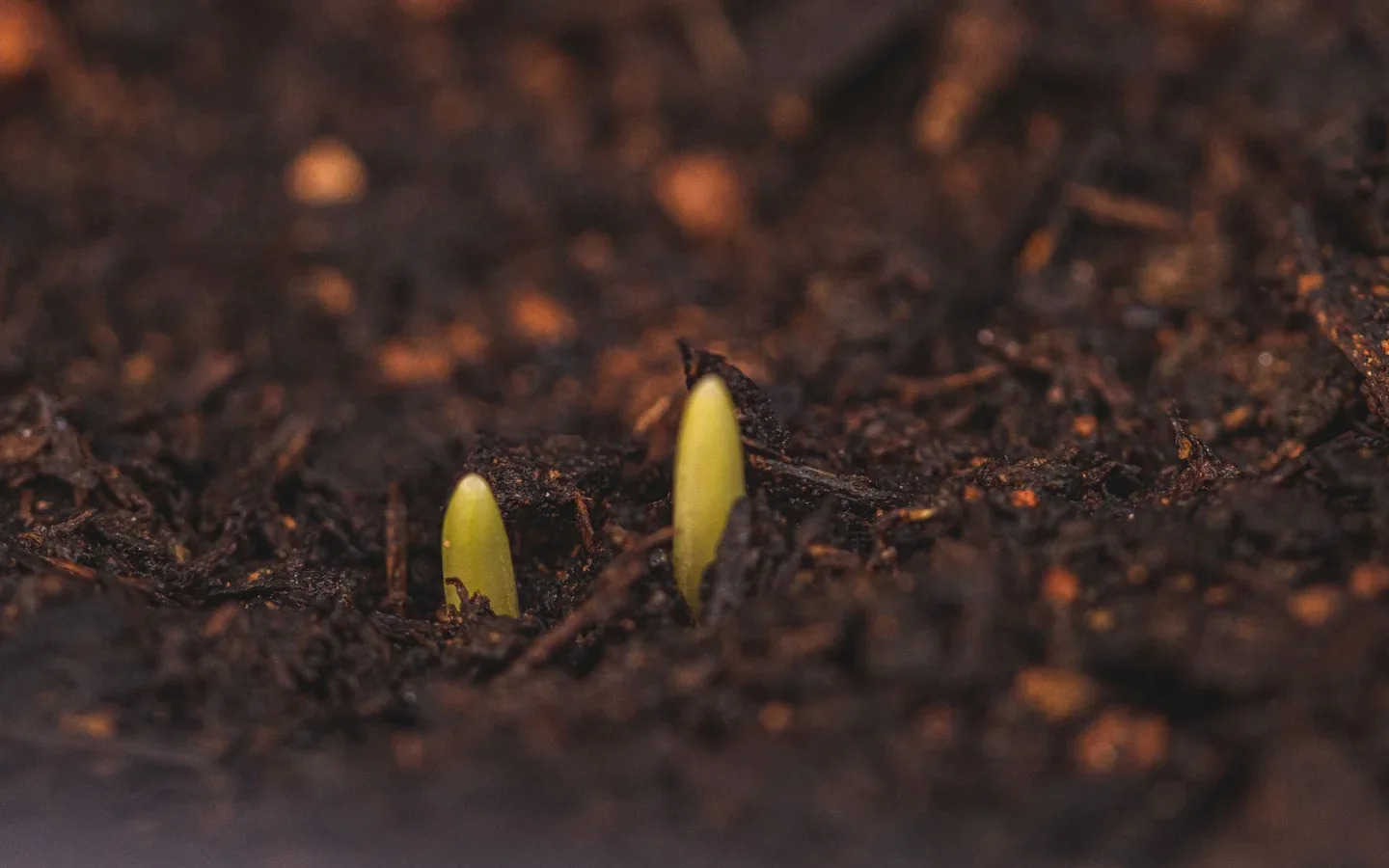
A tray of seedlings can look healthy at breakfast and contain collapsed stems by evening. When tiny plants fall over at soil level, one possible cause is damping off, a disease complex caused by organisms that attack the stem or roots.
It is distressing because the damage can spread through a densely sown tray quickly. The most effective response isn't a last-minute homemade spray. It's clean equipment, a suitable growing medium, sensible watering and good airflow before the problem starts.
What does damping off look like?
New seedlings may fail to emerge, rot just after germination or suddenly collapse.
At soil level, affected stems can become narrow, water-soaked, dark or soft. The plant may topple even though its first leaves still look green.
Several different pathogens can cause these symptoms, including Pythium, Phytophthora and Rhizoctonia species.
Not every fallen seedling has damping off. Strong water jets, rough handling, extreme heat, drought and exhausted seedlings grown with insufficient light can cause different problems. Look closely at the base before diagnosing.
Why the disease spreads in seed trays
Seedlings have tender tissues and limited reserves. A disease that damages the stem at the base can interrupt water movement almost immediately.
Conditions that often make the problem worse include:
- Soil or compost that stays very wet.
- Dense seed sowing with poor airflow.
- Reused dirty trays or tools.
- Contaminated growing medium.
- Stagnant humid air beneath a propagator lid.
- Weak seedlings growing in unsuitable conditions.
Warmth alone isn't the enemy. Many seeds need warmth to germinate. The problem is providing warmth and water without good hygiene or ventilation.
Start with clean pots and trays
Use new clean trays or thoroughly wash reusable ones before sowing.
Remove all old compost and plant debris first, then clean surfaces carefully. If the tray previously suffered damping off, consider replacing it rather than relying on casual rinsing.
If using a disinfectant, choose a product suitable for horticultural equipment and follow the instructions for concentration, contact time and rinsing.
Don't mix cleaning chemicals or leave residue in a tray that may injure seedlings.
A clean workspace matters as much as the tray. Put seed compost on a washed bench instead of a surface covered with rotting potting debris.
Use fresh, suitable seed compost
Buy or prepare a fine, free-draining peat-free seed compost suited to the seeds being grown.
Avoid reusing compost from a previous diseased seed tray. It may contain pathogens or decaying material.
Homemade garden compost is useful as a soil improver but may not be the safest material for delicate seed propagation unless appropriately prepared.
A fine compost allows moisture to be distributed without becoming a waterlogged mass. Large pieces and compacted clods create uneven germination.
Our pot compost guide explains why a container's growing medium needs to balance moisture retention with air.
Sow thinly instead of making a carpet
Sowing very densely creates competition and traps humid air among stems.
Follow packet spacing and depth advice. Seeds are easier to manage when they are distributed over a small surface rather than dumped into one corner.
Thin excess seedlings once they can be handled. Keep only the healthiest plants when space is limited.
If you are raising many vegetables, use separate modules so individual plants have their own root space.
Dense sowing makes it harder to spot the first collapsed stem and remove it before neighbouring seedlings are affected.
How to water safely
Pre-moisten compost before sowing, then maintain appropriate moisture for germination.
Use a fine watering rose or water from below when suitable, so the surface doesn't get blasted into little craters.
Do not let a tray sit permanently in a deep reservoir of stagnant water. Drain excess after watering when possible.
Check moisture below the surface. A little dryness at the top doesn't always mean every root is dry.
Water demand changes after germination. As seedlings grow, they may need more water overall but still require drainage and periods when the surface is not continually saturated.
Should you water with tap water?
For delicate seedlings grown indoors, mains water is often the safer option if stored rainwater may contain plant debris and pathogens.
Rainwater can be useful for established garden plants, but poorly maintained water butts may accumulate organic material.
If you use collected rainwater, keep storage covered and clean and avoid using obviously contaminated water.
Don't add vinegar, bleach or household chemicals to watering cans in an attempt to sterilise the plants.
Improve airflow without chilling the seedlings
A propagator cover helps during germination by maintaining moisture. Once seedlings have emerged, gradually open vents or remove the cover according to their needs.
Keep seedlings in good light and avoid a permanently sealed humid box.
Air movement should be gentle. A cold draught directly across tiny plants can stress them, while a lack of airflow encourages stagnant conditions.
If condensation is streaming continuously down the lid, check whether humidity is excessive.
Our indoor seed-starting guide can help you match seed conditions to the available light and room temperature.
Temperature and light matter too
Seed packets provide suitable germination temperatures. Follow them rather than leaving every tray on a very hot radiator.
Once seeds emerge, give plants strong appropriate light. Warmth without enough light produces stretched, weak stems that are more susceptible to toppling for several reasons.
A seedling that's merely leggy often has a long pale stem, rather than a dark, pinched, rotting stem at the compost surface.
If you are unsure about the difference, inspect several plants closely before discarding the entire batch.
What to do when seedlings start collapsing
- Stop routine watering until you've checked compost moisture.
- Remove collapsed seedlings carefully, along with any visibly affected surrounding material.
- Isolate the tray from other seedlings.
- Improve ventilation while maintaining suitable temperatures.
- Inspect unaffected seedlings for dark narrowed stems.
- Clean tools and work surfaces after handling the tray.
- If losses continue, discard the affected growing medium safely and start again with fresh clean supplies.
A collapsed seedling whose stem has rotted through is not normally recoverable.
Do not transplant apparently diseased seedlings into the garden in the hope that fresh air will cure them.
Should you use fungicide?
The exact cause of damping off is often unclear without specialist diagnosis. A product suitable for one fungal problem may not affect an organism such as Pythium.
In the UK, only use plant-protection products authorised for the specific purpose and follow the legal label conditions.
Preventive hygiene and correct growing conditions are usually more practical for household seed trays than routine chemical treatments.
Don't use improvised mixtures of washing-up liquid, cinnamon, hydrogen peroxide or household bleach on seedlings merely because they appear in online recipes. They can be ineffective or damaging.
Can you reuse a tray after an outbreak?
It is safer to replace badly affected trays, especially inexpensive cells with tiny crevices that are difficult to wash thoroughly.
If reusing, remove debris, wash carefully and follow appropriate disinfection guidance. Let the equipment dry before storage or the next use.
Throw away compromised compost rather than combining it with fresh material for another seed sowing.
Keep the next sowing smaller and well-spaced so you can monitor it easily.
How to save unaffected plants
If healthy seedlings remain in separate cells, consider moving those cells away from the outbreak and monitoring them carefully.
Don't disturb tender roots unnecessarily. Transferring every small seedling into a new pot can create stress and introduce contamination if tools are not cleaned.
Check the base of stems daily during the critical early period.
The objective is to protect sound plants while removing clear disease, not rescue a rotting tray by overhandling it.
A preventive checklist before every sowing
Before opening the seed packet, make sure:
- The tray and tools are clean.
- The compost is fresh and free-draining.
- Drainage holes are open.
- Seeds can be sown at sensible spacing.
- Watering can be done gently.
- There is adequate light after germination.
- Propagator covers can be ventilated.
- You have labels to avoid leaving trays unattended while guessing what they contain.
This basic preparation is usually quicker than losing and resowing an entire tray.
Other reasons seedlings fall over
Legginess: insufficient light and excessive warmth can produce long, fragile stems.
Drying out: roots and stems may wilt without the dark pinched lesion typical of some damping-off infections.
Overwatering: even without a specific pathogen, saturated compost can suffocate roots.
Heat scorch: a closed propagator in strong sun can damage leaves in a short time.
Mechanical injury: pulling out crowded seedlings may harm their neighbours.
Correctly identifying the cause prevents repeated mistakes.
Quick answers
Can damping off be cured? Affected collapsed seedlings rarely recover. Prevention and protecting unaffected plants are the priorities.
Does cinnamon prevent damping off? There isn't dependable evidence to rely on household cinnamon as a routine control.
Why do seedlings fall over at soil level? Damping off is one possibility, especially with pinched dark stems, but growing conditions and physical injury can also cause collapse.
Should I keep a propagator closed all day? Not after seedlings need ventilation; adjust the lid to suit the plants and conditions.
A clean tray, fresh seed compost and controlled moisture do most of the work. They are far more reliable than trying to rescue a collapsing seedling with a last-minute treatment.