
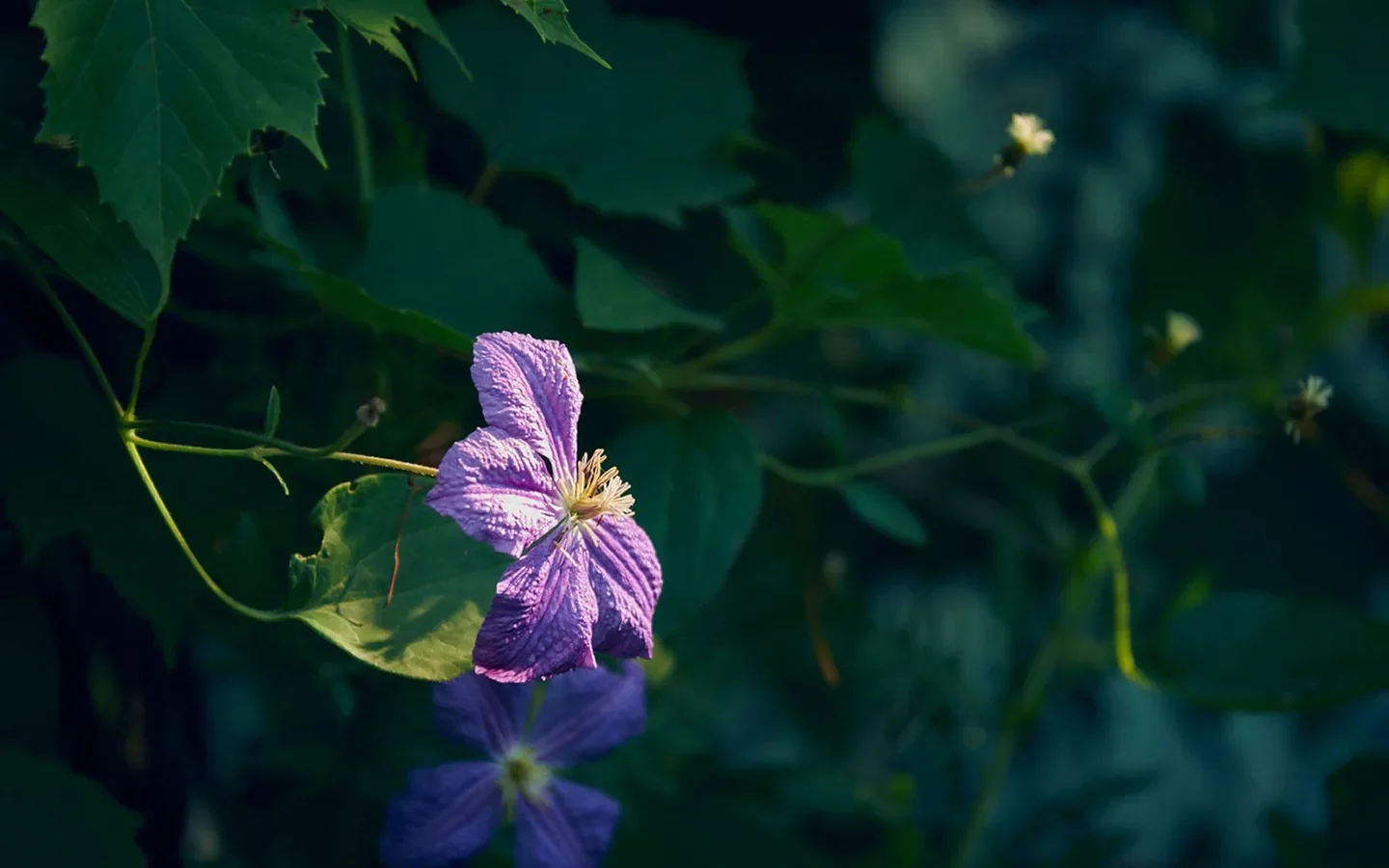
Group 2 clematis are prized for their large flowers in late spring and early summer, sometimes followed by a second flush. They're also the group most often damaged by overenthusiastic winter pruning.
The important rule is preserve the healthy framework of last year's stems. Those stems carry shoots that will make many of the early flowers. You can tidy dead growth in February and selectively trim after the first bloom, but you should not automatically cut every established Group 2 plant to the ground.
First confirm it really is Group 2
Clematis are commonly divided into three pruning groups based mainly on flowering time and the age of the wood that carries flowers.
| Pruning group | Flowering habit | Usual pruning |
|---|---|---|
| Group 1 | Winter or early spring flowers on older shoots | Light pruning after flowering |
| Group 2 | Large flowers in May–June on shoots from previous year's growth, sometimes later repeat | Light February pruning and optional trim after first flowers |
| Group 3 | Mid- to late summer flowers on current year's new shoots | Hard annual cut in late winter |
A label identifying the group is useful, but it isn't always retained. If you're unsure, observe flowering over a full season before cutting heavily.
Common Group 2 clematis varieties
Examples include 'Nelly Moser', 'The President', 'Doctor Ruppel', 'Duchess of Edinburgh', 'Bees' Jubilee' and several other large-flowered hybrids.
Some cultivars flower again on new growth later in the summer if the plant is healthy and growing conditions are favourable.
Don't classify a plant purely by flower colour. Purple, pink and white clematis occur in multiple pruning groups.
Check the exact cultivar name when possible, particularly if it's a valuable established climber.
When to prune in the UK
The main tidy is carried out in late winter or early spring, commonly February, as buds begin to show but before extensive new growth has developed.
Choose a suitable frost-free working day where practical and inspect the stems from top to bottom.
Some plants can also be lightly pruned after the first flush of flowers in early summer to encourage a possible later display.
Avoid making a heavy cut in autumn just to make the support look neat; you may remove stems that should flower the following spring.
The correct February pruning method
- Identify the main living framework of the plant.
- Follow each thin or dead-looking shoot downwards to find healthy buds.
- Remove clearly dead, damaged or weak material.
- Make the cut just above a strong pair of buds.
- Retain healthy older stems that will carry spring flowering shoots.
- Untangle and tie in stems gently where necessary.
- Remove old debris from the support and ground without damaging new buds.
- Step back and check that growth is distributed evenly.
The aim is not a dramatic reduction in height. It's to leave a healthy framework while removing parts that cannot flower well.
How to spot live buds and dead wood
In late winter, living stems may look brown and dry, even when healthy buds are present.
Start at the shoot tip and work down, looking for plump green or swelling buds.
Don't rip out an entire long stem because the first few centimetres are dead. It may be alive lower down.
If a section is clearly brittle and dead without living buds below, cut it back appropriately to healthy growth.
Use sharp secateurs to avoid crushing thin stems.
Why severe pruning removes the first flowers
Group 2 clematis flower in spring from shoots arising on growth made the previous year.
Cutting all stems down to 20cm every February removes much of that material. The plant may still grow vigorously and sometimes flower later, but you've lost much of the intended early display.
This is why advice for Group 3 cannot be copied onto Group 2 without qualification.
A plant that's been pruned hard by mistake will often recover. Give it time to make a new framework rather than cutting it down again when the first flowers fail to appear.
Pruning a new plant in its first spring
There is an important exception. Many newly planted clematis benefit from an initial harder pruning to encourage shoots from low down.
Unless the plant already has several healthy stems growing from the base, a first-spring cut to a strong pair of buds at about 30cm above soil level can encourage branching.
This may reduce early flowers, but it can create a better long-term framework.
For a new plant, structural establishment can be more valuable than one immediate flush of bloom.
Training stems while they grow
Clematis climb using leaf stalks that wrap around thin supports. A very thick timber post may not offer enough small surfaces to grip.
Provide suitable trellis, wire or mesh supports securely fixed with enough space for growth.
Spread stems across the frame rather than allowing everything to rise in one narrow bundle. Tie them loosely if necessary.
Check ties periodically so expanding stems aren't cut into by tight material.
Should you prune after the first flowers?
After the May–June flush, remove spent blooms back to a strong pair of buds or a healthy sideshoot just below the flowers.
You can shorten selected overlong shoots to encourage fresh growth and potentially another flush later in summer.
But repeat flowering isn't guaranteed. It depends on the cultivar, conditions and health of the plant.
Avoid cutting the entire flowering framework hard in midsummer unless managing an overgrown plant with a deliberate renovation plan.
Overgrown Group 2 clematis
A neglected clematis may produce a tangled canopy with flowers far above eye level and little foliage near the base.
Rather than stripping it completely in one day, consider reducing selected stems more firmly after flowering and repeating over two or three seasons.
This gradually encourages lower growth while preserving some flowering display.
If the plant is very old and unmanageable, a hard renovation cut may be possible, but expect to lose the usual early flowers for at least one season.
What if your clematis is on a shared fence?
Prune from your side where safely accessible and avoid damaging the neighbour's property or the plant's main structure.
Don't pull old shoots forcibly from narrow trellis where living stems are intertwined.
A smaller, well-trained climber is easier to maintain than one allowed to build an impenetrable mass across several panels.
If the fence itself needs replacement, plan how to protect the plant's main crown and roots before work begins.
Does Group 2 need feeding after pruning?
A healthy clematis benefits from suitable soil moisture, light and a reasonable supply of nutrients.
You don't need a strong feed simply because you've removed a few dead tips.
Where soil fertility is poor, an appropriate balanced fertiliser and organic mulch can support spring growth. Keep mulch clear of the crown and avoid piling it against stems.
Our mulch-depth guide explains how to apply material without burying delicate growth points.
Watering and root conditions
Clematis roots need moisture without persistent waterlogging. A newly planted climber may require regular checks during dry weather.
If a plant produces short weak shoots, look for dry roots, soil compaction and damage before reaching for more fertiliser.
The soil beside a fence can be surprisingly dry because rain is partly sheltered by the structure.
Water deeply where needed and use a suitable surface mulch to reduce evaporation.
Frost and young shoots
New clematis growth can suffer during severe late cold weather, even when the established plant survives winter well.
On a small newly planted vine, temporary fleece may be useful for a forecast frost without crushing stems.
Remove covers when conditions improve so the plant receives light and ventilation.
Our frost-protection guide explains suitable temporary measures; enclosing a mature climber permanently is rarely practical.
When the plant flowers only once
A Group 2 clematis may flower well in May and June but not again later.
That isn't automatically a sign of poor pruning. Some cultivars repeat more readily than others, and summer drought, shade or a weak root system can limit later flowering.
Deadheading may help, but don't remove healthy foliage aggressively.
Check that the plant has enough light and water before adding strong fertiliser.
If buds fail to appear
First check whether you cut off most of last year's growth in late winter.
Then assess whether the remaining stems are alive, whether the plant received enough light and whether roots have suffered drought or waterlogging.
Clematis wilt can cause sudden stem collapse in susceptible types. Remove clearly affected growth and seek a proper diagnosis if this is recurring.
Not every dead-looking shoot is wilt; frost injury and natural winter dieback can produce similar symptoms.
Common mistakes
Cutting all mature stems hard every February: removes spring-flowering wood.
Assuming flower colour identifies the pruning group: it doesn't.
Mistaking brown stems for dead stems: living buds can occur on old-looking growth.
Leaving an untrained vine tangled: flowers end up high and unevenly distributed.
Pruning the first flush too severely: may prevent a later display or weaken growth.
Ignoring dry soil by a fence: can reduce flowering despite correct pruning.
Quick answers
Should Group 2 be cut to the ground? Not routinely on established plants; retain healthy older framework.
Can I prune in March? In a cold district the spring stage may be later, but prune before growth becomes extensive.
Should I cut off spent flowers? Yes if you want to encourage a possible later flush.
What if I cut too hard? Let it regrow and rebuild its framework; early flowering may be lost temporarily.
Think of Group 2 as a light tidy followed by optional summer shaping. Preserve last year's healthy growth and you'll retain the buds that make the early display special.