
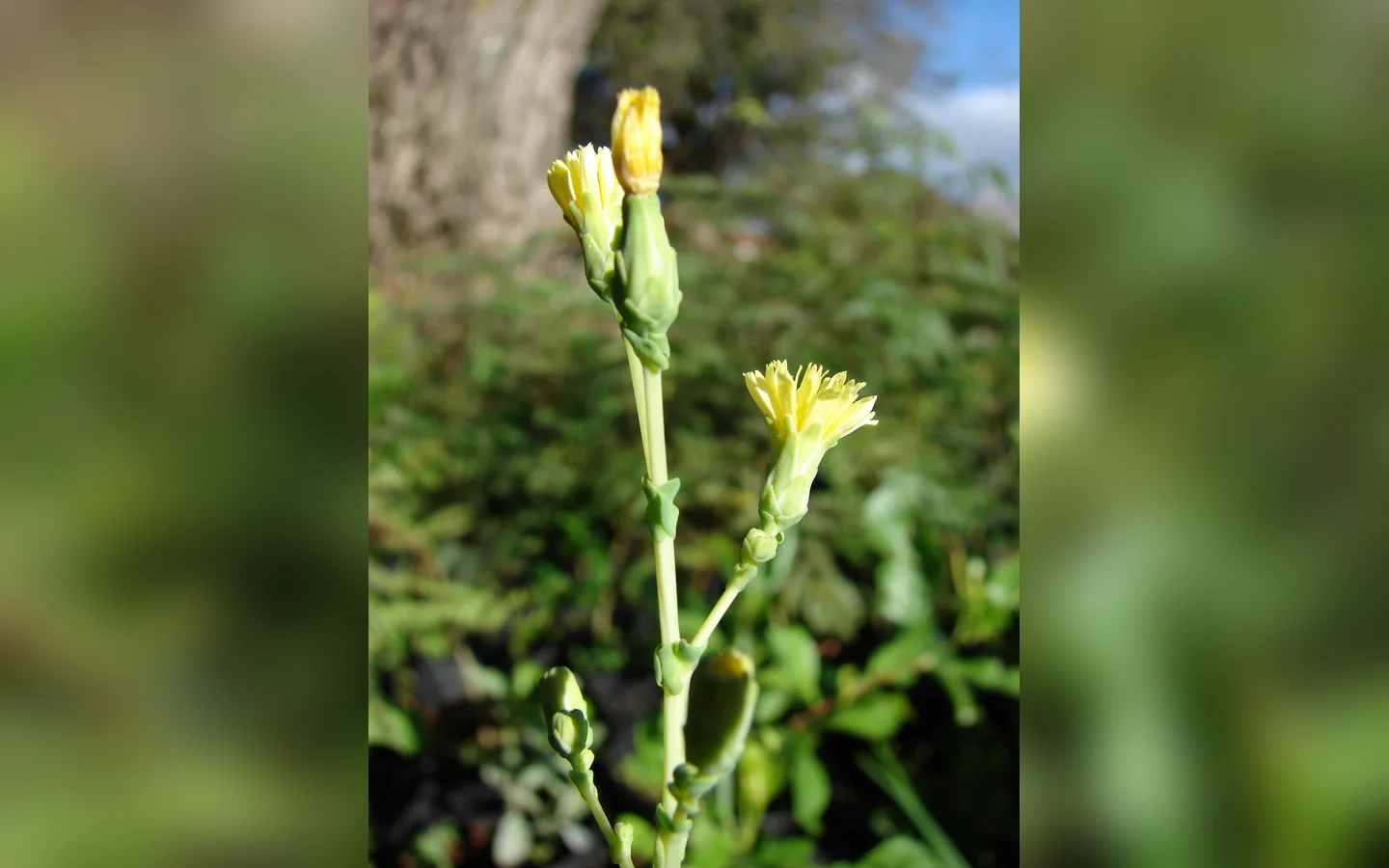
A lettuce that suddenly sends up a tall central stem has started bolting: switching from producing tender leaves to flowering and making seed. The leaves often become increasingly bitter, and cutting the stalk off doesn't turn the plant back into a young salad.
The best results come from preventing premature bolting before it starts—with suitable sowing dates, steady root moisture, light shade in hot weather and varieties chosen for the season.
What does bolting lettuce look like?
The centre begins growing rapidly upward rather than forming a compact head or producing a low rosette of leaves.
As the stem lengthens, small flower buds appear. Mature foliage may become tougher, narrower or sharply flavoured.
| Sign | Likely explanation |
|---|---|
| Tall central stalk | Plant switching to flowering |
| Narrow new leaves on stem | Reproductive growth beginning |
| Bitter leaves | Common consequence of bolting |
| Small flower buds | Seed production underway |
| Wilting without a tall stalk | May be drought, heat or root trouble instead |
| Yellow old leaves near base | Can be ageing or nutrient/root problems |
Don't diagnose bolting from a single yellow leaf. Look for the distinct elongated centre.
Why lettuce bolts
Bolting is part of lettuce's normal life cycle, but conditions can accelerate it.
High temperatures and dry conditions are common triggers, especially for summer sowings. Day length and variety also affect when a lettuce flowers.
The RHS notes that hot dry weather can lead to premature flowering and bitter leaves. Some lettuces naturally resist bolting longer than others.
You can't stop a mature lettuce flowering forever. The aim is to harvest edible leaves first.
Choose varieties for summer
Some cos and crisphead types are bred or selected to be more resistant to premature bolting.
Read the seed packet for claims about summer cropping and recommended sowing dates. A variety labelled for spring or autumn may struggle if sown during a July heatwave.
Loose-leaf lettuces can be harvested early and repeatedly before plants reach flowering size.
Avoid relying on one cultivar for every month of the year.
Sow little and often
A common mistake is sowing an entire packet in March and leaving a dozen mature lettuces in the bed while trying to eat them.
Sow small batches at intervals suited to your household's appetite and the variety's maturity.
By the time the first plants are ready to bolt, younger seedlings should already be growing.
Our plant spacing guide helps you plan the final area needed for staggered crops.
Provide light shade in hot weather
Lettuce generally appreciates good light, but intense midday summer sun can increase heat and water stress.
In a hot spell, a position with morning sun and light afternoon shade may be useful. Temporary horticultural shade mesh can also reduce heat.
Don't put lettuce in permanent deep shade expecting strong growth; insufficient light can make plants weak.
Remove temporary shading when weather cools if plants are otherwise short of light.
Keep moisture more consistent
Letting the root zone dry severely, then soaking it, can stress growing lettuce.
Check soil beneath the surface and water when needed, rather than using a rigid daily schedule.
A gentle low-flow hose or watering can directed at the soil is preferable to repeatedly drenching foliage.
Avoid waterlogged roots: saturated soil can damage plants just as drought can.
Does mulch help?
A light suitable mulch around established lettuces can reduce surface evaporation and keep roots cooler.
Use compost or another appropriate material, keeping the growing centre and stems uncovered.
Thick damp mulch against tender young lettuce may harbour slugs or cause rot. Inspect after wet weather.
Our mulch depth guide explains when and how to apply organic surface covers.
Can you sow lettuce during a heatwave?
You can try, but germination can become unreliable in very warm soil.
Start seed in a cooler shaded propagating area or choose a suitable cooler spell. Water carefully so the surface remains moist without going stagnant.
Don't leave a closed seed tray in direct blazing sun.
If repeat sowings keep failing in midsummer, temporarily switch to another salad crop suited to the season and resume lettuce as temperatures fall.
What about container-grown lettuce?
Pots and shallow troughs dry and heat rapidly, especially on dark paving.
Move suitable containers away from the harshest afternoon sun and check the root zone frequently.
Choose enough soil volume for the number of plants. A crowded small trough can dry far quicker than a deep vegetable bed.
Ensure drainage holes are open and don't leave plants sitting in stagnant water.
Can you cut off the flower stalk to stop bolting?
Removing the flowering stem may temporarily delay seed production, but it generally won't restore tender pre-bolting leaves.
The plant has already shifted into reproductive growth. Flavour and texture usually continue deteriorating.
If a few leaves still taste acceptable, harvest them promptly. Otherwise remove the plant and sow a new batch.
A bolted lettuce can be left to flower for seed or wildlife interest if you want, but don't expect it to become a productive headed lettuce again.
Is bolted lettuce safe to eat?
Leaves of bolted lettuce aren't automatically poisonous simply because the plant is flowering, but they are often too bitter and tough to enjoy.
Avoid eating decayed, mouldy or contaminated leaves. Taste a sound clean leaf if uncertain about quality.
For salads, younger replacements are generally more pleasant than forcing a spent plant to keep cropping.
Nitrogen feeding and stress
Lettuce needs suitable nutrition, but excessive fertiliser is not a cure for summer bolting.
A struggling plant may have dry roots, cramped spacing or inappropriate exposure.
Check crop health before adding feed. If leaves are pale and growth slow in a container, a suitable modest feed might help—but it won't reverse flowering once it starts.
Avoid high-concentration fertilisers during severe heat stress.
When should you harvest?
Hearting varieties should be picked once they reach a useful size and before the flower stem begins rising.
Loose-leaf types can be harvested from the outside or cut according to cultivar instructions while young.
Checking plants every few days in warm weather prevents suddenly discovering that the entire bed has bolted.
Don't wait for an enormous supermarket-sized head if your variety is intended for baby leaves.
What can you grow after removing bolted lettuce?
A fast-growing succession crop can use the space if the season allows.
In mid-summer, suitable radishes, beetroot or later salad leaves may be options, depending on temperature and available time.
Remove old lettuce roots if diseased or badly decayed, prepare a fine seedbed and water germinating seeds carefully.
Our soil preparation for spring planting guide covers general seedbed structure; in summer, moisture management becomes more urgent.
Common mistakes
- Sowing all lettuces on one day.
- Leaving mature heads unharvested through hot weather.
- Planting into the hottest dry patio container without shade.
- Trying to fix bolting through heavy fertiliser.
- Cutting the flower stalk and expecting sweet new leaves.
- Drenching roots that are already waterlogged.
- Ignoring cultivar-specific summer suitability.
Can you stop lettuce bolting once it starts?
Not reliably. You may remove the flower stalk, but the plant usually won't return to producing tender young salad leaves.
Does shade stop bolting?
Light shade during hot weather can delay heat stress and help, but cannot prevent all flowering.
Which lettuce is best for summer?
Choose a cultivar labelled for summer use and good bolt resistance, and sow small successive batches.