
A houseplant can look thirsty while its roots are sitting in water. When the roots lose oxygen and start to decay, the plant struggles to take up moisture — so the leaves droop even though the compost is soaked.
Before you reach for the watering can, check what's happening below the soil. Root rot is often a symptom of persistent waterlogging, although disease-causing organisms may also be involved.
How do you know if a houseplant has root rot?
No single leaf symptom proves it. Look for several signs together:
- Compost stays wet much longer than normal.
- Leaves yellow, wilt or fall despite the pot being damp.
- Growth slows and stems may soften near the compost surface.
- The growing mix sometimes develops a sour or stagnant smell.
- On inspection, some roots are dark, mushy, hollow or break apart easily.
Healthy roots are usually firm. Depending on the plant, they may be white, cream, pale brown or naturally dark. Colour alone isn't enough: judge the texture and condition of the root tissue.
A wilting plant with dry compost needs a different response. Test the moisture before deciding on treatment.
First steps: stop adding water and examine the plant
- Lift the inner pot out of its decorative cover and empty any standing water.
- Check the drainage holes. A blocked hole or a tightly fitting outer pot can keep compost saturated.
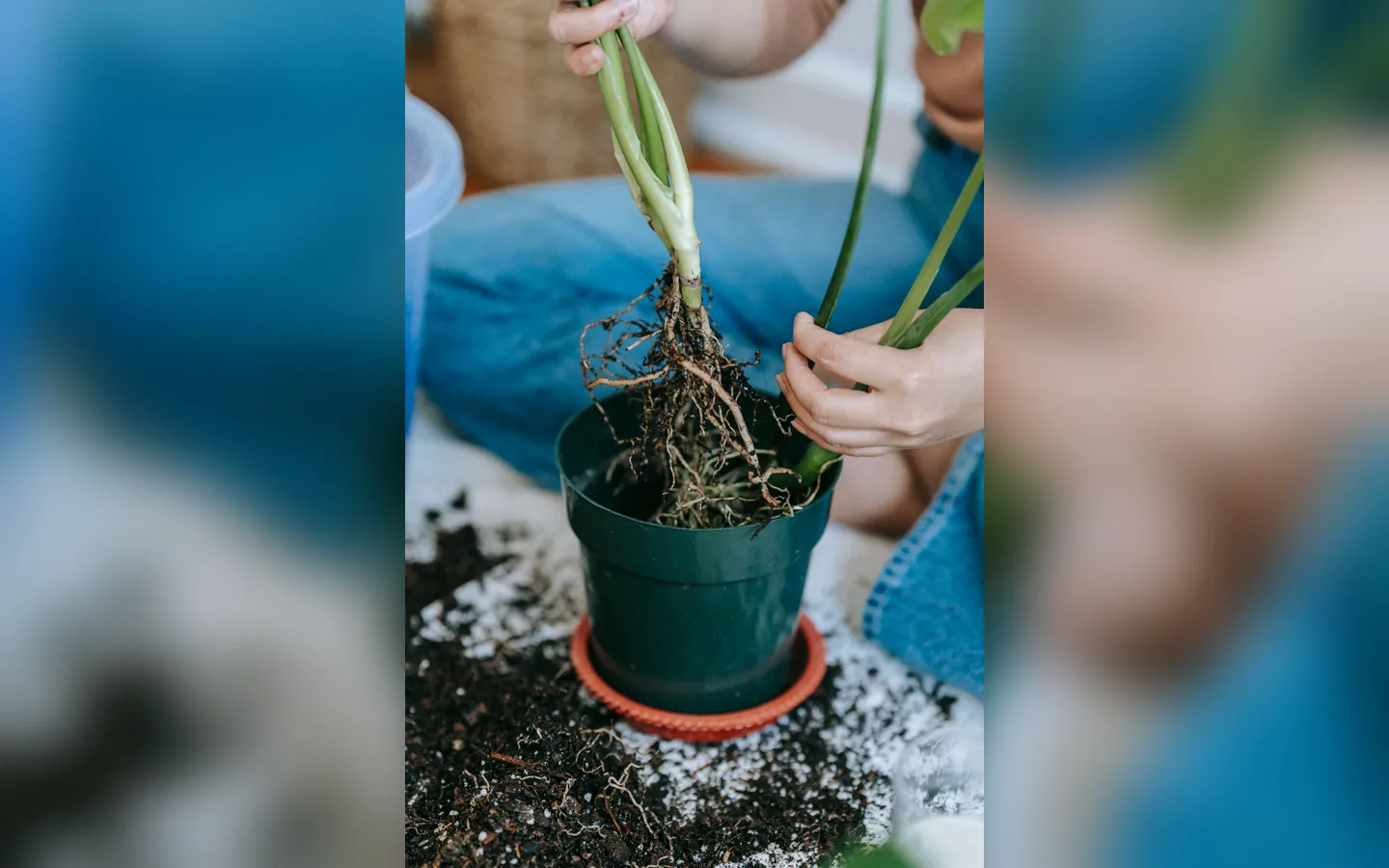
- Gently remove the plant if its condition is deteriorating. Hold the rootball rather than pulling by the stems.
- Inspect the roots. Firm roots are worth preserving; slimy, collapsing roots are not.
- Assess the extent. A few damaged roots on an otherwise firm rootball offer a better chance of recovery than a root system that has almost entirely disintegrated.
Don't keep shaking every plant out of its pot just because one old leaf turned yellow. Reserve a thorough inspection for persistent problems or clear signs of decline.
How to treat root rot in a houseplant
If you find decayed roots, use clean scissors or secateurs to remove only tissue that is clearly dead or mushy. Wipe or disinfect the tool between plants. Avoid cutting healthy roots simply to make the rootball look neat.
Remove saturated, broken-down compost gently. Repot into fresh potting mix suited to the species — an airy, free-draining blend for aroids, for example, and a different mix for moisture-loving ferns. A drainage hole is essential.
Choose a pot that fits the remaining healthy roots. After heavy root loss, that may mean using the same size or a slightly smaller pot rather than moving into a large new one. The purpose is to avoid leaving a tiny rootball surrounded by wet compost.
Set the plant at its original growing depth, firm lightly and place it in appropriate light and warmth away from harsh sun. Water carefully to settle the mix only as needed, then allow it to drain. Recovery depends on the species and how much healthy root remains.
Our step-by-step houseplant repotting guide explains choosing pot size and dealing with tangled roots.
Should you use fungicide, cinnamon or hydrogen peroxide?
Don't start by pouring household chemicals through the pot. These are often promoted as universal cures online, but the cause of decline may simply be a waterlogged, airless root zone. Some pathogens are not fungi, and a generic fungicide is not a guaranteed fix.
Correct the growing conditions first. If several plants repeatedly develop unexplained root disease despite appropriate care, seek a reliable diagnosis before considering any product approved for that specific problem.
Sprinkling cinnamon onto the surface does not replace removing damaged roots and correcting drainage.
Why root rot keeps coming back
The pot has no drainage hole
An ornamental pot without a hole can look attractive, but there's no easy way to remove surplus water. Put the plant in a draining nursery pot inside it, and empty runoff each time you water.
The pot is much too big
A small root system cannot use moisture in a large volume of compost quickly enough, especially in low light. Repot in sensible increments, not into the biggest pot available.
The compost is compacted
Broken-down or unsuitable compost holds too much water and too little air. Match the growing mix to the plant; don't try to fix dense soil by adding a layer of stones at the bottom.
Watering follows a fixed timetable
A plant in a cool room in December may use a fraction of the water it needs in June. Judge moisture at root depth instead of watering by the date.
Poor light or low temperature slows drying
Less light means slower growth and often slower water uptake. A pot on a cold windowsill can stay wet for too long even when the room feels comfortable.
The seasonal pattern is covered separately in our winter houseplant root-rot guide, including cold window ledges and heating-related mistakes.
What if there are almost no healthy roots left?
If the main stem is still firm, you may be able to take a healthy cutting from a plant that propagates readily, such as pothos or tradescantia. Use a clean cut above diseased tissue and root the cutting in a suitable medium. Not all houseplants propagate this way.
Where the crown and entire stem base have rotted, there may be no practical way to save the plant. It is better to discard severely decayed material than keep soaking the pot in hope.
Preventing root rot: a simple checklist
- Use containers with open drainage holes.
- Avoid oversized pots and dense mixes.
- Check moisture below the surface before watering.
- Drain excess water from saucers and decorative covers.
- Give plants the light and temperature their species needs.
- Reduce watering when growth slows.
- Examine persistent problems early, before the whole root system is affected.
A healthy-looking plant doesn't need preventive treatments. Good drainage, the right potting mix and sensible watering do most of the work.
Can a houseplant recover after root rot?
Yes, if enough healthy roots and growing tissue remain. Recovery can take weeks or longer; some species will regrow faster than others.
Can root rot spread between plants?
Some root-disease organisms can spread through contaminated water, compost or tools. Avoid reusing suspect potting mix, clean containers and don't share runoff between plants.
Is yellowing always root rot?
No. Natural leaf ageing, drought, cold, low light and pests can all cause yellow leaves. Check the compost and roots before making a diagnosis.