
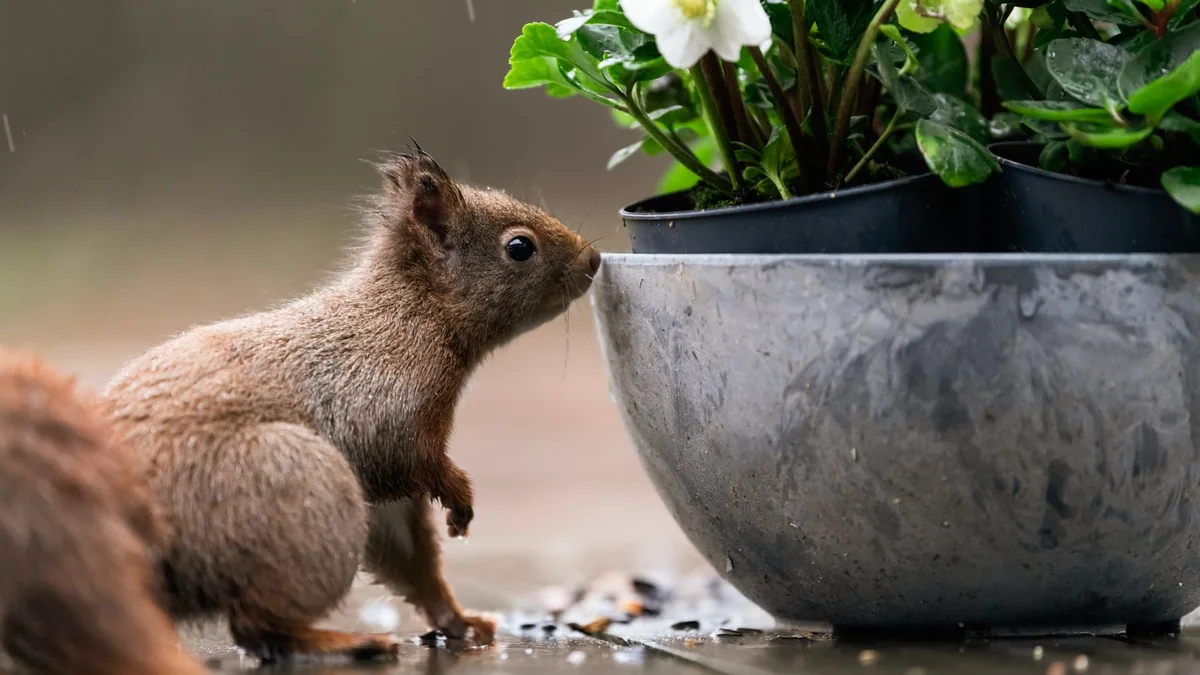
You've spent an afternoon planting tulips in a large pot. The next morning there's compost all over the patio, a crater where the bulbs were, and a squirrel sitting on the fence looking pleased with itself.
The frustrating part is that the squirrel may not even have eaten your bulbs. Loose, freshly disturbed compost is attractive for burying or retrieving food, so squirrels sometimes excavate containers simply because they're easy places to dig.
The most reliable solution is a physical barrier across the top of the pot, secured so a squirrel cannot lift or push underneath it. Smells, powders and novelty deterrents are much less dependable.
The quickest way to protect bulbs in pots
Use a piece of sturdy wire mesh, such as chicken wire or another suitably sized rigid mesh, that covers the full top of the container.
- Cut the mesh slightly larger than the opening of the pot.
- Turn down, cover or blunt any sharp cut ends so they cannot injure people or animals.
- Secure the mesh firmly around the rim or to a stable frame. Loose mesh that can be lifted at one side won't offer much protection.
- Check it after storms and whenever the compost has been disturbed.
- Once shoots begin to emerge, adjust or remove the mesh before the leaves get trapped or damaged.
The aim is to block digging during the period when the newly planted compost is tempting, not to keep the plants covered all spring.
Why do squirrels dig up tulip bulbs?
Squirrels can investigate freshly planted soil and sometimes remove bulbs. Tulips and crocuses are particularly vulnerable; daffodils are usually less attractive.
A squirrel may also use a pot as a convenient food store. The disturbed surface of recently planted compost makes it easier to dig than a hard garden path or established turf.
That's why a pot can be vandalised even when all the bulbs are still present.
If you find little piles of compost around the rim and shallow holes in the surface, a squirrel is a likely suspect. Look for repeat daytime activity, especially in autumn when squirrels are caching food.
Don't assume every missing bulb was taken by squirrels, though. Mice and voles can reach bulbs from below or through gaps and may leave different signs. We cover that separately in how to stop mice eating flower bulbs.
How to fit a wire cover without damaging the bulbs
The cover needs to be rigid and secure, but it must not crush emerging shoots.
For a round pot, bend a piece of mesh over the rim to form a shallow cap. On a large container, a lightweight wooden or metal frame can keep the mesh steady.
For a rectangular trough, fix the mesh to a simple frame or fasten it at several points along the edge. Avoid leaving a loose flap at the corners.
If the pot is deep and you need a temporary cover during autumn, you can leave a little space above the compost so new growth has room to emerge before you remove it.
Use fasteners that can be released without turning the whole pot upside down. Check regularly as the bulbs develop.
Be careful with plastic netting. Loose or damaged netting can entangle wildlife, and squirrels may chew through it. A securely fitted wire barrier is usually a better option.
Will gravel, stones or sharp grit stop squirrels?
A thick top-dressing of gravel can make a pot look tidy and may reduce casual digging, but it isn't a dependable barrier against a determined squirrel.
Large stones can be moved, and a heavy layer may make it harder to see whether the compost is drying or staying too wet.
Don't bury small bulbs under a huge amount of decorative stone just to deter wildlife. The pot still needs an appropriate planting depth, breathable growing medium and working drainage holes.
If squirrels are repeatedly emptying the container, use a physical cover first. Gravel can be a finishing layer, not the main defence.
Does chilli powder or pepper work?
Scent-based home remedies are inconsistent. Rain washes many off quickly, and a squirrel that is determined to dig may ignore them altogether.
Chilli powder, pepper and other irritating substances can get into animals' eyes or noses. They're not a good first choice when a secure mesh cover solves the problem without relying on irritation.
Commercial scaring devices can also lose their effect as animals become accustomed to them. A motion-activated device might deter an occasional visitor, but it does not protect the actual planting area if it fails.
You don't need to turn the patio into an obstacle course of homemade repellents.
Can you protect bulbs planted directly in the ground?
Yes, but it takes a slightly different approach.
For a small patch of newly planted tulips or crocuses, secure wire mesh over the soil surface so it cannot be lifted or pulled aside. Remove it when shoots emerge and no longer need protection.
In a place with persistent digging, bulbs can be planted inside a suitable wire-protected basket or an aquatic planting basket with additional protection over the top. Set the basket at the proper planting depth and make sure the roots can grow.
Avoid leaving thin, loose netting or exposed sharp wire where birds, hedgehogs or other animals might become caught.
If you are planting hundreds of bulbs across a lawn, individual cages are rarely practical. Concentrate protection on the beds and pots that attract repeated attention.
Are some bulbs less attractive to squirrels?
Tulips and crocuses commonly attract problems. Daffodils are generally less palatable, so including them in a display may reduce interest in some situations.
But planting daffodils beside tulips is not a guarantee that the tulips will be left alone. If your pots have been repeatedly raided, the wire cover is still worth fitting.
Choose bulbs for the flowers and conditions you want, then protect the vulnerable kinds appropriately.
If your planting season has slipped, our guide to when to plant tulip bulbs explains the correct timing.
What if squirrels have already dug everything up?
First, recover any bulbs you can find.
Check for damage. Firm, sound bulbs can often be replanted promptly. Discard those that are soft, rotting or badly damaged. If the bulbs have been exposed for a short time, keep them from drying out while you prepare the pot.
Replace compost that has spilled out and make sure the container's drainage holes remain clear. Replant at the correct depth rather than burying bulbs excessively deep to compensate.
Finally, fit the wire cover before you walk away. Replanting without changing the protection often means repeating the same job the next morning.
If you aren't sure whether it's still suitable to plant a particular bulb, see what bulbs you can plant in winter.
How long should you leave the protection on?
Newly planted pots are often most vulnerable before the bulbs root and the surface settles.
Keep the cover in place until the risk of digging has reduced, but inspect regularly. Remove it or raise it as soon as shoots need space, rather than letting leaves grow through narrow openings.
A squirrel may still investigate compost later, so monitor a pot that has been repeatedly targeted.
In a greenhouse or securely enclosed area, you might be able to move pots temporarily instead, but the growing position must still suit the bulbs. Don't move hardy outdoor bulbs into a hot room just to keep them away from squirrels.
Do you need to trap or remove the squirrels?
Usually not. It's difficult to exclude squirrels from a whole garden, and removing individual animals rarely provides a lasting solution.
For containers, protecting the planting surface is simpler and more predictable than trying to control every squirrel in the neighbourhood.
Never use poison, sticky traps or devices that can harm non-target wildlife. If you have a serious problem beyond bulb damage, seek appropriate professional advice and follow local wildlife law.
The best approach for next autumn
Plant your bulbs at the correct depth in a large pot with good drainage. Straight after planting, secure a reusable wire cover across the top, making sure there are no sharp edges or loose sections.
Check the pot after windy weather and remove the cover before it obstructs new shoots.
Once you've made a cover that fits, you can reuse it each autumn. That's far less work than replanting a patio full of tulips every time a squirrel visits.