
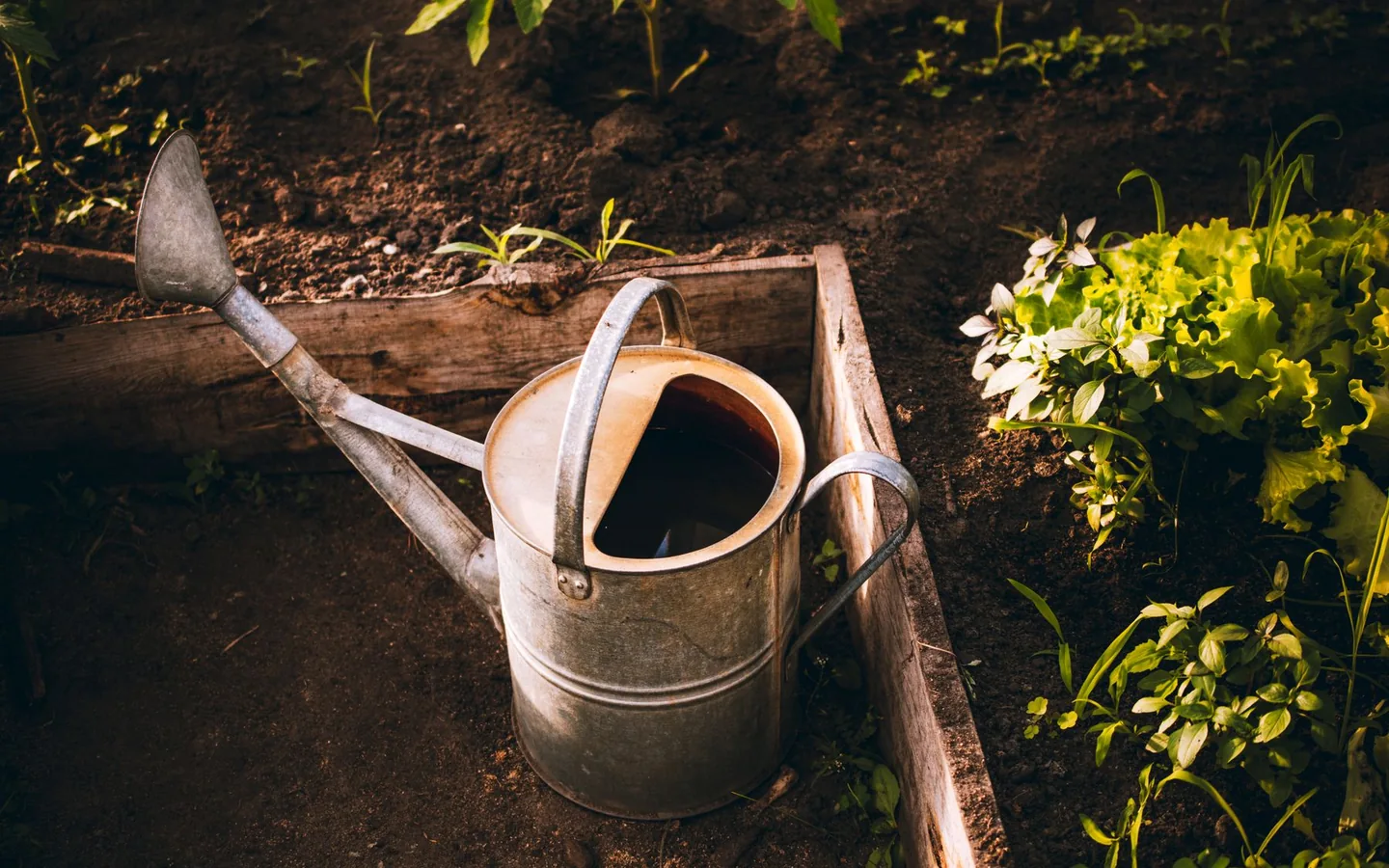
Raised beds can warm up sooner in spring and drain more freely than surrounding ground. That's useful for vegetables, but it also means they may dry more quickly in warm weather, especially when the frame is shallow or stands on paving.
Water the soil where roots are growing, not simply the visible surface. A light sprinkling may darken the top but leave the roots dry several centimetres below.
How often should you water a raised bed?
There is no reliable daily schedule for every raised bed.
A shallow bed with small seedlings may need attention frequently during a hot spell. A deep bed filled with soil and holding established root crops may keep enough moisture for longer.
| Conditions | What to do |
|---|---|
| Mild wet spring | Check before watering; rain may supply enough |
| Dry warm weather | Check root-zone moisture more often |
| Newly sown seeds | Keep the germination zone consistently moist |
| Established deep-rooted vegetables | Water deeply when needed, not endlessly at the surface |
| Containers or raised beds on paving | Monitor more closely; finite soil volume dries more easily |
| Cold autumn or winter | Avoid watering saturated dormant beds |
Use the plants and the actual soil as your guide.
How to check moisture properly
Press your finger a few centimetres into the growing medium, away from the main stems.
For a deep bed, use a suitable hand trowel or soil probe in an undisturbed spot to check moisture farther down.
If the top is dry but soil near the active roots remains adequately moist, another heavy watering may be unnecessary.
If the rooting zone is clearly dry, water enough to reach it and allow the bed to drain.
Wilting isn't always a sign of drought: waterlogged roots and heat stress can also cause leaves to droop.
The best time of day
Morning is usually convenient because plants have moisture for the warmer hours and foliage can dry if it gets splashed.
But if a newly transplanted lettuce is clearly drying out in the afternoon, water it when needed rather than following a strict clock.
Avoid routinely soaking foliage at night in crowded conditions, where prolonged leaf wetness may encourage fungal problems.
The priority is appropriate root-zone moisture, not whether a garden influencer prefers 6am or 7pm.
Should you water deeply or little and often?
It depends on the crop stage.
New seeds and tiny seedlings have roots close to the surface. Their germination zone must not repeatedly dry out, so gentle, relatively frequent watering may be necessary.
Established vegetables usually benefit from slower watering that reaches deeper into the soil rather than repeated tiny sprinkles.
Do not force a newly germinated carrot to rely on deep moisture before its roots have reached it.
Watering vegetables with different needs
| Crop | Key watering priority |
|---|---|
| Lettuce and salad leaves | Maintain even moisture for tender leafy growth |
| Carrots | Keep moisture steady during early establishment; avoid extreme dry-to-wet swings |
| Beans and peas | Give particular attention at flowering and pod formation |
| Courgettes | Large leaves and swelling fruits increase water demand |
| Brassicas | Avoid repeated drying during strong growth and head development |
| Tomatoes in a raised bed | Keep root-zone moisture relatively consistent during fruiting |
| Potatoes in a bed | Avoid severe stress during tuber development |
These are relative priorities, not fixed litres per plant. Weather, soil and root development determine how much water is needed.
How to water without washing soil away
Use a watering can with a fine rose for delicate seedlings or a gentle hose attachment for larger crops.
Aim water at the soil surface, not at the base of leaves with a strong jet. A slow application has time to infiltrate instead of running over the edge.
If the surface has become hard and dry, apply a little water first, allow it to soak in, then continue gradually.
Don't dig into the roots just to confirm that every watering session reached the bottom.
Does raised-bed depth affect watering?
Yes. A deeper soil volume often provides more space to store moisture, although the plant's root reach and the growing medium still matter.
A bed on concrete behaves differently from an open-bottomed bed over good soil. Its roots cannot explore below the base and its drainage outlets must work.
Our raised-bed soil calculator helps estimate growing volume, useful when deciding whether a shallow frame will hold enough soil for larger vegetables.
Is drip irrigation worth installing?
A simple drip line delivers water close to the root zone and can reduce unnecessary wetting of paths and leaves.
It is helpful for larger raised-bed plots or gardeners who struggle to visit every bed during warm weather.
But an emitter can block, a hose can leak and a timer can be set badly. Check the soil after running the system rather than trusting the clock.
Use suitable filters, pressure controls and backflow prevention where necessary. Test a new system before leaving it unattended.
Soaker hoses versus drip emitters
A soaker hose releases water slowly along its length. It can be convenient in a densely planted bed but may deliver unevenly if lengths and pressure aren't managed.
Drip emitters deliver at more defined points, useful for larger individual crops. However, an emitter placed far from the growing roots may do little good.
Match the system to plant spacing, supply pressure and soil texture rather than buying the most complicated kit.
Can mulch reduce watering?
A suitable layer of organic mulch helps shade the soil and reduce evaporation.
Apply it after the bed is properly moist, leaving space around small seedlings and stems. Don't bury delicate growing points under damp material.
Mulch cannot cure waterlogging or eliminate the need to inspect moisture during prolonged heat.
Our mulch depth guide explains appropriate surface use and why piling mulch against stems is a problem.
What happens during a heatwave?
Check shallow beds and new transplants more frequently. Wind can dry a raised bed quickly even when the air temperature doesn't seem extreme.
If a deep-rooted vegetable is in genuinely dry soil, water thoroughly and slowly.
Avoid adding large amounts of water to a bed already saturated because a plant happens to be wilted at noon.
Consider a temporary appropriate shade for recently transplanted seedlings, but don't leave vegetable crops in unnecessary deep shade once established.
Watering while away
For a short absence, a reliable person or a tested drip system may be more dependable than a new timer installed the night before leaving.
Check all hose connections and measure delivered water. An empty water butt won't keep irrigation running without sufficient storage.
Choose crops and mulch arrangements that suit how often you can actually tend the bed.
Rainfall doesn't always reach the roots
A short shower may wet leaf surfaces and a few millimetres of soil without replenishing the whole root zone.
After rain, check deeper moisture before deciding that irrigation is unnecessary. Conversely, a prolonged wet spell may mean no watering is needed for days.
Raised beds with water standing around the roots require drainage correction rather than more irrigation.
Water-saving habits that work
- Water the root zone slowly rather than soaking paths.
- Keep soil covered with suitable mulch once plants establish.
- Use adequate soil depth for the crop.
- Fix hose leaks and blocked irrigation emitters.
- Group thirsty crops where watering access is convenient.
- Capture rainwater safely where practical.
- Don't leave weed-filled beds competing with vegetables for moisture.
Common mistakes
- Watering every raised bed the same amount daily.
- Judging moisture only by a dark surface.
- Using a strong hose jet on newly sown seed.
- Treating a shallow paved bed like a deep in-ground one.
- Buying irrigation equipment without checking delivery.
- Allowing mulch to cover seedling crowns.
- Watering already waterlogged roots because leaves wilt.
Do raised beds need watering every day in summer?
Some may during hot weather, especially with seedlings or limited soil volume. Check the actual root-zone moisture rather than following a fixed rule.
Are soaker hoses better than hand watering?
They can be useful for regular beds, but neither is universally superior. Proper placement and checking delivered moisture matter.
Should raised beds be watered at night?
Morning is often convenient, but plants need water when the roots are dry. Avoid unnecessary prolonged wet foliage overnight.