
A flower border doesn't have to mean daily deadheading, endless staking and replacing everything each spring. The easiest gardens use plants that are naturally suited to the soil, light and local climate, with enough space to reach their mature size.
"Low-maintenance" isn't the same as "never touch again". Newly planted flowers need watering, and even tough perennials eventually need tidying or division. But with the right choices, most of the work can be concentrated into a few sensible seasonal sessions.
Perennial flowers are a good starting point
Hardy perennials return year after year, unlike most annual bedding plants that must be replaced or resown.
A tough clump-forming perennial can cover soil, crowd out some weeds and flower reliably once established.
Look for plants that don't need permanent staking, constant feeding or winter lifting in your location.
The same plant can be low-care in one garden and troublesome in another. Lavender is easy in sunny well-drained soil but may rot in a wet clay border.
Ten dependable choices
| Flower | Usual conditions | Main maintenance |
|---|---|---|
| Hardy geraniums | Sun or part shade, depending on cultivar | Occasional cutback or division |
| Nepeta (catmint) | Sunny, well-drained border | Trim after main flowering if desired |
| Rudbeckia 'Goldsturm' | Sun, moisture-retentive but draining soil | Cut down old stems in late winter |
| Hylotelephium (sedum types) | Sun, well-drained soil | Remove old stems in spring |
| Bergenia | Sun or part shade | Remove damaged leaves occasionally |
| Hellebores | Partial shade and humus-rich soil | Tidy damaged leaves around flowering |
| Alchemilla mollis | Sun or part shade | Manage prolific seedlings |
| Echinacea | Sunny, free-draining soil | Leave or remove winter seedheads |
| Astrantia | Sun or light shade with steady moisture | Divide congested clumps when needed |
| Salvia nemorosa | Sunny border, adequate drainage | Trim flowered stems for a possible repeat |
These vary greatly in height and spread. Don't plant them all into one tiny bed.
Hardy geraniums for forgiving borders
Hardy geraniums are useful around shrubs and along path edges. Many tolerate ordinary British conditions and produce flowers with little fuss.
Choose a cultivar to suit the space. Geranium macrorrhizum is a good groundcover candidate, while 'Rozanne' can spread widely over neighbouring plants.
Cut back tatty foliage after flowering where the cultivar responds well. Some produce fresh leaves and additional flowers.
Avoid assuming every geranium likes exactly the same degree of shade or moisture; check its label.
Nepeta for a long soft edge
Catmint produces masses of small blue or purple flowers and soft aromatic foliage.
It is particularly effective spilling over a sunny path or alongside roses, but give it room. A plant that looks tiny in April can form a broad mound by July.
A trim after the main flowering often refreshes growth and may encourage another display.
It generally dislikes persistently waterlogged soil. In wet clay, a better-drained planting position may save more work than repeated replacement.
Rudbeckia and late-summer colour
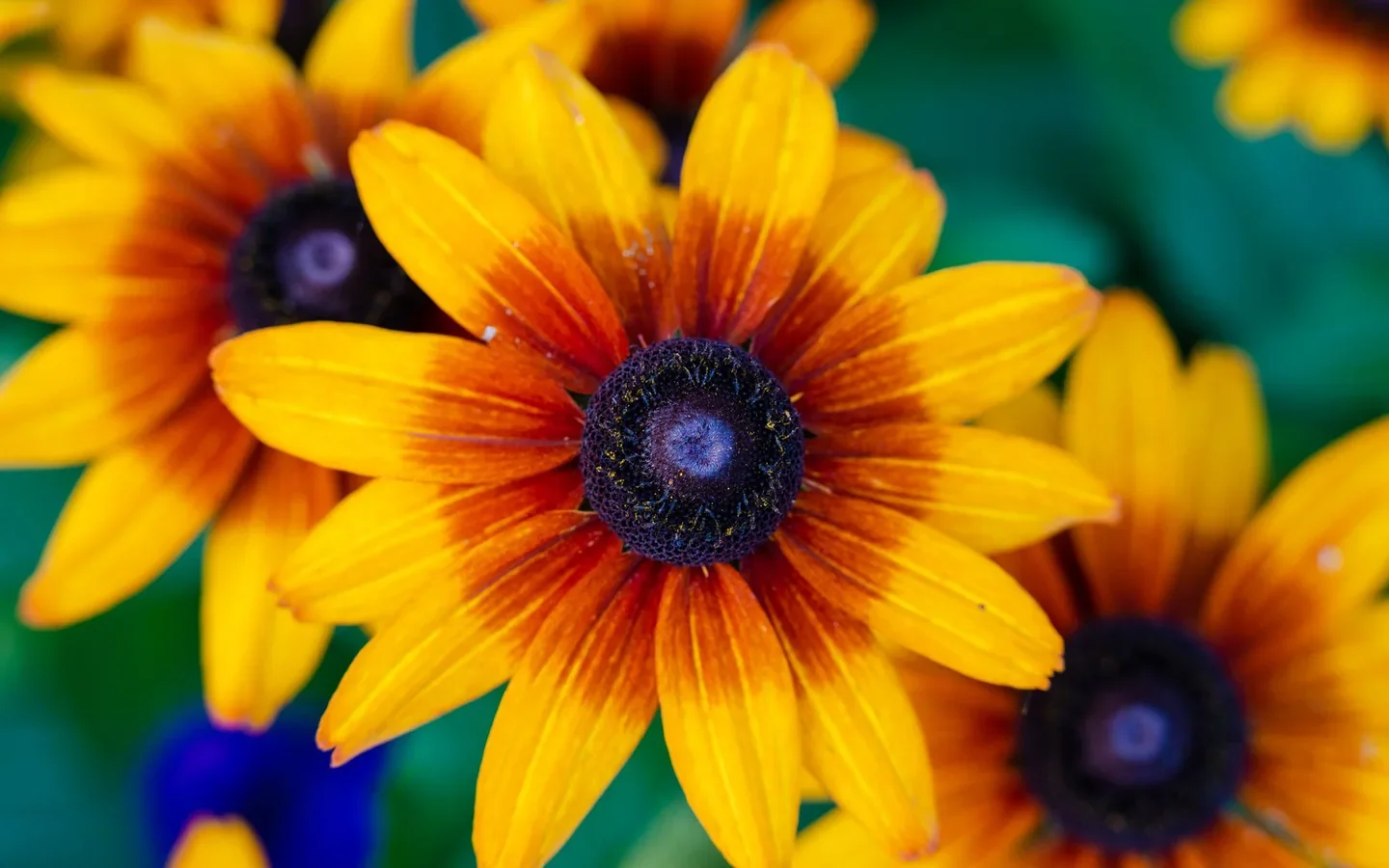
Rudbeckia fulgida 'Goldsturm' produces golden-yellow daisy-like flowers with dark centres, typically in late summer.
Once established in a suitable sunny border, it can make a strong block of colour without elaborate support.
It prefers soil that doesn't become permanently parched. An exposed sandy bed may need watering during a prolonged summer drought.
Leave seedheads for winter interest if you like, then remove old stems before new growth becomes extensive.
Hylotelephium for structure
Plants often sold as "sedum" include perennial Hylotelephium types that produce fleshy leaves and flattened flowerheads.
They are useful in sunny, well-drained positions and provide nectar for late-season insects.
On very rich or shaded soil, some varieties become floppy. Choose a sunnier site or a sturdier cultivar instead of staking every stem individually.
Old flowerheads can remain attractive through winter, with a simple spring cutback before fresh shoots appear.
Hellebores for shade and early flowers
A shady corner does not have to be flowerless. Hellebores produce flowers in winter or early spring, depending on species and cultivar.
They usually suit humus-rich, moist but well-drained shade. Avoid burying their crowns or leaving roots waterlogged.
Remove seriously damaged old leaves where appropriate, especially if leaf spot is established, while protecting emerging flowers.
They can be slow to establish, so don't keep lifting them after one disappointing season.
Bergenia: leaves even when flowers finish
Bergenia offers leathery evergreen or semi-evergreen foliage and pink or white spring flowers.
It tolerates a range of positions and can form useful low clumps near paths or beneath open shrubs.
Remove unsightly leaves occasionally and divide congested clumps only when they need it.
A severely dry or shady position may reduce flowering, even if the plant survives comfortably.
Alchemilla and a warning about self-seeding
Lady's mantle makes soft mounds of scalloped leaves and sprays of lime-green flowers.
It can be an excellent easy-care edge, but self-seeds freely in many gardens. If you don't want seedlings everywhere, cut the flowerheads before seed matures.
A plant that needs no staking may still create weeding work if allowed to seed indiscriminately.
Low maintenance means understanding what a plant does on its own, not just how little watering it needs.
Salvia, echinacea and astrantia
Salvia nemorosa makes upright purple or blue flower spikes in sunny borders. Cutting back spent spikes can extend its flowering, although that is optional work.
Echinacea likes sunshine and good drainage, and its distinctive seedheads are attractive into autumn. Some cultivars are shorter-lived in cold wet conditions.
Astrantia suits more moisture-retentive soil and partial shade. It is useful where very dry-ground plants would struggle.
Choose these according to the site rather than combining them solely because their flowers look good in a photograph.
How to design a border with less work
Use groups of three or five of a few reliable varieties rather than one plant each of twenty species.
Put the tallest at the rear where accessible and the lower groundcovers at the front. Allow their mature spread so weeds aren't the only plants that thrive in gaps.
Our plant-spacing guide helps estimate eventual size before you buy.
A simple repeat of nepeta, hardy geranium and rudbeckia can often look more coherent than a crowded collection of unrelated bargains.
Reduce weeding through soil cover
Prepare the bed thoroughly before planting. Persistent couch grass or bindweed roots shouldn't be hidden beneath fresh mulch.
Apply a suitable layer of mature compost or organic mulch over moist soil, keeping it clear of crowns and woody stems.
As plants spread, they gradually shade the soil, reducing opportunities for annual weeds.
Our soil-improvement guide covers creating a healthier growing bed without constant digging.
Low maintenance in full sun versus shade
Sunny, well-drained borders suit catmint, hardy salvias, some geraniums and many drought-tolerant perennials.
Shade calls for different choices: hellebores, bergenia, selected hardy geraniums and suitable woodland flowers.
A plant surviving deep shade isn't necessarily going to flower generously there. Be realistic about the available light.
If your garden is wet in winter and dry in summer, choose resilient plants that cope with that pattern rather than specialising exclusively in bog or alpine plants.
A first-year watering plan
Even drought-tolerant perennials need water while their roots establish.
After planting, water thoroughly and check the soil during dry spells. Reduce routine watering once growth and roots are established.
Containers still require more frequent checks because their root zone is restricted.
Don't use a calendar to justify watering soggy ground. Healthy roots need oxygen as well as water.
Keep wildlife in the picture
Several of these flowers provide nectar and pollen for insects.
Allowing some seedheads and stems to remain through winter can also offer shelter and food in suitable areas.
You don't have to leave every border untidy, but avoid stripping all material while the garden still supports overwintering insects.
For additional winter-season choices, see our guide to winter flowers for bees.
A realistic annual maintenance routine
In spring, remove dead stems from deciduous perennials and weed around new growth.
In summer, trim only the species that benefit from it, and water new plants during prolonged dry weather.
In autumn, cut back anything diseased or blocking access while leaving useful seedheads elsewhere.
Every few years, divide clumps that have genuinely become congested. A healthy plant doesn't need disturbing simply because a schedule says so.
Mistakes that create unnecessary work
Planting too closely: means constant cutting back.
Ignoring the soil: causes repeated failures and replacements.
Choosing thirsty bedding plants for dry borders: increases watering demand.
Leaving aggressive self-seeders unchecked: creates extra weeding.
Relying entirely on one month of flowering: makes the garden look empty later.
Assuming all perennials are fully hardy: some need protection or better drainage.
Quick answers
Which flowers need the least care? Suitable hardy geraniums, bergenia, nepeta and rudbeckia are useful examples for the right locations.
Are perennials always easier than annuals? Often in the long term, though annuals can fill gaps cheaply.
Can low-maintenance borders support pollinators? Yes, particularly with several accessible flowering forms across the season.
Will flowers grow without watering? Established plants may tolerate dry spells, but new plantings need moisture to establish.
Put the effort into soil preparation, correct spacing and a few reliable varieties. That is what turns a good-looking flower border into one you can actually enjoy maintaining.