
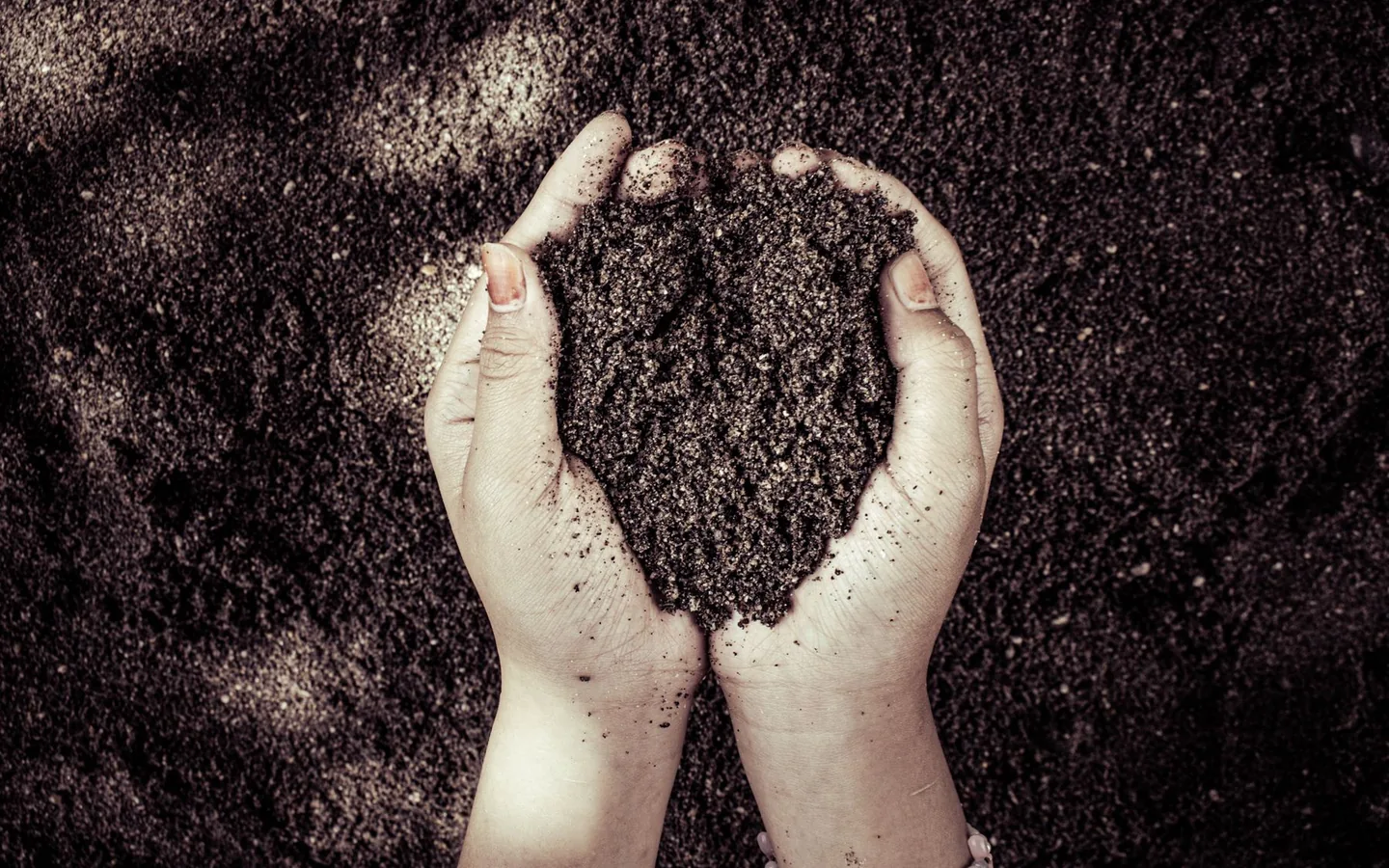
Garden centres and soil suppliers often describe loam as the ideal growing soil. That can make it sound like a special product you have to buy, but loam is simply a mineral soil containing a useful balance of sand, silt and clay particles.
Good loam holds water and nutrients while still allowing enough air and drainage for roots. It isn't necessarily black, exceptionally rich or sold in bags labelled “premium”.
What is loam made of?
All ordinary mineral garden soils contain varying amounts of sand, silt and clay.
The size of these particles influences how the soil behaves:
| Particle | Approximate size | Main influence |
|---|---|---|
| Sand | 0.05–2mm | Improves drainage and provides gritty structure |
| Silt | 0.002–0.05mm | Fine-textured, can hold useful moisture |
| Clay | Less than 0.002mm | Holds nutrients and water, but can become compacted |
| Organic matter | Not a mineral particle class | Feeds soil organisms and improves structure |
Loam is a textural category, not a fixed recipe of one third sand, one third silt and one third clay.
A sandy loam contains relatively more sand; a clay loam has more clay. Both may grow good plants if the structure and drainage are managed well.
Why loam is good for gardens
Balanced particle sizes help soil hold water without staying constantly saturated and provide nutrient reserves for plants.
A healthy crumb structure makes it easier for roots to penetrate and for air to move through the rooting zone.
Loam can be very productive for vegetables, flower borders, shrubs and lawns, but it still needs appropriate management.
Walk over loam when it is extremely wet and you can compact it; leave it bare and dry for long periods and its structure can deteriorate.
What does loam feel like?
Take a small soil sample after removing stones and surface debris. Moisten it slightly until it can be pressed without dripping.
Gently rub it between your fingers.
Good loam often feels smooth but slightly gritty. It forms a loose ball when squeezed, yet usually crumbles with moderate pressure.
Pure sand feels coarse and falls apart easily. Heavy clay feels sticky and smears, and can form a long smooth ribbon when rolled or pinched.
This hand test is a useful practical guide; a laboratory texture analysis is more reliable if precise proportions are important.
The difference between sandy loam and clay loam
| Soil type | What you'll notice | Common management |
|---|---|---|
| Sandy loam | Easy to work, relatively quick drainage | Add organic matter to improve moisture retention |
| Medium loam | Balances moisture and drainage | Maintain organic matter and protect against compaction |
| Clay loam | Feels heavier and stays wet longer | Avoid wet working and protect soil structure |
| Heavy clay | Sticky in winter, hard in summer | Improve structure gradually; don't dig when saturated |
A sandy loam isn't automatically inferior to a medium loam. Some herbs and bulbs prefer freer-draining conditions.
Heavy clay can be extremely fertile once its structure is improved, and a dry sandy garden can be very productive with suitable watering and mulching.
How to test soil texture at home
- Take soil from a representative part of the bed, avoiding fresh compost heaps.
- Remove stones and large roots.
- Wet the soil just enough that it holds together.
- Rub a pinch between finger and thumb for grittiness or smoothness.
- Squeeze a small ball and see whether it crumbles.
- Try rolling a short sausage or ribbon.
- Repeat in different parts of the garden and compare results.
Soil may change dramatically over a short distance, especially on newly built plots where topsoil and subsoil have been moved.
Don't classify an entire garden from one sample beside a patio.
Can you make loam by adding sand to clay?
Not easily. Changing the actual mineral texture of a large bed requires far more material than most gardeners realise.
A small scattering of builders' sand isn't a sound way to turn heavy clay into loam. It may do little for deep drainage and can create undesirable layers.
For most gardens, improve the soil's structure with appropriate mature organic matter, roots, mulch and better traffic management rather than trying to change its mineral classification.
Our natural soil improvement guide covers those practical actions.
Loam is not the same as compost
Compost is decomposed organic material. It helps condition soil, but its physical characteristics differ from mineral loam.
You can add mature compost to loam to improve fertility and structure; you can also add it to sandy or clay soil.
A bag of peat-free multipurpose compost may contain bark, coir, wood fibre and other ingredients without being loam soil.
When buying soil for raised beds, ask whether the supplier means screened mineral topsoil, a soil-based mix or bagged growing media.
What is a loam-based potting compost?
Some traditional potting mixes use a measured amount of loam as part of a formulated container medium.
Loam-based mixes can offer stability and nutrient-buffering capacity for long-term container plants, but they may be heavier than modern peat-free alternatives.
A pot still needs reliable drainage and a mixture formulated for its intended plant.
Don't fill every houseplant pot with dense garden loam and assume it will drain properly inside a container.
Is loam always the best soil for vegetables?
Loam is excellent for many crops, but the best soil depends on what you're growing.
Carrots need a relatively stone-free, workable rooting layer. Mediterranean herbs generally prefer good drainage and may perform badly in moist nutrient-rich soil.
Blueberries require acidic conditions. A naturally alkaline loam isn't automatically suitable for them.
Use soil texture and pH as separate pieces of information. Our soil pH for vegetables guide explains the latter.
How to keep loam healthy
Avoid standing on cultivated beds, particularly when wet.
Add mature organic matter where appropriate, keep soil covered with living plants or mulch and allow roots and organisms to improve the structure.
Rotate heavy crop demands where practical. Irrigate according to root-zone moisture rather than a rigid daily schedule.
Don't over-rotavate a bed simply because the soil looks better when finely powdered. Stable crumbs are often more useful than loose dust.
Buying loam or topsoil
Check the supplier's intended use and whether the soil has been screened for debris and sourced responsibly.
A label saying “loam” doesn't establish fertility, pH, freedom from weed seeds or absence of contaminants.
For food growing or expensive landscaping, a reputable tested supplier is worth choosing over an anonymous heap of cheap soil.
Measure your volume carefully before delivery, particularly for raised beds that can hold hundreds of litres.
Common misunderstandings
- Believing loam always contains exactly equal parts of sand, silt and clay.
- Assuming black soil is automatically excellent loam.
- Calling multipurpose compost the same thing as mineral topsoil.
- Adding small quantities of sand to clay expecting an instant transformation.
- Working wet clay loam until it compacts.
- Forgetting that loam can be acidic or alkaline.
- Buying “premium loam” without checking its actual source or suitability.
Is loam better than clay soil?
A well-structured loam is generally easier to work, but clay soil can be very fertile and productive with appropriate management.
Is loam soil good for raised beds?
Yes, suitable loam-rich topsoil can provide a stable mineral component when mixed with mature organic matter.
How can I tell if my garden soil is loam?
Use a hand-texture test on moist soil, looking for both mild grittiness and the ability to form a crumbly ball rather than a long sticky clay ribbon.