
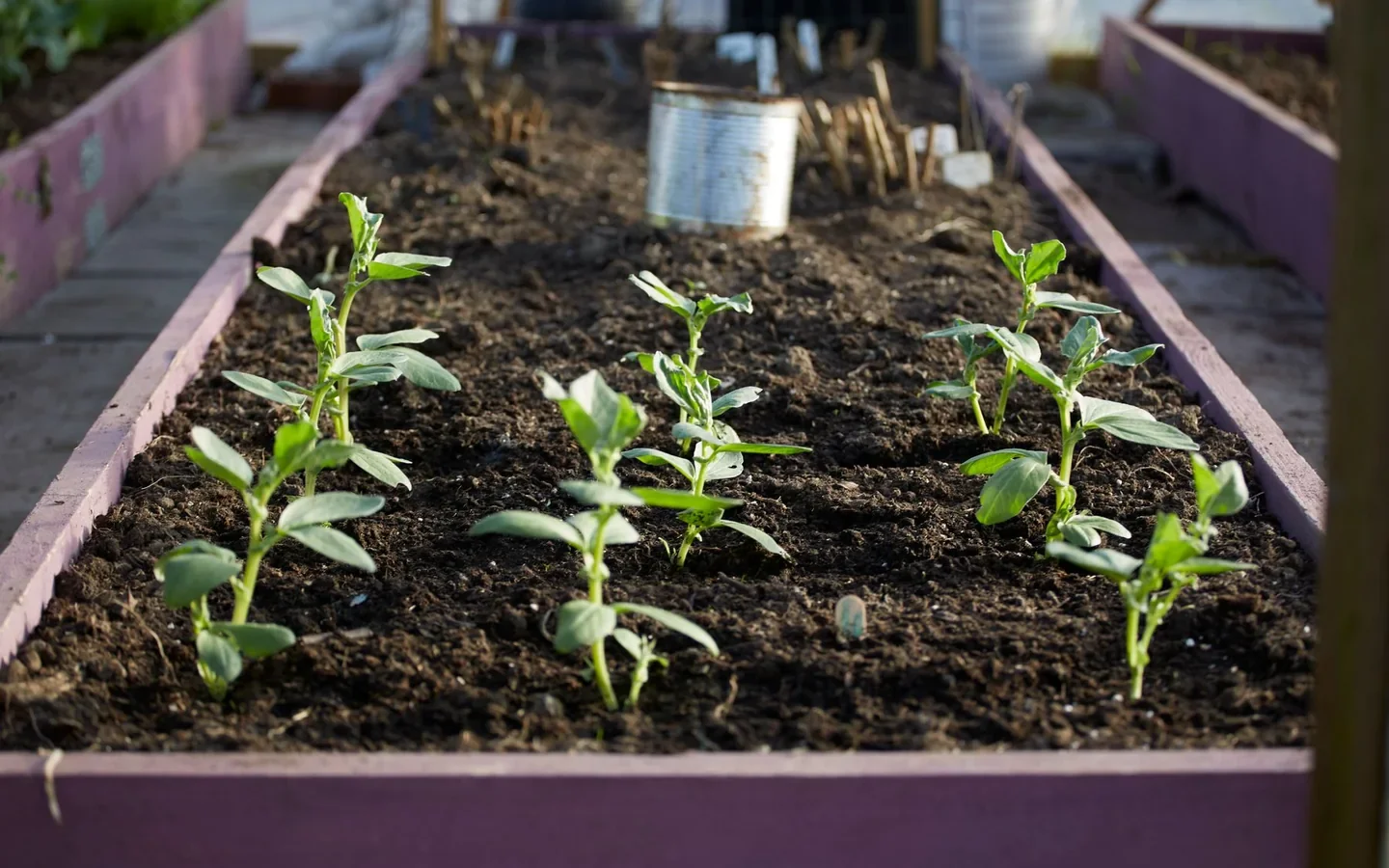
Online raised-bed instructions often say to fill the bottom with stones, logs, plastic or several layers of cardboard. Some of that advice can work in specific situations, but none is a universal answer.
The first question is what is underneath the raised bed. A shallow frame set on ordinary garden soil has different needs from a tall container on a concrete patio. Drainage, root depth and any contamination matter more than using up whatever material happens to be lying around.
The short answer for the common situations
| Where the bed sits | Usually sensible at the bottom | Usually avoid |
|---|---|---|
| Open garden soil | Leave bottom open, remove weeds and loosen soil if needed | Impermeable plastic sheet |
| Grass or lawn | Remove or suppress turf appropriately; maintain soil contact | Thick persistent plastic membrane |
| Concrete or paving | Provide drainage route and suitable contained soil depth | A sealed base trapping water |
| Very tall bed | Consider suitable bulk subsoil or carefully designed lower fill | Unstable trash and unknown treated materials |
| Soil with burrowing pests | Suitable galvanised mesh laid flat where warranted | Fine mesh that blocks roots or drains |
| Contaminated ground | Purpose-designed barrier/contained bed, professional advice if needed | Assuming ordinary cardboard is permanent protection |
For a typical vegetable bed on healthy open soil, you usually don't need a complicated bottom layer.
Raised beds on ordinary soil
A timber frame resting directly on the ground lets roots explore below the bed and allows excess water to move into suitable soil underneath.
Remove established perennial weeds and larger debris. In a shallow bed, lightly fork compacted soil if it is workable, without turning saturated clay into a hard layer.
Then fill the bed with an appropriate growing medium. A mixture with genuine topsoil and mature organic matter is usually more stable for long-term vegetables than pure compost.
Our guide to filling a raised bed covers the growing mix above the base; here we are dealing with what belongs underneath it.
Should you remove grass first?
For shallow beds, removing turf is generally the cleanest option, particularly where the grass has vigorous roots.
You can sometimes suppress grass under a suitable biodegradable layer, but the material must break down and must not leave a permanent impermeable barrier.
Where the ground is severely infested with couch grass or other perennial weeds, simply covering it once may not be enough.
A raised bed on grass shouldn't have to compete with a living lawn trying to grow through the growing medium.
What about cardboard?
Plain untreated cardboard can temporarily block light and weaken annual grass or weeds.
Remove tape, staples, glossy coatings and unsuitable adhesives. Overlap pieces sufficiently to reduce immediate light gaps.
Cardboard decomposes; it is not a reliable permanent defence against persistent perennial weeds or invasive roots.
Use it only where temporary suppression is appropriate. Avoid tightly compacted, impermeable layers that interfere with drainage and soil biology.
Do raised beds need gravel at the bottom?
Not as a universal drainage solution.
Adding a gravel layer below finer soil doesn't automatically make wet soil drain. Water still needs somewhere to go, and a sharp change in particle size can alter how moisture moves through the growing medium.
If the bed sits on saturated clay, gravel inside the frame will not repair the underlying drainage.
Instead, check whether the site needs soil improvement, a more suitable position or a designed drainage outlet.
Can you put branches and logs at the bottom?
Large woody material is sometimes used in deep beds, including hügelkultur-style systems. As it decomposes, it can alter moisture retention and cause soil settling.
For a shallow bed, logs occupy valuable root space and may create large air gaps.
Avoid fresh diseased wood, treated timber, painted wood or material that could contain harmful residues.
If you deliberately use woody fill in a deep bed, understand that the top may sink and require replenishment. Don't describe it as a permanently stable foundation.
Deep raised beds are different
A bed over approximately 50cm high may require a large volume of fill. In that situation, suitable lower subsoil, clean mineral material or other structurally appropriate bulk fill can sometimes reduce cost.
The RHS describes specific deep-bed methods that differ from ordinary shallow vegetable beds, including preparing the existing base and using appropriate material beneath the main growing layer.
This is not permission to dump building rubbish, broken glass, contaminated rubble or plastic waste under edible plants.
Ensure sufficient good soil depth for the crop. Carrots, parsnips, tomatoes and deep-rooting plants won't perform well if the usable rooting layer is a shallow skin above junk.
Raised beds on concrete patios
On concrete or paving, roots cannot simply pass into the ground.
Build the bed as a large draining container or use an appropriate open-bottom design that still allows water to escape safely.
Check the fall of the paving and any drainage outlet. Water should not collect beneath the bed or be directed towards the house.
A suitable base lining may prevent soil washing away while letting water pass. Don't place an impermeable sheet directly under a soil-filled container without drainage.
Consider the weight: wet soil is heavy, particularly on suspended patios or roofs where structural capacity needs professional assessment.
What about weed membrane?
Permeable geotextile can sometimes separate soil from a drainage arrangement, especially on hard surfaces, but it is not always needed.
On open ground, permanent membrane may restrict root growth, become tangled with roots and complicate future soil improvement.
Thin plastic weed sheets can fragment or trap water, and they do not eliminate the need for weeding.
Choose a material based on a specific purpose rather than treating membrane as an automatic first step.
Do you need wire mesh for rodents?
If burrowing animals repeatedly damage roots or underground crops, suitable galvanised mesh may help.
Select a mesh size that excludes the target animals while allowing free drainage and avoiding unnecessary root restriction.
Fix it securely and avoid leaving sharp wire edges that can injure people or animals.
Don't automatically install unnecessary mesh on every raised bed. Most gardens do not need an elaborate rodent barrier for ordinary vegetables.
Soil depth for vegetables
A practical raised bed needs enough good growing medium for the crops you intend to grow.
Short salad leaves need less than full-sized carrots or parsnips. Tomatoes and squash also make substantial root systems and may need deeper, wider beds.
Measure the usable soil depth after allowing for any lower fill. The overall height of the timber frame may be misleading.
Our raised-bed soil calculator estimates quantities based on dimensions and required fill depth.
What soil mix should go above the base?
A balanced growing medium can include topsoil and mature organic matter. It should hold enough moisture without staying waterlogged.
Avoid filling a whole large bed with fresh manure or lightweight bagged multipurpose compost. These can settle, decompose or behave very differently from stable topsoil.
For a bed intended for food crops, use clean material from a trustworthy source.
If you have heavy clay nearby, you may be able to use some existing topsoil with suitable improvement rather than buying everything new.
Should raised beds be lined with plastic?
Some gardeners line timber sides to reduce contact with moist soil, but lining the sides is different from sealing the bottom.
Choose a suitable product and consider the timber treatment, long-term wear and whether the liner will trap water.
A continuous impermeable plastic base without drainage is a problem for ordinary food-growing beds.
Don't use unknown reused industrial materials in direct contact with soil intended for edible crops.
Compacted or waterlogged ground underneath
An open-bottom raised bed may still drain poorly if the subsoil is permanently saturated.
Inspect the surrounding ground after rain. If water ponds for long periods, investigate the wider drainage before spending heavily on raised-bed fill.
You may need a different site, appropriate subsoil improvement or a properly designed drainage solution.
Do not send excess surface water towards neighbouring properties or house foundations.
How to prepare a shallow raised bed step by step
- Choose a reasonably level, accessible position with suitable sunlight.
- Measure the frame and mark its footprint.
- Remove turf and troublesome perennial weed roots.
- Inspect the underlying soil for compaction and drainage.
- Loosen the surface gently where practical and appropriate.
- Install the frame securely without leaving dangerous protrusions.
- Add only any specific barrier or mesh actually needed.
- Fill with a suitable soil mixture, allowing for settling.
- Water to settle the medium and check for drainage problems.
- Top up and plant once the bed is ready.
Keep the process simple where the ground is already healthy.
Quick answers
Should you put stones in the bottom? Not routinely. They won't fix underlying drainage problems.
Can I put logs in a raised bed? In a properly planned deep system, sometimes, but they are not a good default for shallow vegetable beds.
Is cardboard compulsory? No. It is an optional short-term weed-suppression material.
Should the bottom be open on soil? Usually yes for an ordinary shallow bed in suitable ground.
A raised bed is not improved just because it contains more layers. Build the base for the actual site, preserve useful root depth and give water somewhere safe to go.