
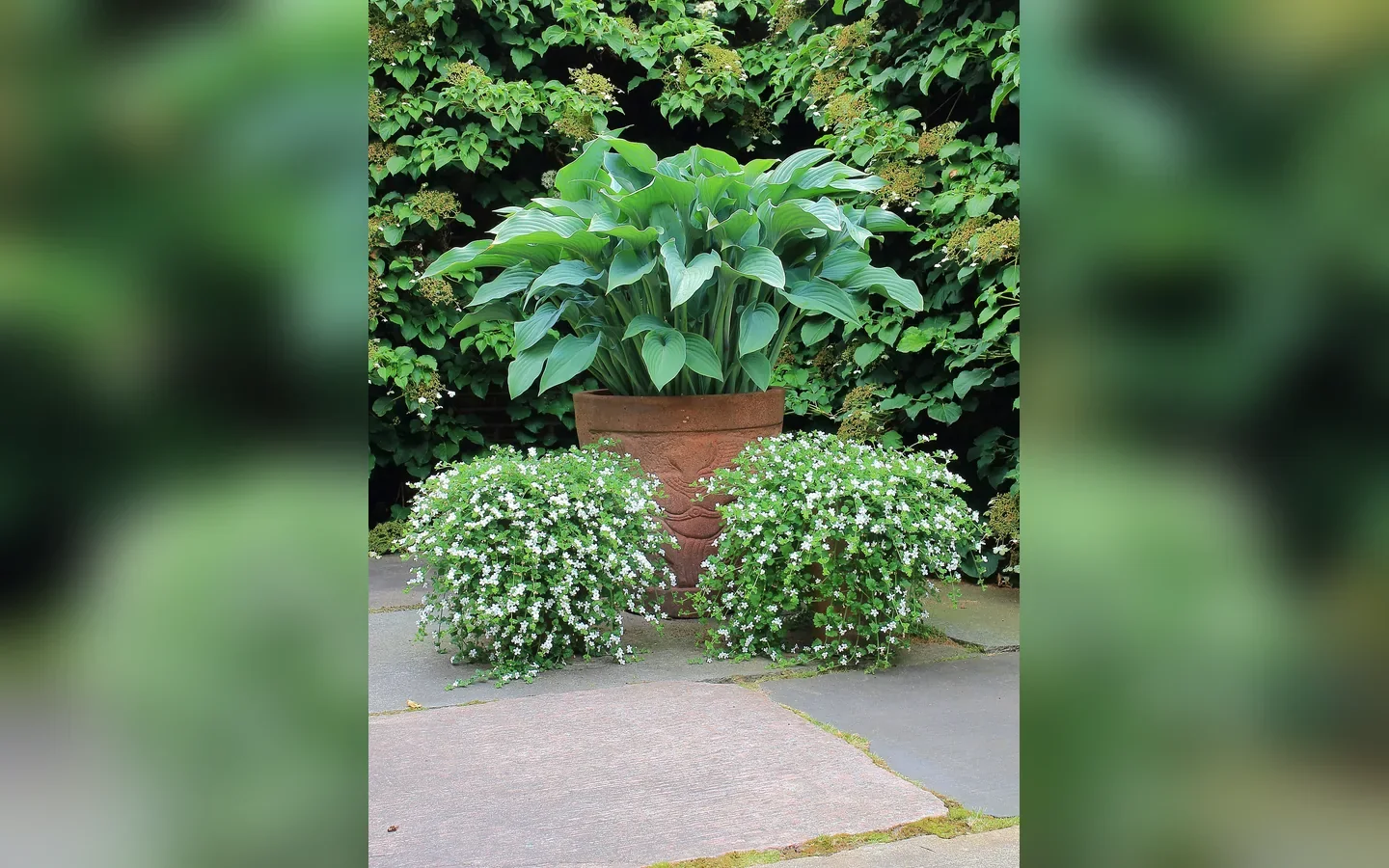
Hostas make generous clumps of leaves in shady borders and containers. After a few years you may have one large plant crowding its neighbours, or you may simply want a second hosta for another part of the garden.
Dividing is the straightforward way to multiply a named hosta. But a healthy hosta doesn't need dividing every year, and splitting at the wrong time can make recovery harder than necessary.
The best time to divide hostas
There are two useful windows in Britain:
- Early spring, when new shoots are appearing or just before they unfurl.
- Late autumn, after the foliage has naturally died back and the plant is dormant.
Spring is particularly convenient because the emerging shoots show where the growing points are. It is also easier to see the divisions before the large leaves obscure the crown.
Autumn works if soil is workable and the divisions will have time to settle before severe cold. Avoid trying to divide waterlogged, frozen ground.
Don't dig up a hosta during a heatwave in full leaf unless moving it is unavoidable.
How often do hostas need dividing?
An established clump can remain attractive for many years without disturbance. A useful rule of thumb is to consider division after four or five years, but only if size, congestion or poor growth makes it worthwhile.
Some cultivars increase slowly; a small hosta may be better left to mature.
Signs that division could help include a very dense centre, declining vigour, roots filling a container completely or a clump spilling across a path.
If the plant flowers well and the leaves look healthy, there's no horticultural rule demanding that you dig it up.
What about different hosta varieties?
Large hostas can form heavy crowns with tough fibrous roots. Smaller types may have looser roots that pull apart more easily.
Variegated cultivars are usually multiplied by division to preserve their characteristic leaf pattern. Seedlings may not look the same as the parent.
A hosta with very thick, tight roots may need a sharp spade or clean knife. A small young clump can often be teased apart by hand.
Identify which growth buds belong to each section before cutting. A chunk of roots with no viable growing point may not produce a new plant.
Equipment for dividing hostas
Have a garden fork, spade, sharp clean knife if necessary, watering can and a place to set the lifted clump.
A board or plastic sheet makes it easier to see and separate the roots without burying everything in mud.
Prepare the new planting holes and pots before lifting the hosta. It is unhelpful to leave exposed roots drying in the sun while you search for a container.
Gloves are useful when handling wet soil and sharp tools; clean cutting edges minimise torn roots.
How to divide a hosta step by step
- Water the plant a day beforehand if the soil is very dry.
- Use a fork to loosen soil around the outside of the clump.
- Lift the crown with as many sound roots intact as possible.
- Shake off loose soil so the growth buds and root structure are visible.
- Decide where the crown naturally separates into healthy sections.
- Pull apart loose-rooted clumps by hand or use two tools back-to-back.
- For tougher crowns, slice cleanly with a sharp spade or knife.
- Leave several healthy shoots or buds on each division.
- Discard rotten sections and damaged tissue rather than planting them.
- Replant promptly at the original growing depth, firming soil around the roots.
- Water thoroughly to settle each new section.
Large hostas are heavy. Get help lifting a very mature clump rather than twisting your back trying to drag it free.
How many shoots should each division have?
A section containing five or six good shoots will usually establish faster than a tiny fragment with one weak bud.
For a generous clump, several divisions of moderate size can be more sensible than cutting it into as many pieces as possible.
Smaller divisions are possible, but they take longer to fill out and are more vulnerable to drying or slug damage.
Check that each piece has both a viable crown and a decent quantity of roots. Leaves without roots and roots without buds are poor starting material.
Replant at the correct depth
Hostas should generally be replanted at approximately their previous depth, with the growing points at or just above the surrounding soil surface as appropriate.
Avoid burying the crown under a deep mound of wet compost. That can contribute to rot, especially during cold weather.
Improve poor soil with mature garden compost, but don't create a soggy pocket of organic material inside heavy clay.
Space divisions according to their mature spread. Our plant spacing guide can help you avoid planting several vigorous hostas where only one will eventually fit.
Where should the new hostas go?
Most hostas like partial shade and soil that holds moisture without being permanently saturated.
Golden or variegated varieties often benefit from some gentle light to develop good colour; intense midday sun can scorch certain cultivars.
Deep dry shade beneath large trees can be difficult because the tree roots compete for moisture.
Choose a site that suits the particular hosta rather than assuming all shade is equally good.
Dividing hostas growing in pots
Tip a potted hosta out onto a sheet, supporting the rootball instead of pulling hard on the leaves.
If roots circle the container tightly, tease them apart as much as practical. Divide the crown into sections with buds and roots.
Repot into clean, suitably sized pots with good peat-free compost. Don't put a tiny division straight into an enormous tub of permanently wet growing medium.
Our pot compost guide explains how container size and drainage affect roots.
Keep newly divided pots sheltered from strong wind while they establish.
Watering after division
The most important aftercare is consistent moisture, particularly in spring and during any dry spell.
Water thoroughly after planting, then check the soil beneath the surface. It should be moist but able to drain.
A surface mulch of mature compost can conserve moisture, provided it is kept clear of the crown.
Don't fertilise heavily to force rapid leaf growth. A recovering division needs to rebuild roots as well as top growth.
Slugs and snails are a bigger risk for small divisions
Young hosta shoots are particularly attractive to slugs and snails. A division that loses all emerging foliage may struggle just as it is trying to establish.
Inspect plants at dusk, especially after rain. Remove obvious hiding places close to small crowns and use sensible physical protection where necessary.
Keep the area weed-free so you can spot damage quickly.
Our winter slug guide covers why slugs remain active during milder cold-weather periods.
Older hostas with thick leaves can tolerate some damage, but new divisions deserve close attention.
Can you divide a hosta in summer?
It is possible if you provide careful watering and shade, but spring or dormant autumn division is generally more reliable.
Large active leaves lose water rapidly. If roots are disturbed while the plant is full of foliage, wilting can occur.
If you must move a plant, take as much rootball as possible, reduce avoidable stress and water well afterward.
Don't use the ability to survive a summer move as a reason to divide every hosta in the hottest week of the year.
What if the hosta looks weak the following spring?
A newly divided hosta may take time to regain its former size. That isn't automatically a failure.
Check whether growing points are alive, the soil is not saturated and slugs haven't removed the shoots.
If the crown is soft and rotting, investigate poor drainage and damage rather than repeatedly feeding the plant.
A section with healthy roots and buds can recover over a growing season, especially if weather is suitable.
Mistakes to avoid
Dividing an immature clump: slows establishment with little benefit.
Cutting every section too small: creates weak plants that take years to fill out.
Leaving roots exposed: causes avoidable drying.
Burying growing points deeply: increases the risk of crown problems.
Ignoring slug damage: new shoots may be destroyed quickly.
Planting in saturated soil: roots may rot before they establish.
Assuming every cultivar spreads at the same rate: some hostas are naturally slow growing.
Quick answers
Is March a good month to divide hostas? Often yes, if the soil is workable and shoots are just emerging.
Can I divide hostas in October? Yes, after foliage dies back, provided the ground is not excessively wet or frozen.
Will hostas flower after dividing? They can, but the plant may focus on rebuilding roots and foliage for a season.
Does a hosta need three buds? There is no universal minimum, but several strong buds and sound roots improve establishment.
Divide hostas when they need it, not simply because the calendar says so. A few generous, well-rooted sections usually make better plants than dozens of tiny fragments.