
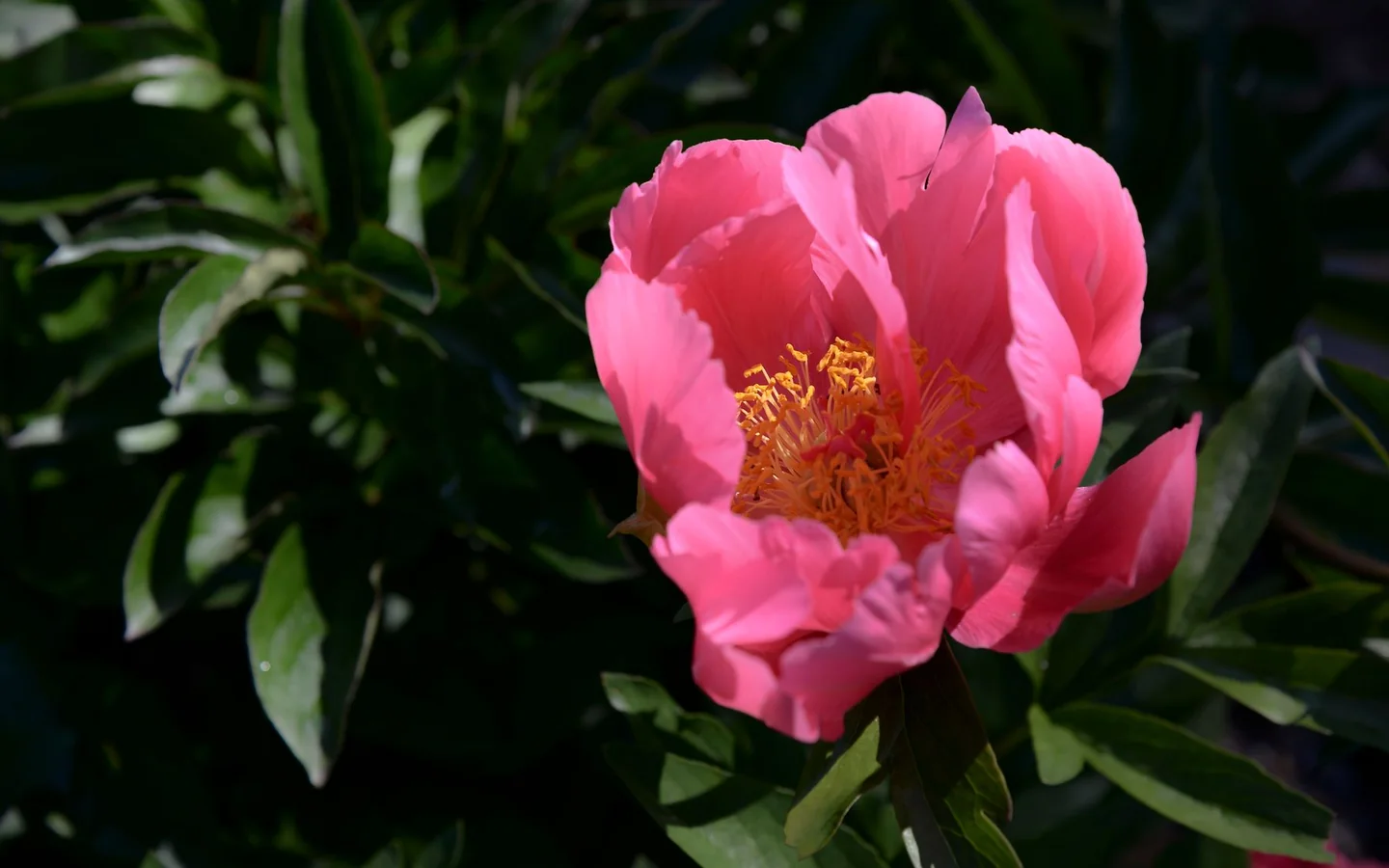
A good herbaceous peony can flower in the same place for many years. If it has formed an enormous clump or stopped flowering well, division can help—but it's a job to do carefully, not a routine task every autumn.
The critical details are timing and planting depth. Divide when the plant is dormant, keep several healthy growth buds with each piece and avoid burying them so deeply that flowering becomes difficult.
Do peonies really need dividing?
Not often. Some herbaceous peonies remain productive for decades when they're given a suitable sunny position and enough space.
Consider division if the clump has become badly congested, you want to create more plants or you need to move a peony from an unsuitable spot.
If it flowers strongly every year, leaving it undisturbed may be the best decision.
Don't assume a lack of flowers automatically means the crown needs splitting. Excess shade, planting depth and prolonged drought can also reduce flowering.
Herbaceous, intersectional and tree peonies
This guide focuses on herbaceous peonies and, with appropriate care, related intersectional types that can be propagated by division.
Herbaceous peonies die back to the ground in autumn and regrow from buds on a crown just beneath the surface.
Intersectional or Itoh peonies have characteristics of both herbaceous and tree peonies and may require careful cutting of their often woody crowns.
Tree peonies form permanent woody stems. Their propagation and care differ; don't dig up a tree peony and chop it into sections using this method.
The best season for dividing peonies
In the UK, late autumn is generally the preferred time, once foliage has begun dying back and the plant is dormant.
September to November can be suitable depending on local conditions, but avoid saturated or frozen ground.
Autumn division gives roots a chance to settle before spring growth begins. In a mild district this may be relatively straightforward; in colder areas the working window can be shorter.
If the soil is heavily waterlogged, wait for more suitable conditions rather than damaging its structure and the peony roots.
How often should peonies be split?
There isn't a fixed three-year cycle. A clump can remain healthy for a very long time.
Division is usually a response to a practical problem: overcrowding, a need for more plants, deteriorating growth or a garden redesign.
A newly planted peony that hasn't yet flowered may simply need time. Digging it up every autumn resets its establishment.
If a mature plant is flowering poorly, check sunlight and planting depth before deciding to divide it.
Understand the crown and 'eyes'
The thick underground roots store food for the next season. Near the top of the crown are small pointed growth buds, often pink or red, sometimes called eyes.
Each new division needs a viable section of crown with buds and a sound supply of roots.
A large detached storage root with no crown buds may not produce a new plant. Equally, a tiny piece with one weak eye may struggle to establish.
Aim for at least three strong growth buds on each division where possible, along with several healthy roots.
What tools do you need?
Use a garden fork, sharp spade, a clean strong knife, gloves, labels and a board or sheet for examining the lifted clump.
Peony roots can be thick and brittle. Plan a wide digging area rather than jabbing the fork immediately next to the crown.
Clean blades reduce unnecessary tearing and the risk of moving disease between plants.
Prepare the new planting site before lifting the clump so the roots are not left exposed in drying wind.
How to divide a peony step by step
- Wait until the plant is dormant in autumn and soil is workable.
- Cut back collapsed old stems and remove diseased foliage.
- Dig carefully around the clump, starting beyond the obvious root area.
- Lift with as much of the storage-root system intact as practical.
- Gently shake or wash away soil to reveal the crown and growth buds.
- Identify natural sections containing several buds and healthy roots.
- Use a clean sharp knife to separate sections without crushing roots.
- Discard soft or obviously rotten pieces.
- Replant promptly into prepared ground with correct bud depth.
- Firm soil gently, water in and label the position.
You don't need to divide the plant into as many pieces as possible. A few substantial divisions establish more reliably than a pile of tiny fragments.
How deep should peony divisions be planted?
This is the point that catches gardeners out. For most herbaceous peonies, the uppermost crown buds should sit under no more than around 2.5cm of soil.
Deep planting can lead to years of leafy growth with few or no flowers.
Dig a broad hole and arrange the roots naturally without bending them sharply upward. Set the crown at the right height, backfill and check the final soil level after watering.
A generous thick mulch directly over the buds can effectively deepen the crown too much, so leave that area clear.
Choose the new position carefully
Herbaceous peonies flower best in full sun or a position with plenty of strong light.
They prefer fertile soil that drains well, with enough moisture during active growth. They dislike ground that stays saturated through winter.
Allow roughly a metre of space for a mature clump, depending on cultivar. Placing divisions under a shrub that will shade them in two years is poor planning.
Our plant spacing guide helps estimate future width rather than spacing by the small size of a new division.
Soil preparation and feeding
Improve poor ground with well-rotted compost or manure mixed into the surrounding soil ahead of planting.
Don't bury the crown in a deep pocket of wet compost. The roots need normal soil contact and drainage.
Apply a suitable balanced feed in spring if soil conditions warrant it, but excess nitrogen can encourage foliage without improving bloom.
Our soil preparation guide explains how to judge whether soil is fit to work before planting.
Watering new divisions
After planting, water the soil to settle it around the roots if conditions are dry.
Through the following spring and summer, check moisture during prolonged dry periods. New divisions have fewer established roots than the original clump.
Avoid frequent shallow sprinkling or leaving the planting hole saturated.
Established peonies can tolerate moderate dry spells, but fresh divisions need more attentive watering while they settle.
Will a divided peony flower next spring?
Sometimes, but don't count on a full display immediately. Dividing interrupts the root system, and the plant often needs time to regain strength.
A good division may take one or two years to flower well. Very small pieces can take longer.
If healthy foliage appears but no buds open the first spring, leave it to establish rather than digging it up again immediately.
A peony that has been replanted too deeply, however, may continue to fail until the planting depth is corrected.
What if the plant has a woody centre?
Some old crowns and intersectional peonies become thick and hard to separate.
Examine where healthy buds emerge before cutting. If the clump is too woody to divide safely, take fewer larger pieces or leave it intact.
For a valuable named plant, professional propagation advice may be worth more than forcing a spade straight through the crown.
Do not attempt this method on a tree peony's permanent woody framework.
Recognise peony disease before replanting
Peony wilt can cause buds, stems and leaves to turn dark and collapse. Remove affected foliage and avoid dividing severely diseased crowns.
Look for soft or discoloured tissue on roots as you lift. Healthy storage roots should feel firm.
Don't move obviously rotten material into a fresh border and expect it to recover.
Improve drainage and airflow where disease has repeatedly been a problem.
Dividing peonies that grow in containers
A mature peony in a pot can become crowded, but division isn't always the first answer. Sometimes moving it to a larger container is enough.
If you do divide it, slide the rootball out carefully and examine the crown without tearing away all the roots.
Replant divisions into sufficiently deep, stable pots with drainage holes and good growing medium.
Our container compost guide covers managing root space and winter moisture in pots.
Keep the uppermost buds near the correct surface level even if the pot looks visually underfilled.
Common mistakes
Dividing every year: prevents a long-lived peony settling.
Splitting into pieces with no eyes: leaves sections unable to regrow.
Burying buds too deeply: a common cause of missing flowers.
Planting in deep shade: reduces flowering.
Leaving roots exposed too long: dries vulnerable divisions.
Digging in saturated soil: damages soil structure and roots.
Expecting immediate heavy flowering: new sections need time to rebuild strength.
Quick answers
Is October a good month to divide peonies? Often yes for dormant herbaceous peonies if the soil is workable.
Can you divide them in spring? It is possible in some situations but autumn is the preferred routine window.
How many eyes should a division have? Ideally at least three viable crown buds with good roots attached.
Do tree peonies divide the same way? No; their permanent woody structure requires a different approach.
Peonies are happiest when left alone in the right spot. Divide only when there is a reason, protect the crown buds and plant shallowly enough that future flowers have a chance.