
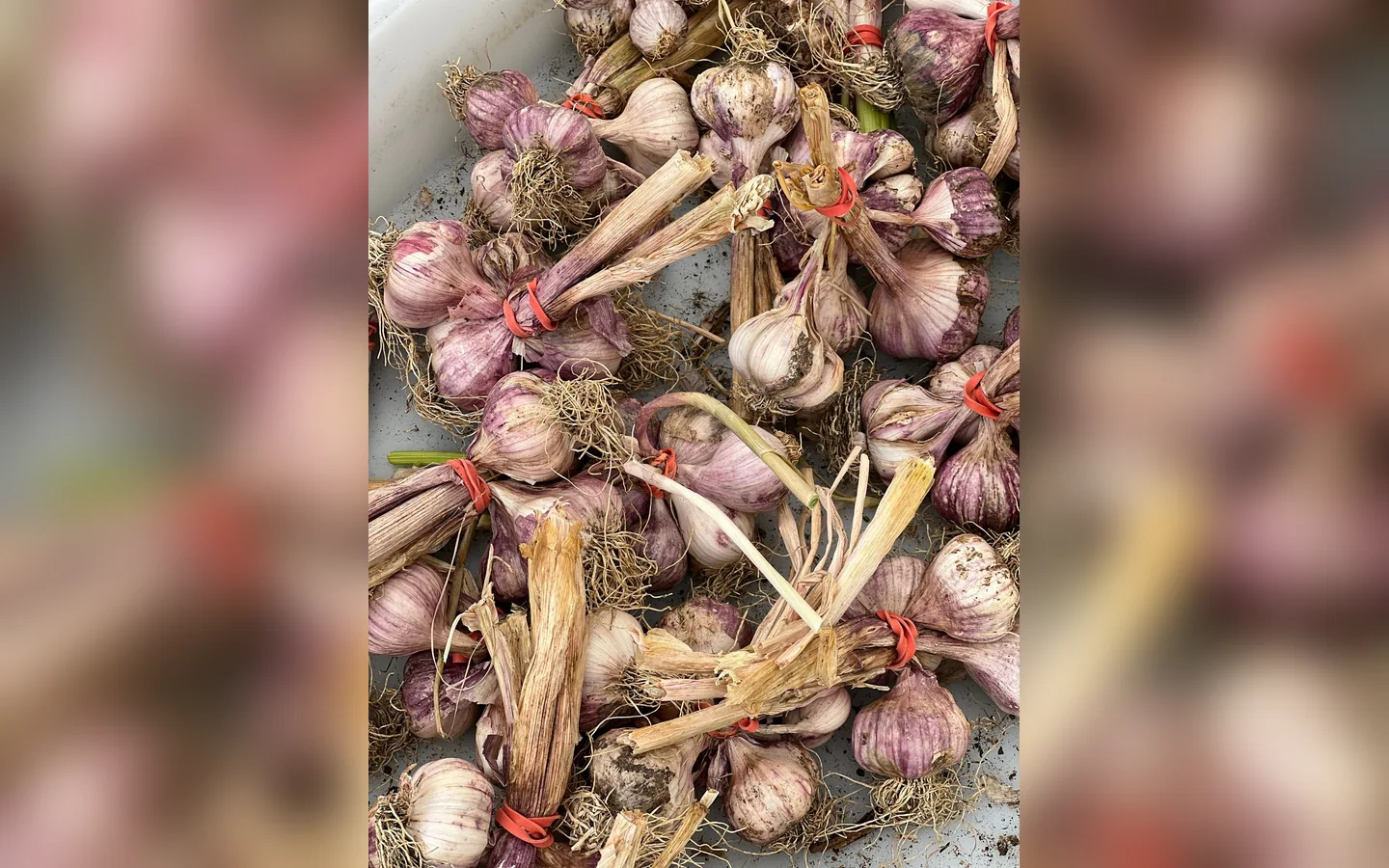
Garlic is one of those crops where the calendar gives you a clue, but the plant tells you when to act. Lift too early and the bulbs may be small with soft skins. Leave them too long and the individual cloves can begin separating, making the crop harder to store.
In the UK, harvest often starts in late June or July for autumn-planted garlic. Spring-planted crops generally finish later. The useful signal is yellowing foliage combined with a developed bulb, rather than a fixed date for every variety.
When is garlic ready to harvest?
The RHS recommends harvesting once garlic leaves begin turning yellow and dying back. The exact week depends on whether the cloves were planted in autumn or spring, the variety, soil moisture and weather.
| Crop | Typical UK harvest period | What to check |
|---|---|---|
| Autumn-planted hardneck garlic | Often late spring to early summer | Yellowing lower leaves and formed bulbs |
| Autumn-planted softneck garlic | Commonly June–July | Several yellow leaves, bulbs with sound wrappers |
| Spring-planted garlic | Mid-summer to early autumn | Maturity signs rather than the planting date alone |
| Garlic grown for green leaves | Much earlier | Harvest leaves sparingly, not as mature storage bulbs |
Don't use these ranges as guaranteed deadlines. A cold spring may delay growth; early heat and drought can hasten yellowing without creating fully mature bulbs.
The signs that matter more than the calendar
Start inspecting when the lowest leaves yellow. A mature garlic bulb should be made up of full cloves enclosed by protective outer skins.
A useful practical approach is to lift one test bulb from the end of the row. If cloves are well formed and the bulb has intact papery wrappers, the rest may be approaching harvest.
If the bulb is small and the leaves are still predominantly healthy green, give the crop more time, provided conditions and disease allow.
Don't wait for every leaf to turn brown and collapse. By then the outer wrappers may already be breaking down.
Does yellowing always mean the garlic is ripe?
No. Rust, drought, waterlogging and ordinary ageing can all cause yellowing leaves.
Rust often produces orange or brown powdery pustules on foliage. A plant damaged by drought may dry rapidly but still have poorly developed bulbs.
Look at the whole crop: planting date, variety, root health, degree of yellowing and a sample bulb. If plants are suddenly collapsing, investigate disease rather than assuming the harvest has arrived early.
Our guide to preparing soil for spring planting explains the importance of drainage for root crops and alliums.
How to lift garlic without damaging it
- Choose a reasonably dry day if the weather allows.
- Loosen soil some distance away from the bulbs with a hand fork or garden fork.
- Lift from beneath rather than pulling hard on the neck.
- Shake off loose soil gently; don't bang bulbs against tools or each other.
- Avoid scraping away all the outer skins, which protect the cloves.
- Separate damaged bulbs from those intended for long storage.
- Move the harvest somewhere dry and airy.
- Label varieties if you've grown more than one kind.
Garlic bruises can become storage problems. A nick in the basal plate may matter more than a small amount of soil left attached.
Should you stop watering before harvest?
When bulbs are maturing and the foliage is naturally dying back, avoid unnecessary irrigation that keeps the soil saturated.
You don't need to engineer drought weeks before maturity. Sudden severe water stress can affect plants that are still growing.
If prolonged rain is forecast when the crop is already ready, lift the bulbs and begin curing under cover rather than waiting for perfect sunshine.
On heavy clay, wait until the soil is workable enough to lift without tearing apart the bulbs.
How to cure garlic after lifting
Curing dries the necks and outer skins so healthy bulbs store better.
Spread the bulbs in a single layer in a dry, well-ventilated place, such as a sheltered greenhouse with appropriate airflow or a dry open-sided shed. Avoid fierce excessive heat—RHS guidance warns against curing above roughly 30°C.
Keep air moving around the bulbs. Mesh racks or slatted trays are often better than a deep heap.
Some growers hang small bundles with leaves intact. Don't tie huge wet bundles together, which can trap moisture.
How long does curing take?
It commonly takes two to three weeks or longer, depending on humidity, temperature and the size of the bulbs.
The necks should become thoroughly dry and the outer wrappers papery. If the weather is damp, allow extra time rather than packing moist garlic into a closed box.
Check regularly for soft, mouldy or damaged bulbs and remove them.
Don't wash the harvest before curing unless there is a specific reason and you can dry it fully afterwards. Excess moisture makes reliable storage harder.
Hardneck and softneck storage differences
Softneck garlic typically stores for longer and is often suitable for plaiting after its foliage dries.
Hardneck varieties generally have a firm central flowering stem and may have a shorter storage life, although exact keeping quality varies by cultivar and curing conditions.
Both need a dry, well-ventilated store away from excess heat or freezing.
Use bulbs with damaged wrappers first instead of trying to keep them until winter.
Should you remove the leaves and roots?
After curing, trim fully dried roots and foliage if storing loose bulbs, or retain sound softneck stems if plaiting.
Avoid trimming wet fresh necks close to the bulb immediately after lifting, which can create an extra route for decay.
Brush away remaining dry soil gently without peeling off healthy protective skins.
If you want to save bulbs for planting, choose the healthiest well-developed specimens and store them appropriately.
What if the garlic has split apart?
Bulbs that have begun separating into individual cloves may have been left in the ground too long, or their wrappers may have broken down.
They are less suitable for long storage. Check for signs of rot and use sound cloves sooner.
If bulbs split consistently year after year, note the variety and start test-lifting earlier next season.
Split bulbs aren't repaired by returning them to the ground.
Garlic rust and white rot: harvest safely
Rust affects leaves and can reduce yields; it doesn't automatically mean every bulb is inedible.
White rot can cause serious root and bulb decay. Don't store soft, mouldy or rotten bulbs with healthy ones, and don't move contaminated soil to clean beds.
If white rot is suspected, use crop hygiene and avoid replanting alliums in affected ground. The pathogen can remain in soil for many years.
Do not add diseased material to a casual cool compost heap if it may spread infection.
Where to store cured garlic
Choose a cool, dry, airy location away from direct sunlight and persistent damp.
Mesh bags, open baskets or braids can work if air circulates. Closed plastic bags are unsuitable for long-term storing because moisture collects.
Inspect the crop periodically. Remove soft or sprouting bulbs and use sound ones while they remain in good condition.
Don't assume a cool damp cellar is suitable merely because it is dark.
From harvest to next planting
Record the date you lifted each variety, how many healthy bulbs you got and how long they kept.
Those notes are more useful than a single national garlic harvest date because they reflect your garden.
For the beginning of the next cycle, see our when to plant garlic in the UK guide.
Common garlic-harvest mistakes
- Waiting for every leaf to turn entirely brown.
- Pulling by the neck and bruising the bulb.
- Leaving a ready crop in saturated ground while waiting for sun.
- Curing in a deep wet pile with poor airflow.
- Trimming necks very short while still wet.
- Storing damaged or diseased bulbs alongside healthy ones.
- Assuming all spring-planted and autumn-planted varieties ripen together.
Can I harvest garlic while some leaves are green?
Yes. Garlic is commonly ready when lower leaves are yellowing while some upper foliage remains green. Confirm bulb development with a test lift.
What month should garlic be dug up in the UK?
Often June–July for autumn-planted crops, and later for spring-planted garlic; use plant maturity as your guide.
Can I eat garlic straight after harvesting?
Yes, sound fresh garlic can be used immediately. Curing is mainly for safe longer storage.