
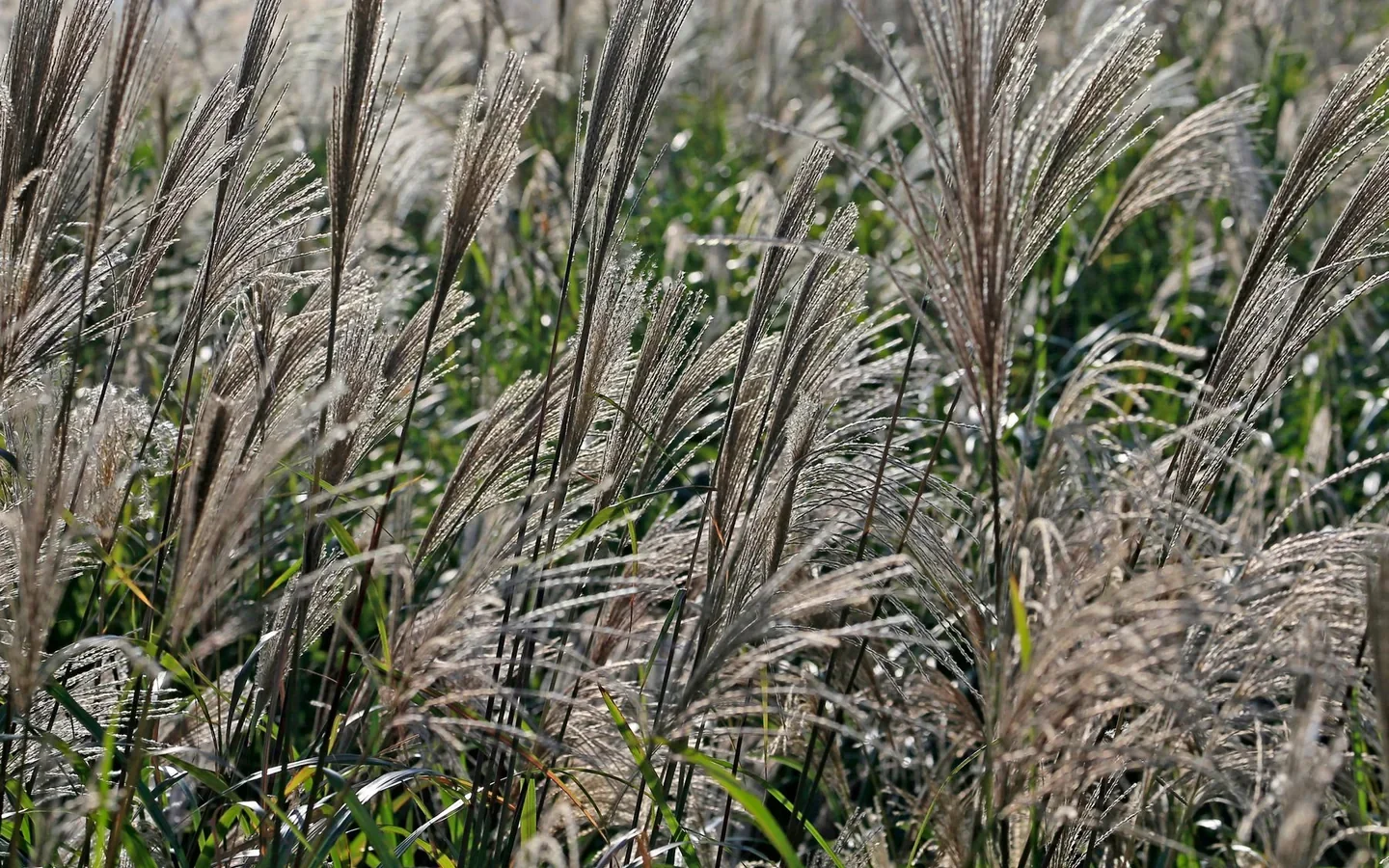
An ornamental grass can look excellent for years without attention, then suddenly develop a tired centre or become too wide for its border. Division lets you rejuvenate the clump, create another plant and reclaim some growing space.
But not every grass starts growing at the same time. Dividing a dormant warm-season grass in cold March soil is different from dividing a cool-season sedge that is already making new roots. Getting the timing right is more useful than using a bigger spade.
The short answer: which month?
For cool-season grasses, divide as new growth begins in late winter or early spring. That may be February to April depending on the weather and species.
For warm-season grasses, wait until they begin actively growing in late spring, often around May. These include Miscanthus, Panicum and Pennisetum.
Don't divide while the ground is frozen, saturated or baked hard by drought. Soil condition and visible plant growth are better guides than a fixed calendar date.
Know which group your grass belongs to
| Type | Examples | When to divide |
|---|---|---|
| Cool-season | Carex, Calamagrostis, Deschampsia, Festuca, Hakonechloa, Stipa | Late winter to early spring |
| Warm-season | Miscanthus, Panicum, Pennisetum, Imperata, Cortaderia | Late spring once growth resumes |
Check the botanical name. Common names can be misleading, and some sedges sold among ornamental grasses have different habits from true grasses.
Certain evergreen species only need tidying and occasional division, rather than being cut to the ground every spring.
Does the grass actually need splitting?
Division is useful when a clump becomes congested, loses vigour or grows beyond its space. Some cool-season grasses benefit from division every few years.
Warm-season types may remain attractive much longer before needing it. A big healthy Miscanthus that fits its position is not obliged to be divided on a timetable.
Look for a hollow or dying centre surrounded by vigorous outer shoots. This often signals that the outer sections are the best material to replant.
If a grass is flowering poorly but the clump isn't congested, lack of sunlight may be the issue rather than age.
Prepare the new planting space first
Before lifting anything, find somewhere for the divisions to go.
Choose soil and light that suit the species. Many ornamental grasses flower best in full sun, while some, including Hakonechloa and several Carex, tolerate partial shade.
Remove weeds and prepare the planting hole to the same depth as the original rootball.
Our plant spacing guide helps ensure that several modest divisions won't become an overcrowded wall of grass after two summers.
Water the parent clump if the soil has become unusually dry, but avoid working mud.
Tools for small and large clumps
For a small Carex or Hakonechloa, a garden fork and your hands may be enough.
A substantial Miscanthus clump may require a sharp spade, two garden forks inserted back-to-back or a pruning saw for especially dense crowns.
Wear gloves, eye protection and appropriate clothing. The edges of some grass leaves are sharp, and mature pampas grass can cut exposed skin badly.
Large clumps are heavy. If necessary, get help rather than trying to lift a dense root mass in one movement.
How to divide an ornamental grass
- Cut away dead top growth where appropriate for that type of grass.
- Dig around the outer edge, keeping as much root material as possible.
- Lift the clump, supporting its base.
- Inspect the crown and identify healthy outer shoots.
- Pull apart a loose clump by hand or lever it using forks.
- Cut through a tough crown with clean, strong tools if needed.
- Discard dead, rotten or hollow central sections.
- Keep generous sections with sound roots and several growing shoots.
- Replant promptly at the original growing depth.
- Firm soil gently and water well if conditions are dry.
Don't make dozens of tiny fragments merely because the crown can be cut that small. Larger divisions establish and look presentable much sooner.
Splitting a Miscanthus
Miscanthus often becomes a large, woody-rooted clump. It typically wakes up later in spring than cool-season grasses.
Wait for new shoots before dividing, then cut healthy outer sections with a sharp spade or suitable saw.
Discard the worn centre if it is dead. Plant divisions into an open sunny area where the foliage will have room to arch.
Avoid leaving newly cut roots exposed in warm, drying wind.
Dividing Carex and Hakonechloa
Many sedges and Japanese forest grasses are much easier to split. Their roots may separate into several well-rooted portions without heavy tools.
Work during their early growing period, keeping a healthy amount of root with each division.
Don't assume every sedge wants damp soil; species differ greatly. Choose the correct conditions for your plant.
A small division of Hakonechloa may be slower to fill out than a vigorous sedge. Water carefully while it establishes and avoid scorching sun.
What about pampas grass?
Pampas grass has sharp foliage and can form a large, dense crown. Divide it only if necessary and with suitable safety precautions.
Cut back old foliage before tackling the clump, wearing stout clothes, heavy gloves and eye protection.
A large established plant may be more work to divide than it is worth. If space is limited, consider replacing it with a smaller grass rather than attempting an unsafe lifting job.
Pampas grass also requires careful management to prevent unwanted spread in suitable climates.
Replanting at the correct depth
Place the division so its crown sits at approximately its previous soil depth. Don't bury living shoots under a thick mound of compost.
Backfill with the surrounding soil and firm to remove large air pockets. Water in thoroughly if dry.
A light mulch can conserve moisture, but keep the immediate crown free from wet material, especially for grasses that dislike winter damp.
Our soil preparation guide explains why it is better to wait than dig saturated clay.
Can you divide container-grown grasses?
Yes. Tip the plant out carefully and inspect its roots. A badly pot-bound grass may have an almost solid root mass.
Separate or cut the rootball into healthy sections, then repot them in fresh suitable compost with functioning drainage holes.
Don't choose an enormous pot for a tiny division; a moderate pot is easier to water appropriately.
Our pot compost guide helps assess compost and drainage for ornamental containers.
Aftercare during the first summer
New divisions need regular moisture while the disturbed roots recover. Check the soil instead of watering automatically.
Protect them from severe drying winds if they were separated late in spring. Some species may produce fewer flowerheads in the first season.
Don't force top growth with heavy nitrogen fertiliser. Let the roots recover.
If old foliage browns after division but new shoots remain healthy, the plant may simply be adjusting to its smaller root system.
Common mistakes
Dividing warm-season grasses too early: cold wet ground slows recovery.
Cutting evergreen sedges down to bare stumps: can spoil their appearance and growth.
Leaving tiny rootless fragments: reduces survival.
Burying crowns deeply: can lead to decay.
Working saturated soil: damages both roots and soil structure.
Splitting massive sharp-leaved plants without protection: risks injury.
Quick answers
Can I split Miscanthus in March? Usually better to wait until its growth starts in late spring.
Is autumn suitable for ornamental-grass division? Spring is generally preferred in the UK, especially for warm-season types.
Will divided grass flower the same year? It may, but substantial divisions can take a season to regain their full display.
How many sections should I make? Enough to produce vigorous pieces with several shoots and a good root system.
Wait for the right growth stage, divide healthy sections generously and plant them promptly. A vigorous younger clump will usually look better than a large exhausted one with a dead centre.