
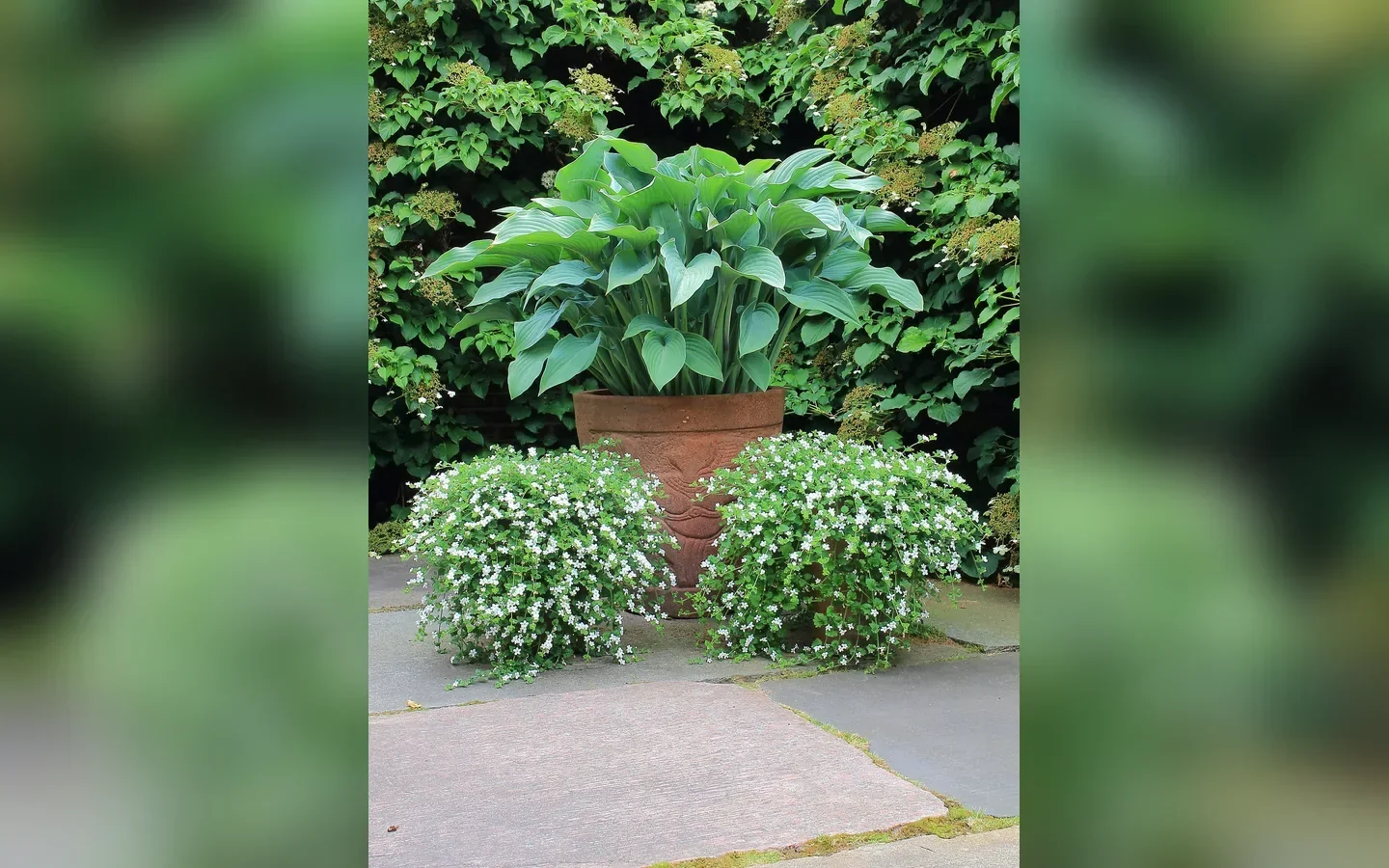
A well-established perennial can become a huge clump after several years. Sometimes it flowers less freely in the middle, crowds its neighbours or develops a worn-out centre. Division gives you a chance to rejuvenate it and make new plants at the same time.
The timing is not universal. Many summer-flowering perennials are divided in spring or autumn, while certain spring-flowering plants are better divided after they bloom. Knowing what kind of root system you have matters as much as choosing the month.
Does every perennial need dividing?
No. Some long-lived plants can remain healthy for many years without being lifted.
Look for genuine reasons: reduced flowering, congestion, a dying centre, or a need for more plants elsewhere.
A clump that is healthy, flowering strongly and fitting its position can be left alone. A large peony, for example, often resents unnecessary disturbance.
Don't divide an unfamiliar plant simply because it has been in the ground for three years. First check whether the species tolerates division.
General UK timing
| Plant or group | Useful division period | Notes |
|---|---|---|
| Hardy geraniums | Spring or autumn | Replant healthy rooted sections |
| Daylilies (Hemerocallis) | Spring or early autumn | Dense roots may need two forks |
| Hostas | Early spring or late autumn | Preserve several growing buds |
| Asters/symphyotrichum | Spring | Young outer sections often best |
| Achillea | Spring or autumn | Vigorous clumps may benefit from thinning |
| Primulas | After flowering or suitable autumn conditions | Avoid drying delicate roots |
| Crocosmia | Spring | Carefully separate corm chains |
| Bearded irises | Summer after flowering | Rhizomes need particular planting care |
| Warm-season ornamental grasses | Late spring as growth resumes | Avoid splitting dormant crowns in cold wet ground |
These timings are broad rather than exact. A wet November in Lancashire is not a suitable occasion to dig up a large clump just because autumn division is normally possible.
Why spring and autumn are useful
Division damages some roots. Plants generally recover better when conditions are cool enough to reduce water loss and warm enough to make new roots.
In spring, you can see emerging growth points and follow their development as the soil warms.
In autumn, many summer-flowering plants are finishing and can establish before winter, provided the ground doesn't become saturated.
A hot July afternoon is usually a poor time to split an actively flowering perennial with a large leaf area.
Spring division: the practical choices
Early spring is useful for many clump-forming summer and autumn bloomers as shoots begin to appear.
Lift the clump carefully, identify healthy new shoots and separate sections before foliage becomes extensive.
Spring also gives a long period for rooting before winter, which can be helpful for slightly tender plants.
But don't divide everything into tiny pieces. Several good stems and an established root section usually recover better than an isolated fragile shoot.
Autumn division: where it works
Early to mid-autumn can work well for many hardy perennials in reasonably drained soil.
Wait until the plant has finished its main flowering cycle, choose a cool day and water divisions if conditions are dry.
Avoid leaving newly divided plants in cold, saturated ground. In heavy clay, spring may be safer.
Don't divide a perennial just as an early severe frost is forecast if it won't have any opportunity to settle.
Plants with different rules
Bearded irises are commonly lifted and divided after flowering in summer, when their rhizomes can grow and establish before the following season.
Crocosmias form chains of corms. These can be separated carefully in spring, maintaining healthy roots and viable growth.
Peonies have thick fleshy roots and distinct crown buds. They are not divided by the same method as a soft fibrous-rooted hosta.
Ornamental grasses also vary in growth season. Warm-season Miscanthus is better split when growth has resumed in late spring.
Tools and preparation
Gather a garden fork, sharp spade, clean sturdy knife where needed, gloves, labels and a watering can.
Prepare the new planting space before lifting the original clump. Roots shouldn't be left drying in the wind while you search for pots.
If the original soil is dry, water the day before. If it's saturated, postpone digging.
Use clean tools if any nearby plants have shown rot or disease.
How to divide a clump step by step
- Loosen soil around the outside using a fork.
- Lift the whole clump with as many sound roots as practical.
- Shake away loose soil so you can see the crown and roots.
- Find healthy younger portions, often around the outer edge.
- Pull loose sections apart by hand or prise with two back-to-back forks.
- Cut dense rootballs with clean tools where necessary.
- Discard rotten, dead or badly damaged central sections.
- Keep robust divisions with several healthy shoots or buds and roots.
- Replant at the original growing depth.
- Firm the soil and water thoroughly.
Don't pull on the stems to separate a heavy rootball. That can tear the crown away from its roots.
What size should each division be?
For many fibrous-rooted perennials, several healthy shoots and a generous root section are a good target.
A tiny piece might survive, but it may take longer to fill a border and be more susceptible to drought.
For a large hosta, five or six healthy shoots can make a strong division. For an unfamiliar species, check its root structure and growth habits.
There's no prize for making twenty plants from a clump that would have produced four vigorous new specimens.
Replant at the same depth
A newly divided perennial should generally return to its appropriate original planting depth.
Avoid burying its growing crown in wet compost. That is especially important with species susceptible to crown rot.
Firm enough to remove large air gaps, but don't stamp saturated soil solid.
If you are relocating the plant, assess mature spacing. Our plant-spacing guide helps prevent the same congestion recurring next year.
Should you add fertiliser?
Mature garden compost can help poor soil structure and provide a modest nutrient contribution.
But strong fertiliser is not a replacement for healthy roots. A fresh division usually needs moisture and time more than a rapid growth boost.
Avoid burying highly enriched, wet compost directly against the crown.
Our soil-preparation guide explains why the condition of the soil matters before you attempt this job.
Dividing plants in pots
Tip a pot-grown perennial out onto a clean sheet or bench, supporting the rootball rather than pulling the stems.
Identify several rooted sections and carefully separate them. A badly pot-bound plant may require a clean sharp knife.
Repot into suitably sized containers with fresh peat-free compost and working drainage holes.
A very small division in an enormous permanently damp tub is more prone to problems than one in an appropriately sized pot.
Watering and early aftercare
Water newly planted sections promptly if the soil isn't already wet.
Check moisture regularly during dry weather until new roots develop. Shade from intense midday heat may help if division was unavoidable during an active growth period.
Watch for slugs around emerging foliage; damaged young shoots can delay recovery.
Don't judge success solely by whether the plant flowers immediately. New divisions sometimes devote their first season to making roots.
Problems after division
The plant wilts: roots may be disturbed or soil dry; check moisture and shelter.
Shoots rot at the base: look for excessive moisture, deep planting or diseased material.
Nothing grows the next spring: the section may lack viable buds or suffered severe winter damage.
Leaves appear but flowers are few: it may still be establishing.
The same clump deteriorates repeatedly: reconsider soil conditions, light and whether the plant is suited to the position.
When division is not the best answer
Some plants with deep taproots are hard to divide successfully. Others are best propagated from cuttings or seed.
A recently planted perennial that isn't yet mature doesn't benefit from frequent disturbance.
Large woody shrubs aren't divided like herbaceous clumps. Their roots and long-lived stems require a different propagation method.
Check the species rather than applying the same treatment to every plant that survives winter.
Quick answers
Is September good for splitting perennials? Often, for suitable hardy summer-flowering species where the soil is workable.
Can I divide in March? Yes for many clump-forming types, once growth begins and ground conditions allow.
Do divided plants flower in the first year? Some will, others need time to establish.
Must I divide every three years? No. Use plant vigour and congestion as your guide.
Division is one of the cheapest ways to refresh a border, but it works best when you respect the plant's growing season and keep every section genuinely well rooted.