
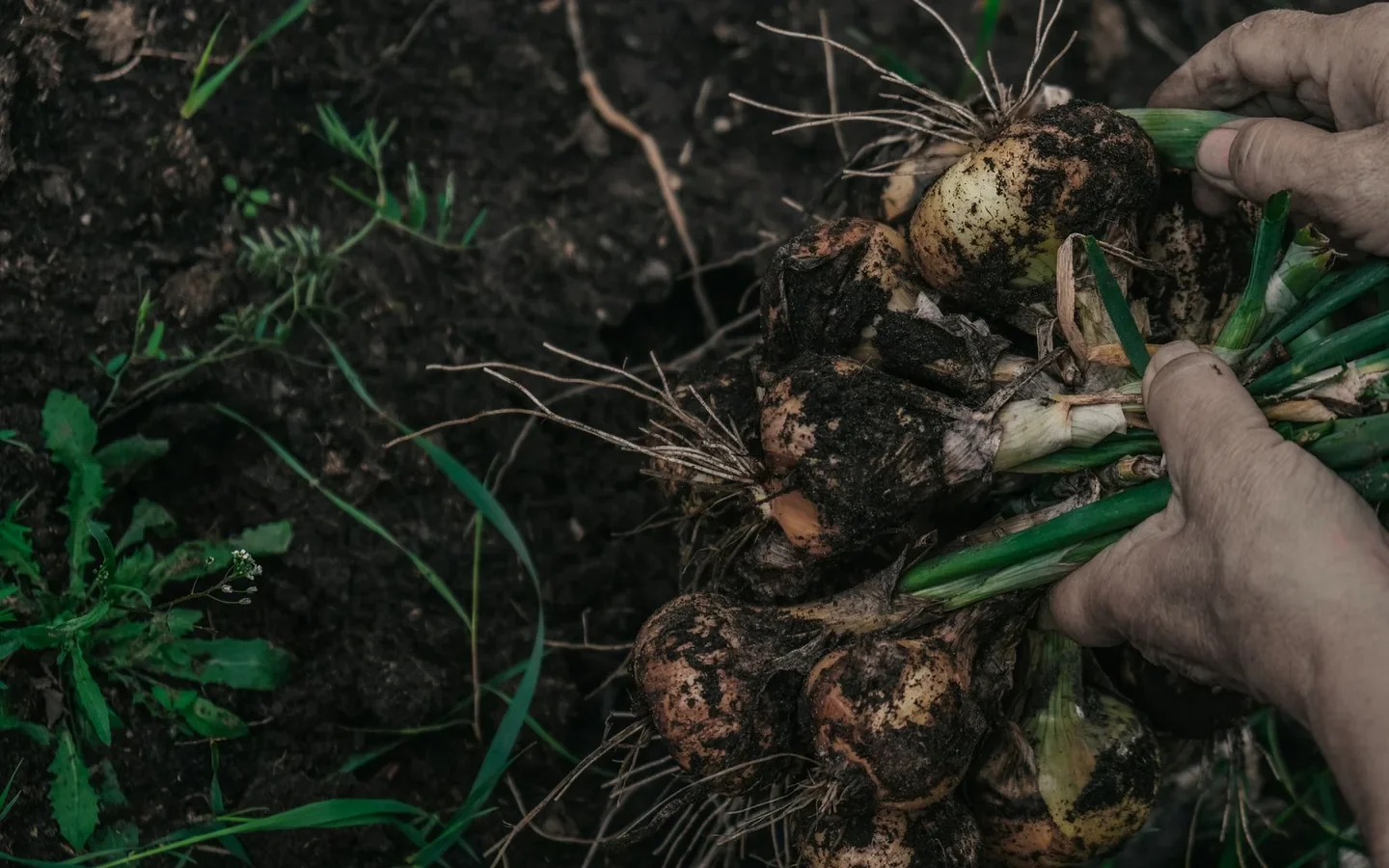
A row of onions can look vigorous in May and still produce disappointingly small bulbs by harvest. Sometimes the culprit is poor spacing or competition from weeds. Sometimes the crop simply didn't have enough time, sunlight or moisture to build a large bulb.
Before adding fertiliser, look at when the onions were planted and how their leaves grew through spring. Bulb size is closely linked to the amount of healthy foliage produced before the plant switches to swelling its bulb.
How big should the variety become?
Not every onion is meant to grow to supermarket size. Some varieties produce smaller flattened bulbs, while others are selected for large round onions or long storage.
Check the seed packet or set label. An early overwintering onion may mature at a different time from a spring-planted maincrop variety.
Don't compare a shallot or spring onion with a full-sized bulb onion. They're different crops or have different harvest aims.
If the onion is healthy, firm and fully mature but smaller than expected, variety and growing conditions both deserve consideration.
Too-close planting is common
Onions need enough space to develop their bulbs and leaves. Overcrowding restricts light and root access, particularly in relatively poor soil.
A useful planting spacing for many bulb onions is about 10–15cm between sets, with approximately 20–30cm between rows. Adjust for the variety and intended harvest size.
Thinning crowded seed-grown onions early gives the remaining plants room to enlarge.
Don't assume that the smallest possible spacing will produce the greatest usable harvest. It may produce many tiny bulbs.
What if the onion sets were planted very late?
Bulb onions respond to day length as well as temperature and variety. They need time to develop enough foliage before the bulbing stage.
A spring onion set planted much later than recommended may form fewer leaves before bulbing begins and therefore produce a smaller onion.
Choose the right planting month for the variety and your district. Overwintering types and spring-planted types aren't interchangeable.
Our guide to overwintering onions explains what differs from ordinary spring sets.
Are weeds stealing space?
Onions have narrow upright foliage and often cast little shade on the surrounding ground.
Weeds can grow rapidly between them and compete for water, nutrients and light during the critical early season.
Remove weeds while small and avoid disturbing the shallow onion roots with aggressive hoeing.
A carefully prepared, weed-free bed is one of the simplest improvements you can make next year.
Drought during early growth
Onion roots are relatively shallow. Dry spring weather can reduce leaf growth just when plants need to build their capacity for bulbing.
Check soil moisture beneath the surface and water during prolonged dry spells, particularly while plants are actively growing.
Water the soil rather than leaving foliage wet for long periods, which can contribute to disease problems.
Once bulbs have swollen and foliage begins naturally ripening down, reduce watering. Excess late irrigation can affect storage quality.
Does too much water make them small?
Waterlogged ground limits oxygen to roots and can cause rot or poor growth.
If onions remain pale, stunted or soft in persistently wet soil, inspect drainage before adding more water.
A raised bed can improve conditions on some sites, but only where excess water actually has somewhere to drain.
Our guide to preparing soil can help with compacted or heavy ground.
Not enough sunlight
Bulb onions perform best in a sunny, open position.
Dense shade reduces photosynthesis, leaving plants with less energy to develop a useful bulb.
An onion bed that worked well two years ago may now be shaded by a growing hedge or nearby structure.
Choose a sunnier position next season rather than expecting extra feeding to compensate for a severe shortage of light.
Soil fertility and feeding
Onions do well in fertile, reasonably well-drained soil with organic matter incorporated before planting.
Poor soil can limit foliage and bulb growth, but indiscriminate fertiliser isn't the answer. Excess nitrogen late in the season may encourage soft growth and poorer storage.
Use mature compost in bed preparation and, where the soil genuinely lacks nutrients, an appropriate fertiliser at the recommended rate.
Don't pile fresh manure against onion bulbs. The goal is sound soil and steady early growth, not a sudden late surge of foliage.
What about soil pH?
Very acidic or otherwise unsuitable soil conditions can restrict nutrient availability.
If several crops perform poorly in the same bed, a soil test can be worthwhile. Onions generally prefer a soil pH in the mildly acidic to neutral range, with suitable fertility and drainage.
Avoid adding lime without measuring the pH first. Too much can create new nutrient problems.
Our vegetable soil pH guide explains how to interpret test results before making changes.
Bolting diverts energy from the bulb
Bolting occurs when an onion sends up a flower stem instead of continuing normal bulbing and ripening.
Stress from cold, planting unsuitable sets or other growth interruptions can contribute. Some onion types are more prone than others.
Remove a developing flower stem if appropriate, but recognise that the bulb may already be compromised and may store poorly.
Use bolted onions promptly rather than relying on them for long winter storage.
Pests and diseases to consider
Onion fly, thrips, white rot and downy mildew can affect growth, although not every small bulb is diseased.
Inspect leaves for unusual streaks, silvering, distortion or collapse. Check bulbs for rot or damaged roots at harvest.
If a serious soil-borne problem is suspected, avoid moving infected material into healthy beds.
Do not apply a general pesticide simply because bulb size is disappointing. Identify the actual issue first.
Are onion sets too small to begin with?
A small sound planting set can still make a good bulb if grown under suitable conditions.
Extremely large sets may have different bolting risks, and damaged or dried-out sets may establish poorly.
Use healthy certified planting stock from an appropriate supplier and store it properly until planting.
Don't assume the biggest set in a bag automatically produces the largest mature onion.
Why seed-grown onions may remain small
Seed-grown onions generally need an earlier start and more growing time than sets.
If they are sown very late, remain crowded in modules or are transplanted after becoming badly root-bound, they may have less time to develop.
Start at the recommended date for the variety, give seedlings enough light and plant them out before roots become cramped.
If growing a giant exhibition onion, that is a different cultivation system with specific sowing and feeding needs.
Should you cut the green leaves?
No. Healthy leaves provide the energy used to build the bulb.
Cutting the green tops early reduces the plant's capacity to swell its onion. Likewise, folding leaves over to "force" maturity is not a useful routine way to enlarge bulbs.
Allow leaves to finish their natural growth and ripening process.
Only remove diseased material where there is a sound reason and appropriate handling plan.
When are onions ready to harvest?
As the crop matures, leaves naturally turn yellow and fall over. Bulbs should develop firm skins and reach a useful size for the cultivar.
Not every plant finishes at exactly the same time. Check the row rather than using one fixed calendar day.
If a bulb has stopped growing and the neck is softening naturally, leaving it indefinitely in wet soil will not make it significantly larger.
For storage, lift and cure sound onions correctly. The timing depends on weather and variety.
A better plan for next year's crop
- Choose a bulb onion variety suited to your intended harvest.
- Plant at the recommended time for spring or autumn sets.
- Prepare a sunny, weed-free bed with workable soil.
- Give the bulbs their proper spacing.
- Keep weeds from competing throughout early growth.
- Water during prolonged dry weather while foliage is actively developing.
- Avoid overfeeding late in the season.
- Inspect the crop for bolting and disease.
- Allow foliage to ripen naturally before harvesting.
Take a photograph of a representative row in spring and again at harvest. You'll learn more from comparing actual growth than from adding random fertiliser.
Quick answers
Will small onions get bigger if left in the ground? Only while they're still actively growing. Fully mature onions won't become large simply by being left in wet soil.
Should I feed onions heavily in June? Not automatically; late excess nitrogen can reduce quality and storage.
Does spacing matter? Yes, wider suitable spacing generally gives individual bulbs room to swell.
Can small onions be eaten? Yes, if they're sound and healthy; small size alone isn't a safety concern.
A useful onion crop starts with sufficient time to grow leaves. Plant on schedule, keep the bed sunny and weed-free, and manage moisture during that early development.