
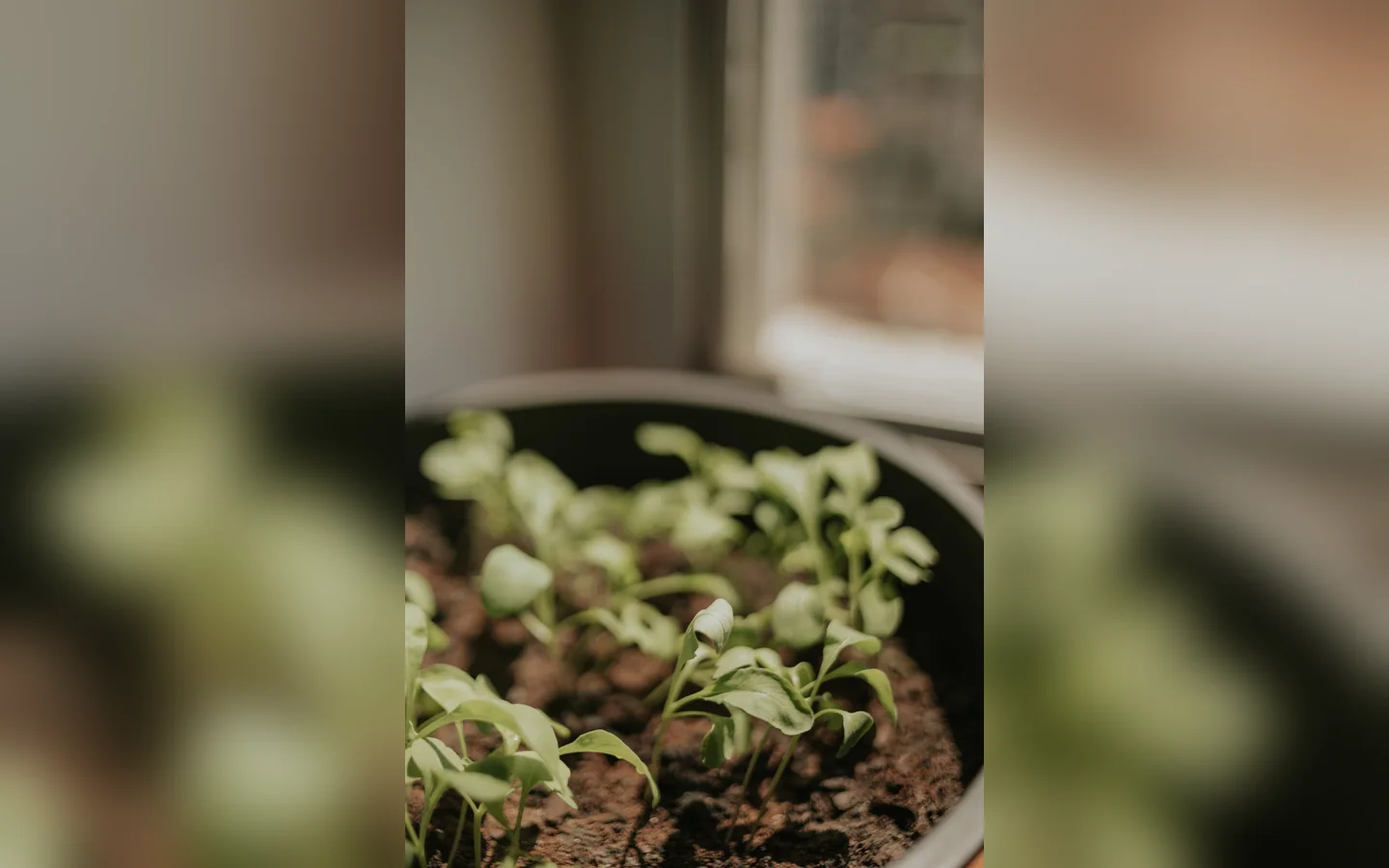
Seedlings that stretch upwards on long thin stems are telling you something about their growing conditions. The usual cause is too little light for the temperature they're growing in.
A warm windowsill can germinate seeds quickly, but if the light is weak the seedlings stretch as they try to reach it. You can improve future growth, and sometimes rescue existing plants, but not every seedling responds to deep replanting in the same way.
What does a leggy seedling look like?
A leggy seedling often has a long pale or thin stem below its first leaves. It may lean towards a window, topple over or look unusually tall relative to the size of its leaves.
The leaves can remain green and healthy at first. A seedling can be leggy without having any pest or disease.
Compare plants of the same variety, sown at the same time. Some naturally grow taller than others, so height alone doesn't prove a problem.
Why do seedlings become leggy?
| Cause | Typical clue | What to change |
|---|---|---|
| Weak light | Seedlings leaning towards a window | Move to brighter appropriate light |
| Too much warmth for available light | Fast stem growth, small leaves | Lower temperature after germination where suitable |
| Crowded seed trays | Stems competing and shaded | Thin or prick out carefully |
| Sowing too early | Large seedlings before outdoor conditions improve | Adjust next year's sowing date |
| Indoor light too far from plants | Rapid stretch under a lamp | Adjust light position safely |
| Too much nitrogen or weak growing medium management | Soft growth and weak balance | Avoid strong feeding of tiny seedlings |
Light and temperature are the first things to assess.
How light causes stretching
Seedlings use light to build leaves and sturdy shoots. In weak light, they often produce elongated stems in an attempt to reach more of it.
A bright-looking room may still provide much less usable growing light than a sheltered greenhouse or outdoor spring day.
A south-facing windowsill can be useful, but winter and very early spring daylight may be insufficient for warm-growing crops such as tomatoes.
Turn trays occasionally if plants are bending towards a window, but rotation doesn't replace adequate light.
What temperature should seedlings have?
Different species need different temperatures for germination and for later growth.
Many seeds germinate best in warmth, but young seedlings often grow stronger if the temperature is reduced once they emerge, provided the species can tolerate it.
A tomato can germinate in warmth then grow steadily with bright light and moderately cooler conditions. A tender plant shouldn't be placed outside in frost just to slow stretching.
Follow the seed packet's species-specific guidance rather than cooling every tray to the same temperature.
How to use grow lights effectively
A suitable horticultural grow light can help when indoor daylight is weak.
Position and distance matter. A light too high above the tray provides little benefit, while a powerful lamp too close can overheat or scorch plants.
Follow the manufacturer's recommended distance, intensity and daily photoperiod. Use a timer so seedlings receive regular light and a normal dark period.
Avoid improvising unsafe electrical setups near water trays or using a lamp that produces excessive heat.
Should you prick out leggy seedlings?
Once seedlings have suitable true leaves and enough roots to handle, move them into individual modules or pots if they're crowded.
Handle them by a leaf rather than squeezing the fragile stem, and use suitable peat-free seedling or potting compost.
Give them enough space so neighbouring leaves don't shade each other. Keep the compost moist but not saturated while they settle.
Our pot and container compost guide explains medium choice and how drainage influences young roots.
Can you bury a leggy tomato seedling deeper?
Tomatoes often form adventitious roots along buried stems, so a stretched tomato seedling can frequently be planted deeper into its new pot once it is healthy enough to handle.
This is not a rule for every seedling. Some plants, especially those prone to crown rot or with a sensitive growing point, can suffer if buried deeply.
Check the crop before changing planting depth. Don't bury a lettuce, basil or delicate flower seedling up to its leaves simply because the method works for tomatoes.
Seedlings falling over: leggy or damping off?
This distinction matters.
A healthy leggy seedling usually has a long but intact stem and may bend towards the light.
Damping off is a disease problem where young seedlings collapse, often with a narrowed, darkened or rotten area close to the compost surface.
If stems are visibly rotting, changing the light alone won't cure affected plants. Remove collapsed seedlings, improve hygiene and use suitable clean compost and drainage.
Avoid overwatering crowded trays or leaving them in cold stagnant conditions.
Can leggy seedlings recover?
Some can improve significantly once they receive more light, suitable temperature and room.
Existing elongated stem sections usually do not become short again. New growth may be sturdier, and a healthy seedling can sometimes be potted on or supported temporarily.
Very weak, pale seedlings that keep collapsing may be better replaced. Reseeding at the correct time often saves effort compared with trying to rescue a tray grown too early.
Why early sowing can backfire
It's tempting to sow tomatoes, cosmos and other favourites months ahead of outdoor planting time.
But if you have limited windowsill light, they may outgrow their pots before nights are warm enough to move them outside.
Use realistic sowing dates and consider how much indoor or greenhouse space you have.
Our when to start seeds indoors guide helps plan a sensible sequence instead of sowing everything in January.
Watering and airflow
Water seedlings carefully so roots have access to moisture and oxygen. Constantly saturated compost encourages root trouble, while bone-dry compost slows growth.
Good airflow can help build sturdier plants and reduce stale humid conditions, but avoid strong cold draughts directly across delicate trays.
A gentle fan may be appropriate in some indoor setups, but correct light is more important than trying to strengthen a stretched plant through wind.
Hardening off before planting outside
Even healthy indoor seedlings need gradual exposure to outdoor sunshine, wind and temperature changes.
Move them outside for short sheltered periods when weather permits, increasing exposure over several days.
Our hardening-off guide covers that transition. It won't correct poor light indoors, but it helps avoid sun and wind damage once plants are ready.
Mistakes that keep seedlings weak
- Sowing far earlier than your lighting setup can support.
- Keeping seedlings on a very warm dark shelf after germination.
- Believing a fan can make up for inadequate light.
- Burying every species as deeply as a tomato.
- Ignoring collapsed, rotting stems as though they are merely stretched.
- Crowding seedlings until leaves overlap heavily.
- Giving young seedlings a strong fertiliser dose to force growth.
Why are my cosmos seedlings so leggy?
They often stretch in warm conditions with insufficient light, particularly when started too early indoors.
Should I remove leggy seedlings?
Not automatically. Improve conditions and assess whether the plant has healthy roots and new growth before deciding.
How many hours should seedlings be under grow lights?
It depends on species and lamp intensity. Follow the light manufacturer's instructions and provide a regular dark period rather than leaving every light on continuously.