
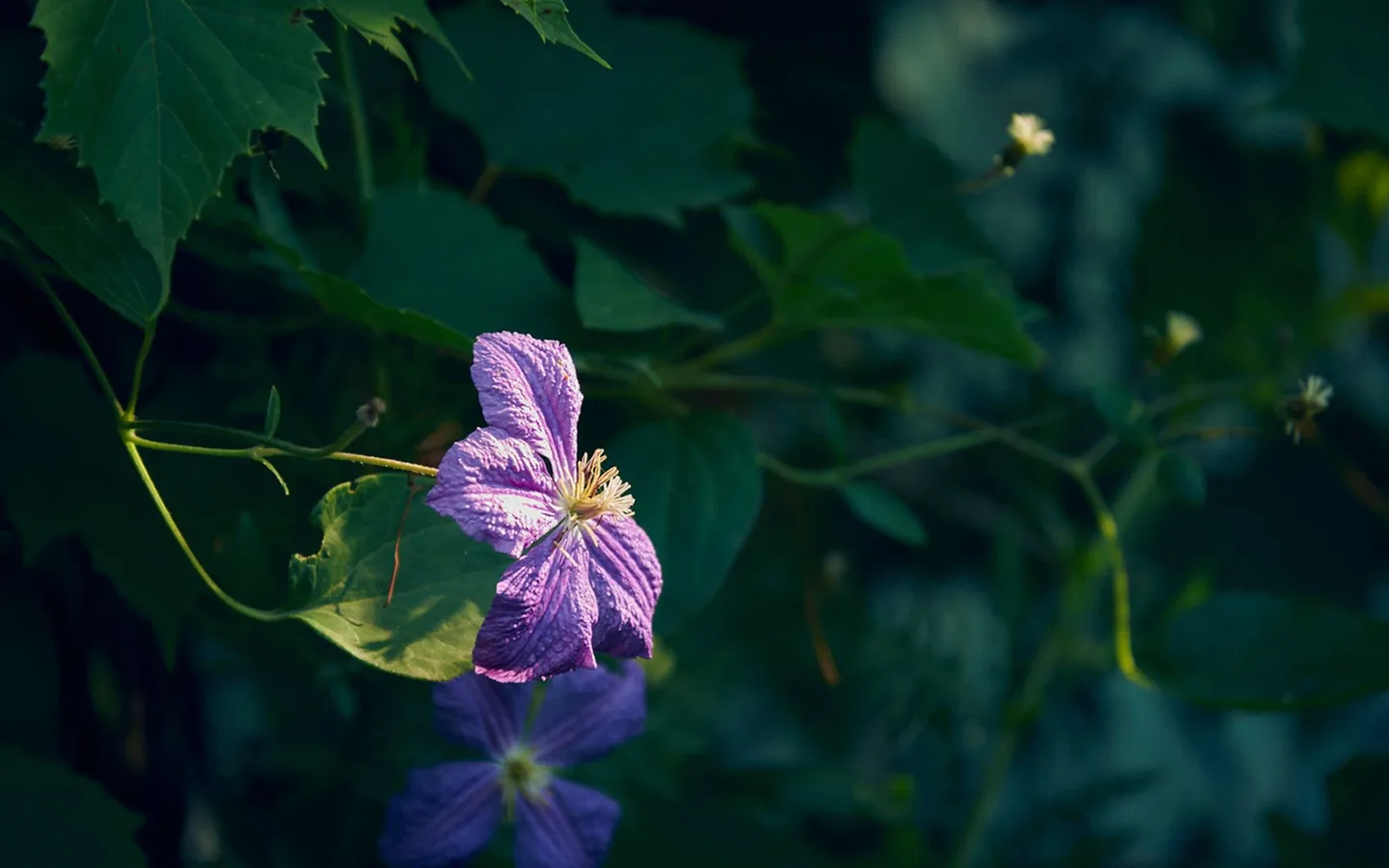
A clematis that climbs enthusiastically but never produces flowers can be particularly frustrating because the leaves suggest it is doing well. In many cases, though, the plant is perfectly capable of blooming: the flower buds were removed at pruning time, or the shoots aren't getting the conditions they need.
Start with the label or a description of the cultivar. Knowing when your clematis should flower makes diagnosing the problem much easier.
Check the pruning group before cutting anything
Clematis are divided into three broad pruning groups, and the groups flower on different ages of growth.
| Pruning group | Typical flowering | What can go wrong |
|---|---|---|
| Group 1 | Winter or spring, mostly on older shoots | Cutting hard in late winter removes buds |
| Group 2 | Late spring or early summer, sometimes a later flush | Hard pruning removes many early flowers |
| Group 3 | Mid- to late summer on new growth | Neglecting pruning can lead to tangled, unproductive lower stems |
A vigorous early-flowering Clematis montana cut to the ground in February is unlikely to produce its normal show that spring. A Group 3 cultivar that is pruned hard in late winter, by contrast, can still bloom on the current season's growth.
Don't apply a generic “cut all clematis back to 30cm” rule without confirming the cultivar.
1. The plant was pruned at the wrong time
Think back to the last cut. Did you remove all the old stems because they looked brown and lifeless? Many clematis stems look woody even when they carry living buds.
If you pruned an early-flowering cultivar severely, the most helpful action may be to leave it alone and let a framework of new stems develop for next year.
Don't attempt to force immediate flowers with extra feed. Protect fresh growth and prune correctly at the next appropriate time.
2. The top of the plant is in too much shade
Many clematis appreciate cool roots, but their leafy shoots and flowering stems usually need a good amount of light.
A plant growing behind a dense evergreen shrub may produce long, stretched vines with few buds. A fence that receives a little sun in summer can be far darker in spring when an early-flowering cultivar needs it.
Consider training young shoots towards a brighter section of trellis, provided the support is sound. Don't dig up a huge established root system during a heatwave just because the plant missed one flowering season.
3. The roots are drying out
Clematis are often planted near walls and fences, where an overhang creates a rain shadow. The leaves may remain green for a while even when the rootball experiences repeated drought.
Check moisture several centimetres beneath the surface. Water deeply during a dry spell, letting moisture reach the roots rather than sprinkling the top. A suitable organic mulch can help reduce evaporation; leave it clear of the stems.
Our guide to improving garden soil naturally covers how to improve poor structure where water is running off compacted soil.
4. The roots are too wet or damaged
The opposite problem also happens. In heavy waterlogged ground or a decorative pot without an outlet, roots may lose oxygen and stop growing properly.
If the soil is persistently soggy, don't add more water. Check drainage and consider whether nearby paving is sending runoff straight into the planting hole.
For container plants, examine whether the pot has become rootbound or is far too large for the existing rootball. Use suitable compost and open drainage holes.
5. The plant is young or still establishing
Some newly planted clematis spend the first season making roots and new shoots. Others flower modestly until their framework is established.
If the plant was only purchased recently, is in the right light and has healthy growth, give it time. Regularly lifting and moving it can delay establishment.
Remember that a plant bought in bloom may have been raised under ideal nursery conditions, so it won't necessarily repeat that display immediately after planting.
6. Frost or cold weather damaged flower buds
Early flowering buds can be lost to late spring frost, particularly after a mild spell encourages growth.
Check for shrivelled or blackened young shoots. Wait to see which buds recover before pruning anything that still has signs of life.
A sheltered growing position reduces damage from cold winds. Fleece may be helpful over vulnerable small plants during a brief frost but is no guarantee in severe weather.
The same kind of frost injury can affect other garden shrubs; our guide to frost damage recovery explains why healthy roots may still produce fresh shoots afterward.
7. Feeding is out of balance
A plant heavily fed with nitrogen may make lots of leaves without better flowering. Feeding won't replace sufficient sunlight or correct damaged roots.
Where the plant is established and otherwise healthy but grows in depleted soil, a suitable balanced feed or one with potassium used according to the label may support flowering. Don't sprinkle fertiliser onto dry roots or exceed the dose.
Check the first six explanations before assuming a nutritional deficiency.
What the symptoms suggest
| What you see | First question |
|---|---|
| Strong leaves after hard late-winter pruning | Was it Group 1 or 2? |
| Long shoots in deep shade | Is there enough light for buds? |
| Leaves regularly wilt on sunny afternoons | Is the root zone drying out? |
| Wet compost, yellowing and weak stems | Are the roots damaged? |
| Newly planted vine with vigorous green shoots | Does it need another season? |
| Blackened new tips after a cold night | Did frost kill early buds? |
| Dense leafy growth after heavy feeding | Could excess nitrogen be involved? |
A simple rescue plan this season
- Identify the cultivar and pruning group from its label if possible.
- Check whether the expected flowering period has actually arrived.
- Feel the root zone; correct drought or waterlogging rather than watering automatically.
- Assess sunlight on the flowering stems.
- Inspect shoot tips for frost damage, broken stems or pests.
- Stop unnecessary hard pruning and heavy feeding.
- Allow healthy shoots to mature, then follow the correct pruning calendar.
For a clematis planted in a pot, our pot compost guide helps you choose a more suitable growing medium if the existing mix is failing.
Should you cut a flowerless clematis back?
Only if its pruning group and condition call for it. A late-flowering Group 3 plant may benefit from normal annual late-winter pruning; a healthy Group 1 plant could lose next year's flowers if cut at the same time.
Remove clearly dead or broken stems with clean secateurs when appropriate, but don't punish the plant because you haven't yet seen flowers.
How long before it flowers again?
If the wrong pruning removed buds, you may have to wait until the following normal flowering season. If drought or shade was the cause, recovery depends on how quickly conditions improve and when the plant naturally sets buds.
You cannot make a spring-flowering variety produce a full display in November by feeding it.
Can a clematis have too much sun?
Some varieties suffer in fierce heat when roots dry out, even while their leaves need plenty of light. Keep the root zone cool and moist without waterlogging.
Does a clematis need two plants to flower?
No. A single healthy clematis can flower. Lack of a second plant is not the reason for no blooms.
Why does my clematis flower at the top only?
Older neglected vines, especially some Group 3 types, may have bare lower stems. Correct pruning and training can encourage a better distribution of growth.