
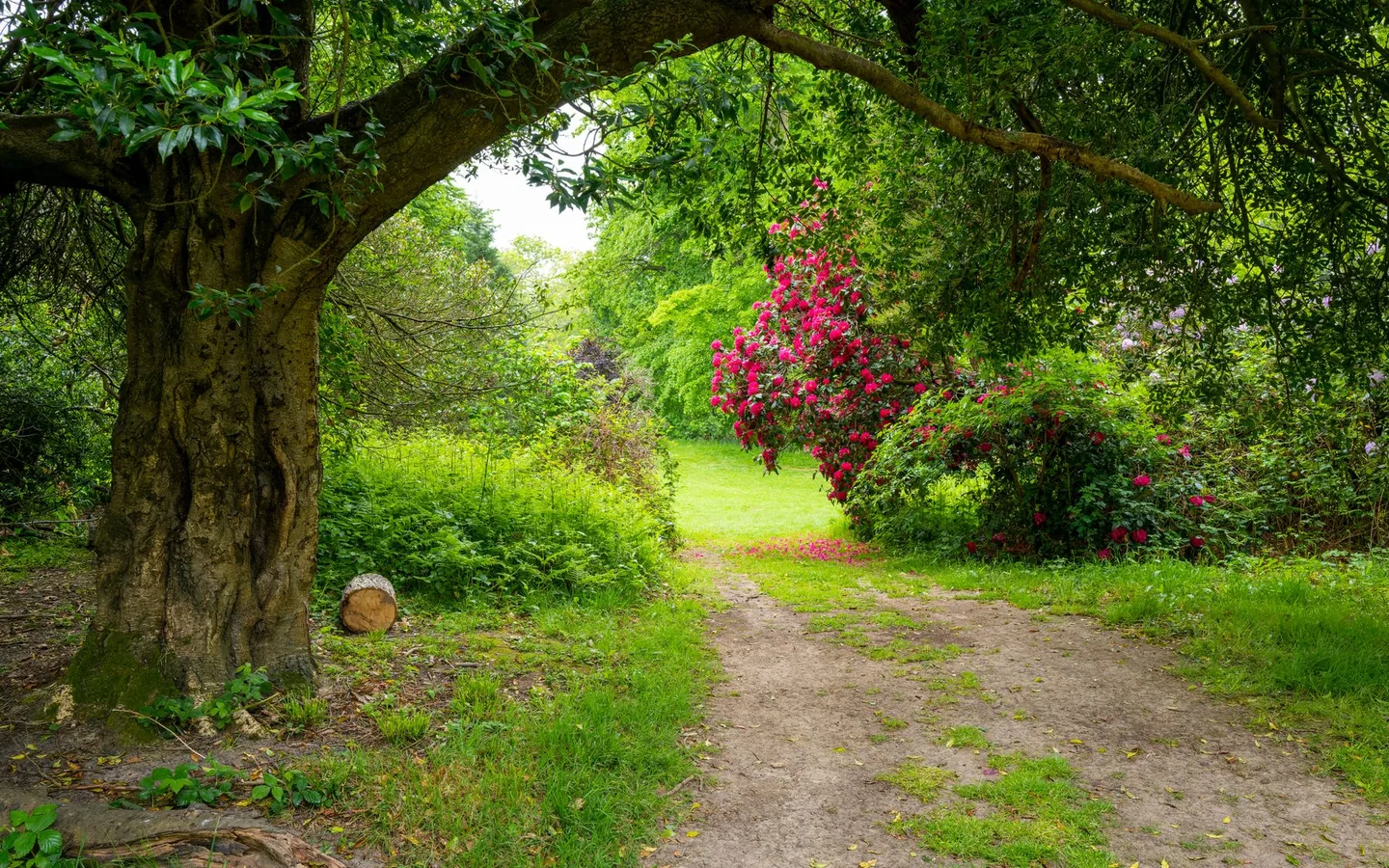
An east-facing garden usually receives morning sunshine and afternoon shade. That's a useful combination for many plants that like some light but struggle in intense late-day heat.
It's not the same as a north-facing garden. In summer, a clear eastern border may get enough direct sun for many flowers, while a narrow strip blocked by the house or a tall tree may remain shaded for much of the day.
Observe your own garden before choosing plants. Aspect is only one part of the light story.
What does east-facing mean for UK gardens?
An east-facing wall or border looks towards the rising sun. Depending on buildings, trees and season, it may receive direct sunlight from early morning until around midday.
By afternoon it is generally cooler and more sheltered from direct sun than a west-facing position. This often helps moisture-loving shrubs and perennials keep their leaves in good condition.
In winter, morning sun can thaw frost-damaged buds quickly, which may affect sensitive spring-flowering plants. Local shelter is still important.
Plants that often suit morning sun
| Plant | Main interest | What it needs |
|---|---|---|
| Hydrangea macrophylla | Large summer flowerheads | Moist but drained soil and space |
| Astrantia | Delicate summer flowers | Light shade and moisture-retentive soil |
| Hardy geranium | Ground-cover flowers | Correct cultivar and reasonable moisture |
| Hellebore | Winter and spring flowers | Sheltered soil with drainage |
| Brunnera | Blue spring flowers and patterned leaves | Cool conditions, moisture |
| Heuchera | Coloured foliage | Some shade from strongest sun, adequate drainage |
| Japanese anemone | Late summer flowers | Room to spread and moderate moisture |
| Ferns, suitable species | Foliage and texture | Species-specific moisture needs |
| Clematis, suitable cultivar | Climbing flowers | Light on shoots and a cool root zone |
| Fuchsia, hardy varieties | Long seasonal flowers | Shelter, moisture and winter suitability |
The list isn't universal. In a very shaded northeast-facing courtyard, even shade-tolerant plants may flower less freely.
Hydrangeas and east-facing borders
Many mophead and lacecap hydrangeas appreciate morning sun with protection from fierce afternoon heat.
They need root moisture to support their large leaves. If your east wall has an overhang that keeps rainfall away, you may still have to water regularly.
Choose a shrub with mature dimensions that fit the space. Many hydrangeas become broad and shouldn't be squeezed beneath a low window.
Don't hard-prune a traditional mophead indiscriminately in spring; it may be carrying flower buds on last year's stems.
Shade-tolerant flowering perennials
Astrantia can perform well in light shade with moisture-retentive soil, sending up elegant flower stems during summer.
Hardy geraniums offer plenty of variety. Some cope with dry conditions and others prefer moisture, so select an appropriate cultivar rather than treating every geranium alike.
Hellebores bring flowers during colder months and appreciate suitable sheltered conditions. Keep their crowns clear of thick wet mulch.
Japanese anemones provide late flowers in light shade, but can spread strongly; don't plant a vigorous form into a tiny border unless you can manage it.
East-facing containers and patios
Morning sunshine can be gentle on potted plants, but pots close to a house may receive less rain than open garden beds.
Choose adequate root volume and drainage. Group plants with similar moisture needs instead of combining a drought-loving lavender with a thirsty shade perennial in the same small pot.
For larger planters, our pot compost calculator helps estimate growing medium.
A sheltered east-facing patio may also be useful for tender summer fuchsias, provided they are protected from frost and given enough light.
Will roses or lavender grow facing east?
Some roses can grow and flower with several hours of morning sun, particularly where the site is open and bright. Deep shade generally reduces flowering and may worsen fungal problems.
Lavender usually prefers full sun and fast drainage. A bright east-facing position with many hours of direct sun might work, but a short dark morning is rarely ideal.
Don't buy solely on the word “east-facing”; count actual sunlight hours during the growing season.
The important problem: winter morning sun
Cold nights can freeze tender buds and foliage. When strong early sun hits them suddenly, the rapid thaw can damage vulnerable plants, including some camellias.
Camellias are often happier in a sheltered position protected from harsh early morning sunlight during frost, despite enjoying some light in general.
Use trees, shrubs or a suitable screen to protect particularly frost-sensitive flowering plants rather than assuming all morning sun is gentle.
Planting under an eastern roof overhang
A shaded bed beside the house can be dry even after rain. Check soil moisture at root depth.
Prepare soil carefully, water newly planted specimens and add a suitable mulch. Avoid raising soil against air bricks, damp-proof courses or vulnerable masonry.
Our soil improvement guide explains structure and drainage considerations, which matter as much as light.
A simple east-facing border combination
Try hellebores for late winter, brunnera for spring and repeating hardy geraniums for the main summer layer. Add a suitable hydrangea at one end if there is room, plus a Japanese anemone for late-season flowers.
Choose three or four repeated plant types rather than a single specimen of everything.
Use our plant spacing calculator to avoid crowding the border after the first growing season.
What if the garden faces northeast?
A northeast-facing space usually gets fewer hours of direct sun and may be cooler and more shaded, particularly when buildings block the early morning.
Focus more on foliage plants and species able to flower in light shade, and avoid relying on Mediterranean sun lovers for the main display.
Common mistakes
- Assuming east-facing means full shade all day.
- Buying full-sun plants without counting direct sunlight hours.
- Forgetting that soil under eaves can be dry.
- Letting a vigorous climber overwhelm a narrow fence.
- Placing frost-sensitive camellia flowers in a strong morning thaw.
- Choosing plants for aspect while ignoring soil moisture and wind.
Do east-facing gardens get enough sun?
Often yes for many shade-tolerant flowers and even some sun-loving plants, but exposure varies by obstacles and season.
Is an east-facing garden good for hydrangeas?
It can be excellent for many mopheads and lacecaps, provided the soil stays reasonably moist and the plant has space.
Can I grow vegetables in an east-facing garden?
Some leafy crops may cope with limited morning sun, but productive fruiting crops usually need considerably more direct light.