
Chalky soil can feel like a gardening problem when your favourite camellia turns yellow and the ground dries hard in summer. But it also has advantages: it usually drains freely and warms relatively quickly in spring. A wide range of flowering plants grow well in alkaline soil once you understand what lies beneath the surface.
The most effective approach is to grow plants that naturally tolerate lime, rather than continually trying to turn a chalky garden into an acid one.
How can you tell if your garden has chalky soil?
Chalky ground is often pale, stony and relatively free-draining. It may contain visible white fragments of chalk or limestone, and plants may struggle for moisture during dry spells.
A simple soil pH kit gives a better answer than looking at the soil colour alone. Chalky soils are usually alkaline, with a pH above 7.
Before choosing plants, also check the depth of topsoil. Some gardens have a workable layer of soil above chalk; others have only a few centimetres before reaching hard rock.
| Ground condition | What it means for planting |
|---|---|
| Deep fertile soil over chalk | More plant choices and improved moisture retention |
| Shallow stony soil | Choose smaller, drought-tolerant plants with modest root requirements |
| Chalk mixed with clay | Can hold more moisture; drainage varies |
| Very dry slope over chalk | Wind and drought may be bigger problems than alkalinity alone |
Best flowering perennials for chalky soil
Campanula includes several bellflowers that thrive in sunny, well-drained alkaline ground. Choose species carefully: a low trailing campanula suits a wall edge, while a tall form needs a border.
Dianthus, including many garden pinks, prefers good drainage and can flower beautifully in lime-rich soil. Avoid constantly wet winter conditions around its crown.
Hardy geraniums are useful too, although their tolerance varies. Geranium sanguineum is a good candidate for sunny dryish soil, while other varieties prefer more moisture.
Achillea and some salvias suit sunny, free-draining borders. Select hardy types appropriate to your winter temperatures, rather than assuming every Mediterranean-looking plant will survive outdoors.
Hellebores, particularly suitable species and cultivars, can add spring flowers to more sheltered positions where enough soil moisture remains available.
Lavender and herbs on alkaline ground
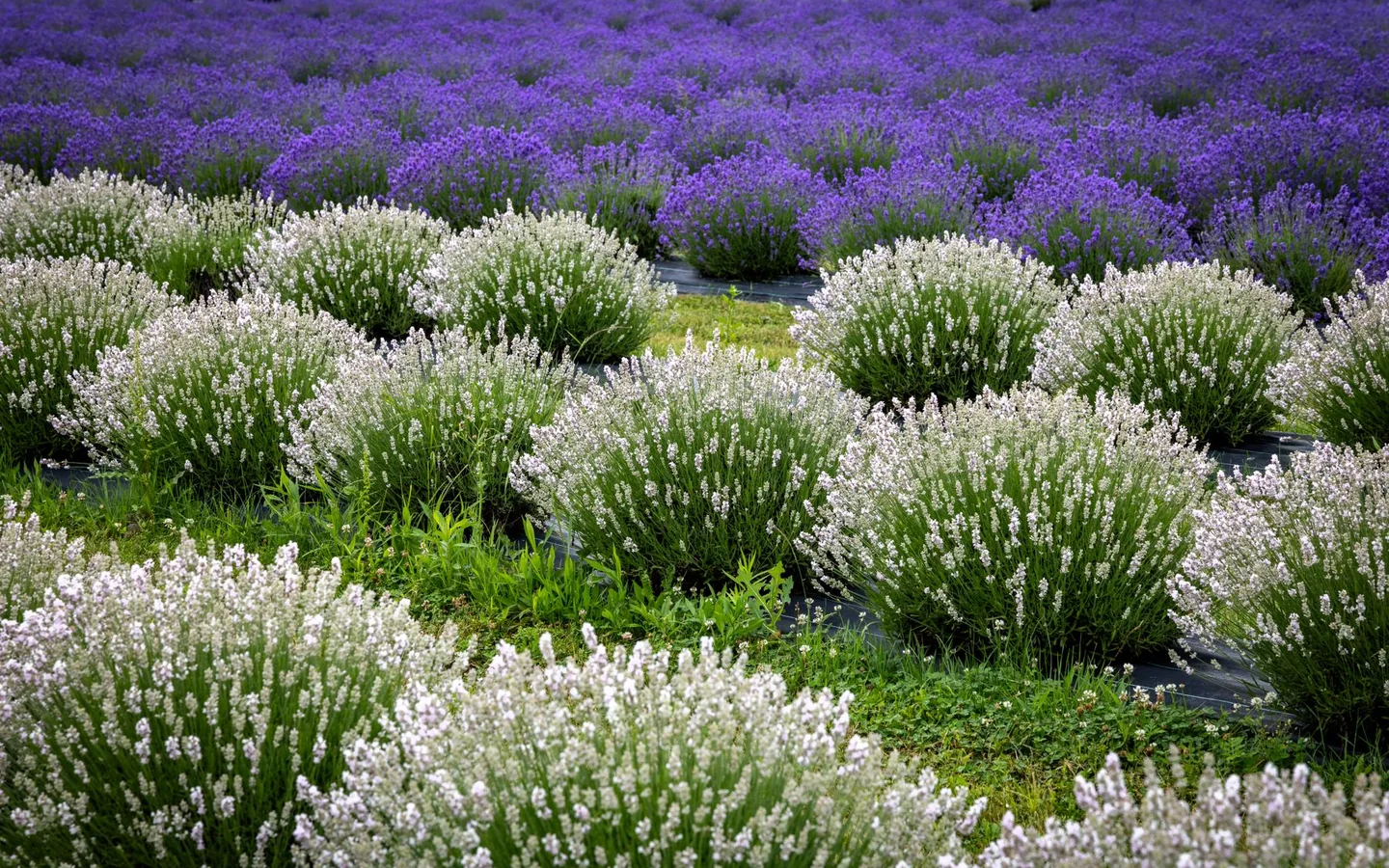
English lavender often performs well on alkaline soil, provided it receives sunshine and its roots are not waterlogged.
Thyme, sage and some other Mediterranean herbs also suit sunny free-draining positions. But a chalky site near a cold, exposed wall may still be challenging during winter.
Drainage matters as much as pH. A plant that tolerates lime may not tolerate six months of saturated soil.
Newly planted lavender and herbs need watering while establishing. Their reputation for drought tolerance applies mainly to healthy plants with developed roots.
Shrubs and climbers that tolerate lime
Some ceanothus cultivars can perform well on free-draining alkaline soil in a warm sheltered spot, though winter hardiness varies.
Clematis can grow successfully on many alkaline soils. Choose a cultivar suited to the available light, mature support and pruning requirements rather than assuming every clematis likes the same position.
Buddleja often tolerates lime, dryness and poor ground, but can become substantial and self-seed readily. Choose a compact cultivar and remove unwanted seedlings responsibly.
Suitable roses can also do well on many alkaline soils, particularly when the soil has enough depth and nutrients. Severe chlorosis or drought may still affect plants in very shallow chalk.
What grows in chalky shade?
Shaded chalk is often dry too, especially beneath established trees. Suitable epimediums, hellebores and certain hardy geraniums may be more reliable than moisture-loving woodland plants.
But no plant enjoys being dropped straight into a pit of powder-dry chalk beneath tree roots. Water during establishment and avoid damaging major roots when preparing planting holes.
If there is too little workable soil, move the planting towards the canopy edge or use a suitably sized container rather than forcing large shrubs into an unsuitable position.
Why do some plants turn yellow on chalk?
Alkaline soil can make iron and manganese less available to plants. Some susceptible species develop lime-induced chlorosis, where leaves become yellow but veins remain greener.
This is especially common among acid-loving plants such as rhododendrons, camellias and many blueberries.
Do not assume yellow leaves always mean a lack of fertiliser. Waterlogged roots, drought, pests and ordinary leaf ageing can also cause yellowing.
Test pH and root conditions before applying treatments. Adding an acid feed to a plant in permanent chalky ground may provide a temporary effect without fixing its long-term suitability.
Can you improve chalky soil?
Yes, its structure and moisture retention can often be improved, even if you cannot permanently change the underlying geology.
- Remove perennial weeds before planting.
- Work suitable well-rotted organic matter into workable topsoil where necessary.
- Mulch after planting to reduce evaporation, leaving crowns and stems clear.
- Avoid digging or mixing in huge quantities of acidifying material in an attempt to change a naturally calcareous bed.
- Water new planting thoroughly in dry weather.
- Use smaller nursery plants when soil depth is limited; they can establish more easily.
For practical soil improvement, see how to improve garden soil naturally.
Should you add more topsoil?
Where only a thin layer covers solid chalk, a well-designed raised bed or additional compatible topsoil can create a useful root zone.
Don't pile soil against house damp-proof courses, tree trunks or boundary structures. Check drainage and any weight or retaining-wall requirements before building a tall raised bed.
If planning a planting area, the topsoil calculator helps estimate quantities after you've measured the depth and area.
Plants best avoided in strongly alkaline soil
Acid-loving rhododendrons, azaleas, camellias and blueberries are generally poor long-term choices for ordinary chalky ground.
A large isolated pocket of ericaceous compost in the soil is unlikely to solve the problem permanently because roots eventually grow into the surrounding alkaline ground.
Grow those plants in suitable containers filled with peat-free ericaceous compost instead. Check drainage and use rainwater where possible.
A simple sunny chalk-border planting plan
For a reasonably deep free-draining bed, group lavender and hardy pinks towards the front, repeat hardy geraniums and campanulas through the middle, then use taller achilleas or a well-chosen small shrub behind.
Choose two or three repeated plant groups rather than one of everything. This gives a more coherent display and simpler maintenance.
Check mature spread before planting. Our plant spacing calculator can help plan numbers.
Mistakes to avoid
- Trying to acidify a naturally chalky garden permanently with small bags of compost.
- Planting lime-hating shrubs simply because their flowers look attractive.
- Assuming every chalky site is dry; chalk over clay can hold considerable water.
- Ignoring the depth of usable topsoil.
- Treating established drought tolerance as permission to neglect new planting.
- Choosing vigorous shrubs for a shallow narrow strip.
Is chalky soil good for lavender?
Often yes. English lavender generally enjoys alkaline, free-draining soil and sunshine, although winter exposure matters.
What is the easiest perennial for chalk?
Suitable hardy geraniums, campanulas and dianthus are useful options. Choose the species or cultivar to suit shade, soil depth and winter drainage.
Can I grow blueberries in chalky soil?
Not reliably in strongly alkaline ground. A large container with suitable ericaceous compost is usually a more practical solution.