
A dry garden doesn't have to be a gravel patch with three struggling lavender plants. Once established, many perennials, grasses and shrubs cope well with low rainfall while providing flowers and habitat for insects.
The key is to match plants to both summer dryness and winter drainage. A sunny sandy border that dries quickly all year differs from heavy clay that becomes waterlogged in December and hard as concrete in August.
What makes a plant suitable for a dry UK garden?
Many drought-tolerant plants have narrow, grey, silver or furry leaves that reduce moisture loss or reflect intense sunlight.
Deep or spreading roots can help established plants access water beyond the topsoil.
But drought tolerant never means no watering after planting. Young plants need time to establish strong roots.
Even mature dry-garden plants may suffer in extreme heat when planted in tiny containers or poorly prepared ground.
Perennials for sunny, free-draining borders
| Plant | Garden value | Growing condition |
|---|---|---|
| Achillea (yarrow) | Long summer flowers, useful to pollinators | Full sun, well-drained soil |
| Stachys byzantina (lamb's ear) | Soft silver foliage, low edging | Sun and generally free drainage |
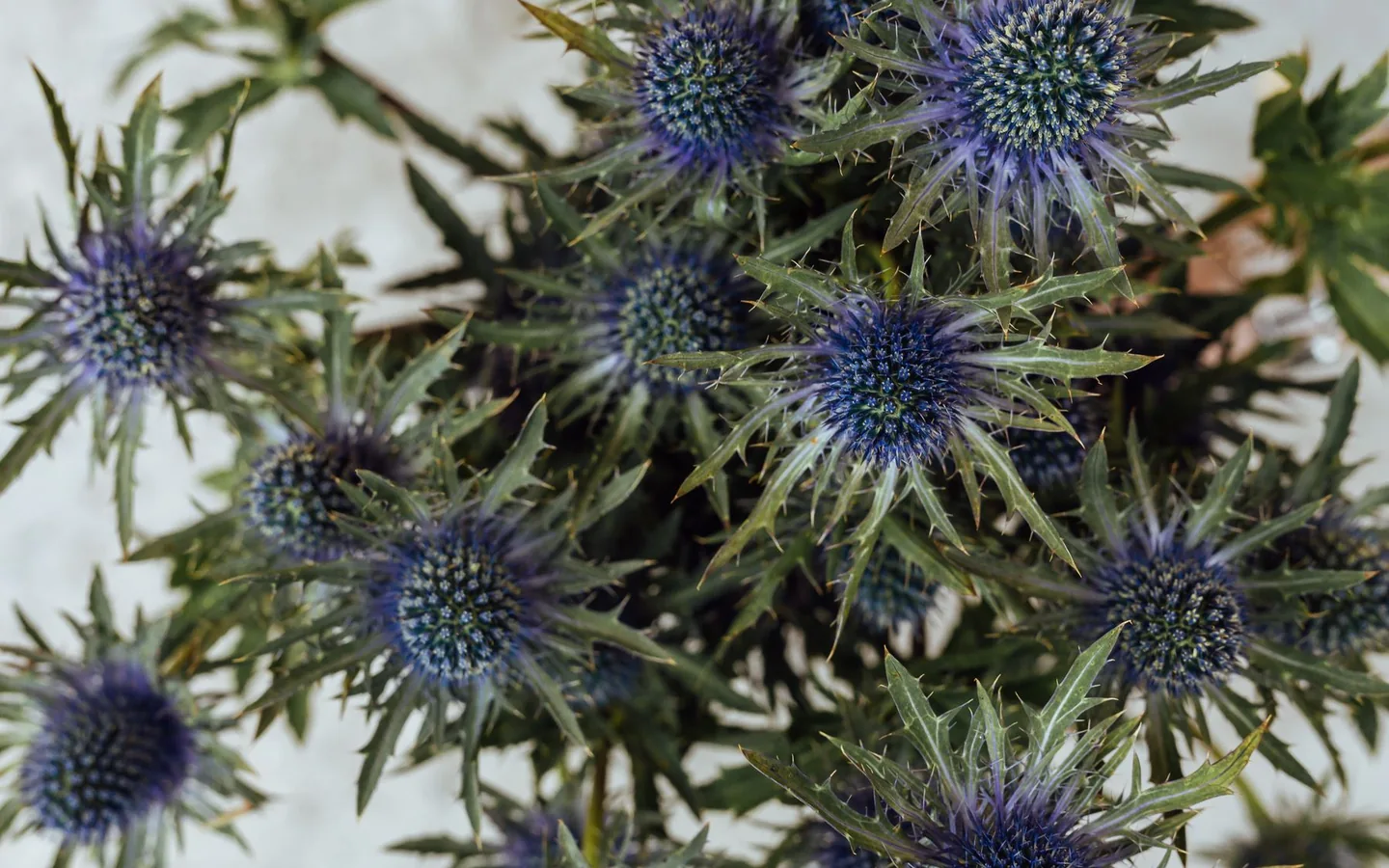
| Eryngium (sea holly) | Architectural blue or silvery flowerheads | Sunny, well-drained soil |
| Nepeta (catmint) | Purple-blue flowers, long bee interest | Sun and good drainage |
| Hylotelephium (stonecrop) | Late-summer flowers and succulent leaves | Sun, good drainage |
| Verbena bonariensis | Tall airy flowers and insect interest | Sun, shelter in colder sites |
| Echinops (globe thistle) | Spherical blue flowers and strong structure | Full sun, well-drained soil |
| Erigeron karvinskianus | Small daisies spilling over steps and walls | Warm, free-draining site |
| Armeria maritima (thrift) | Compact flowering evergreen tufts | Sun, gritty well-drained soil |
These plants aren't interchangeable. Stachys and Armeria stay relatively low; Verbena bonariensis can grow tall and self-seed.
Achillea: strong colour on lean soil
Yarrow flowers in flat clusters, often cream, yellow, red or pink depending on cultivar.
It prefers full sun and usually performs best in free-draining soil, including relatively poor conditions.
Overfeeding can produce tall floppy growth, so don't automatically add rich manure to a border intended mainly for achilleas.
Leave selected seedheads for winter structure and wildlife, or cut back according to the look you want.
Stachys for a soft silver edge
Lamb's ear has furry grey leaves that make a useful contrast with green or dark purple foliage.
It works well near paths or at the front of a sunny border.
Avoid burying the rosettes under a thick winter mulch, which may encourage rot in wet conditions.
Remove old rotting leaves during appropriate spring tidying and allow the foliage enough air.
Lavender: choose drainage before variety
English lavender can make an attractive sunny edging plant and is well adapted to dry conditions once established.
But poorly drained winter soil is a frequent reason lavender declines in UK gardens.
Do not plant lavender into a deep pocket of rich compost surrounded by waterlogged clay and expect the roots to remain dry.
Choose suitable drainage and give plants room to develop. Our live lavender propagation guide helps if you want to increase your own healthy plants.
Nepeta and salvia for pollinators
Catmint produces masses of blue-purple flowers visited by bees and other insects. Many cultivars tolerate dry ground after establishing.
Hardy salvias can also be useful, but hardiness varies considerably by species and cultivar.
Don't assume every tender salvia can survive an exposed Lancashire winter simply because it tolerated a dry summer.
Read the plant label for winter temperature tolerance and drainage requirements.
Evergreen shrubs for a dry border
| Shrub | Suitable use | Caution |
|---|---|---|
| Cistus (rock rose) | Sunny dry, free-draining border | Many dislike cold wet roots |
| Ceanothus | Blue spring flowers and evergreen structure | Site and frost exposure matter |
| Euphorbia characias | Architectural evergreen stems and flowers | Milky sap irritates skin and eyes |
| Santolina chamaecyparissus | Compact silver-leaved edging | Needs good drainage and suitable pruning |
| Abelia × grandiflora | Late-season shrub flowers | Check hardiness and sheltered position |
| Rosemary (Salvia rosmarinus) | Aromatic evergreen foliage | Cold waterlogged ground can kill roots |
These aren't all suitable for every cold garden. Some require a sheltered aspect and cannot cope with prolonged frozen wet conditions.
Good shrubs for a winter-wet, summer-dry plot
A garden that floods in winter and cracks in July needs a different plant list from a permanently sandy border.
The RHS lists plants including Iris sibirica, Bistorta amplexicaulis and some Euphorbia species for sites that fluctuate between wet and dry conditions.
That does not mean they tolerate permanent waterlogging. Diagnose drainage and choose to the actual pattern.
Our waterlogged garden in winter guide explains the causes of standing water.
Can ornamental grasses survive drought?
Some ornamental grasses thrive in sunny free-draining sites, adding movement and structure.
Stipa tenuissima suits many sheltered warm gardens, but performance can vary with winter wet and local conditions.
Festuca glauca provides compact blue-grey foliage and often works in gritty sunny borders.
Check mature size and self-seeding behaviour; a small ornamental grass in a garden-centre pot can spread far beyond its initial footprint.
How to prepare a dry border
- Observe how long soil stays wet after winter rain.
- Test texture and identify compacted or poorly draining areas.
- Choose plants matched to the actual moisture cycle.
- Remove persistent weeds before planting.
- Plant healthy modest-sized specimens where possible.
- Water thoroughly to settle roots, then monitor establishment.
- Apply a suitable mulch once soil moisture is adequate.
- Avoid excessive fertiliser that produces soft thirsty growth.
For dry-loving Mediterranean plants, a gritty mineral mulch can suit the site. For shrubs in sandy soil, mature organic matter may help improve moisture retention.
Watering during the first year
A drought-tolerant plant in its first season is not yet drought tolerant in practice.
Check root-zone moisture and water deeply when needed so roots expand into the surrounding soil.
Don't leave a shallow layer of compost perpetually wet while the deeper root ball remains dry.
After establishment, gradually reduce routine irrigation, keeping an eye on prolonged severe droughts.
Layout ideas that look deliberate
Use low silver plants such as stachys or santolina near the front, medium mounds of nepeta and achillea in the centre, and tall airy verbena or grasses farther back.
Repeat small groups rather than planting one specimen of twenty unrelated species.
Allow enough space for mature shrubs, especially ceanothus and cistus, which may become wider than the purchase pot suggests.
Leave gaps around crowns so winter moisture doesn't collect under thick debris.
Are dry gardens good for bees?
They can be excellent. Achillea, nepeta, eryngium, echinops, lavender and many salvias are frequently visited by pollinators.
Plan a succession of flowers rather than a brief single-season flush.
Don't apply broad insecticides to blooming plants used by bees unless a genuinely necessary, label-compliant treatment is justified.
Choose non-invasive, climate-appropriate cultivars and avoid replacing every green area with sterile gravel.
Common dry-garden mistakes
- Treating waterlogged winter clay as identical to sandy dry soil.
- Assuming drought tolerance applies on the day of planting.
- Feeding lean-soil plants heavily.
- Putting lavender or cistus into wet holes.
- Selecting tender evergreen shrubs for exposed frost pockets.
- Planting tall grasses too close to paths.
- Forgetting that large containers still dry out quickly.
Which flowers grow well in dry sunny gardens?
Achillea, nepeta, eryngium, stachys and many drought-tolerant salvias are useful choices in suitable free-draining soil.
Can you plant drought-tolerant shrubs in clay?
Some can if drainage is adequate, but many Mediterranean shrubs struggle with winter waterlogging. Match species to the actual site.
Are drought-resistant plants maintenance free?
No. They need planting care, occasional shaping and establishment watering, although mature plants often need less irrigation.