
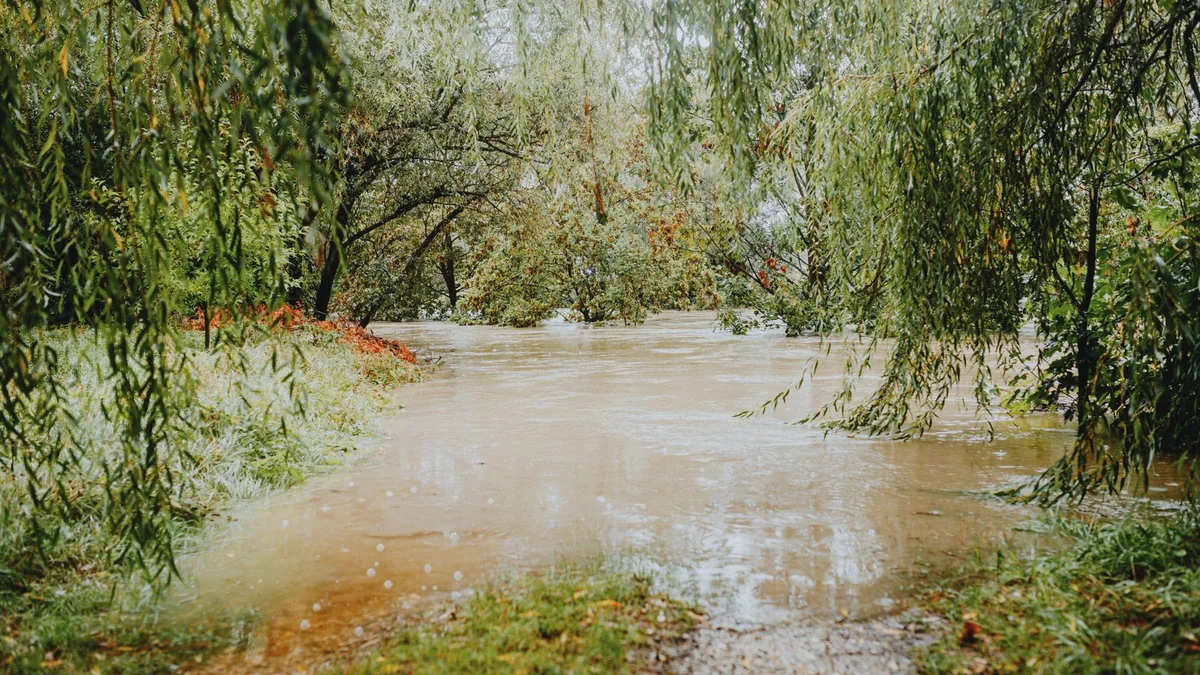
After a week of heavy rain, the border is shiny with standing water, the path squelches underfoot and the lawn looks more like a pond. It's tempting to grab a fork and start digging drainage channels.
That can make the problem worse.
When soil is waterlogged, the first job is to find out where the water is coming from and avoid compacting the ground further. The longer-term fix depends on whether you have heavy clay, a compacted surface, runoff from paving, a blocked drain or water rising from below.
Those problems look similar on the surface but don't respond to the same treatment.
Is the garden waterlogged or just temporarily wet?
Most UK gardens get wet in winter. Waterlogging means the spaces between soil particles become saturated, pushing out the air that roots need.
A garden may be temporarily wet after a storm and drain within a day or two. A more serious problem leaves puddles for days, makes the soil soft underfoot and causes plants to struggle.
| What you notice | Likely explanation | First thing to check |
|---|---|---|
| Puddles only after exceptional rain | More rain arriving than the soil can absorb at once | How quickly water clears |
| Water always collects in one low corner | Local hollow or runoff from higher ground | Slope, paving and downpipes |
| Ground stays sticky long after rain stops | Dense clay or compaction | Soil texture and history of foot traffic |
| Lawn is wet but borders drain reasonably well | Compacted turf or low ground | Paths, wear and surface levels |
| Entire plot stays wet even in drier periods | High groundwater or difficult site drainage | Water table and neighbouring conditions |
| Sudden flooding near a drain or pipe | Blockage, leak or sewer problem | Safe inspection and relevant utility provider |
The obvious puddle isn't necessarily the source. Water may be running in from a roof, a neighbour's hard landscaping or a raised part of your own plot.
The first 24 hours: what to do and what to leave alone
If the garden is saturated but there is no immediate danger, stay off wet beds and lawns as much as possible. Footsteps squeeze the air out of the soil and leave compacted footprints that can hold water for longer.
Move vulnerable containers away from places where they are standing in puddles. Check drainage holes and lift pots onto feet or blocks if water cannot escape.
Clear leaves and debris from accessible surface gullies and drain grates, without reaching into unsafe or contaminated water.
If rainwater from a downpipe is visibly pouring onto one bed, that tells you something useful. Photograph where the water travels during rain so you can plan a proper fix once the site is dry enough to work.
Don't dig a deep trench into a flooded border hoping the water will disappear. Unless there is a lower, legal and suitable outlet, you may simply move the water from one hole to another.
If flooding may involve sewage, contaminated runoff, electrical equipment or moving water, keep people and pets out and seek appropriate professional or utility help. This is no longer an ordinary gardening drainage job.
Why clay soil becomes particularly wet in winter
Clay is made of tiny soil particles that hold water tightly. It can be fertile and excellent for many shrubs and vegetables, but its fine pores and tendency to compact make it slow to drain when saturated.
In summer the same ground may become hard and cracked. The trick isn't to remove all the clay; it's to protect the soil structure.
Never dig or rotavate heavy clay when it is soaking wet. Wet working smears the sides of holes, breaks up useful structure and can create hard clods that remain difficult to manage.
Wait until a handful of soil crumbles when handled rather than squeezing into a sticky mass.
At that point, composted organic matter and careful cultivation can gradually make a difference. Regular surface mulches and avoiding foot traffic are often more valuable than one dramatic excavation.
Does adding sand fix waterlogged clay soil?
Usually not in the quantities most gardeners can reasonably add.
Mixing a few bags of sand into heavy clay is unlikely to create a free-draining soil. You would need a very substantial proportion and proper incorporation across a meaningful depth to change the texture.
Adding grit or gravel to the bottom of an isolated planting hole can make matters worse. The hole may behave like a bucket surrounded by impermeable soil, leaving roots in standing water.
For borders, improve soil structure over time with suitable organic matter and avoid compaction. If water has nowhere to drain to, consider raised planting areas or a properly designed drainage system.
A raised bed works because roots are elevated into a better-drained growing zone. It doesn't make the underlying groundwater disappear.
How to work out where the water comes from
Take a walk around the garden from a firm path during or shortly after rain. Look for the direction of runoff.
Check whether:
- The lowest point is next to the house or garage.
- A downpipe discharges directly onto soil.
- A new patio, shed base or paved driveway sends water into one narrow strip.
- A fence or retaining wall holds back runoff.
- Neighbouring land sits above your garden.
- Water collects in a particular bed even when the rest of the garden dries.
On a dry day, mark the boundaries of the wettest areas. A simple sketch showing slopes, gutters and puddles is useful if you later ask a landscaper about drainage.
Avoid excavating near services or foundations without checking what is underground. A trench dug in the wrong place can cause a much bigger problem than a soggy flower bed.
A drainage test for when the ground is workable
Once flooding has subsided and it's safe to dig, a simple test can help you distinguish drainage problems from surface puddling.
Dig a manageable hole in a representative area, taking care to avoid buried pipes or cables. Fill it with water and let it soak away to pre-wet the surrounding soil. Refill it and observe how the water level falls.
If the water disappears quickly, the local soil may drain reasonably well and the puddles could be caused by surface runoff or a low spot.
If water remains for a long time, the soil may drain poorly. If the hole fills on its own before you add water, groundwater may be high.
This is a screening test, not an engineered survey. Results change with season, depth, rainfall and soil layers. For persistent flooding or drainage near buildings, get qualified advice instead of designing a system from one hole.
Can you save plants sitting in waterlogged soil?
Start by identifying which plants are actually in trouble.
A dormant deciduous shrub may tolerate a temporary winter soaking better than a tender evergreen, a Mediterranean herb or a plant in active growth.
Warning signs include yellowing foliage, sudden wilting despite wet ground, soft stems and rotting roots. A struggling plant cannot necessarily be rescued with feed; if oxygen is missing from the root zone, fertiliser won't solve that.
For a valuable potted plant, check the drainage and consider moving the container under shelter. For a newly planted, shallow-rooted garden plant in a permanently flooded spot, carefully lifting and relocating it may make sense once conditions are suitable.
Avoid repeatedly digging up established trees and shrubs just because they have stood in water briefly. Disturbing already stressed roots can compound the damage.
If plants recover when the ground drains, resist cutting back all the growth immediately. Wait for clear evidence of what has survived.
Should you dig a trench or install a French drain?
A drainage channel only works if it carries water to an appropriate destination.
A French drain typically uses a gravel-filled trench with a perforated pipe to collect and redirect water. But if the outlet is too high, blocked or legally unsuitable, the trench won't solve the problem.
Drainage also needs to respect property boundaries, buried services, buildings and local rules about discharging water. Never direct excess water onto neighbouring land or into a drain without confirming that it's permitted and appropriate.
A soakaway is another option in suitable ground, but it is ineffective where the water table is high or the underlying soil cannot absorb the water. Placement near buildings needs proper design.
For persistent flooding, especially around foundations, professional drainage assessment is a sensible investment.
Raised beds can be the practical answer
If the vegetable plot is consistently saturated in winter, building raised beds may be more effective than trying to turn the entire garden into free-draining soil.
A raised bed lets you work above the wettest layer, especially when paired with paths that prevent you walking on the growing soil. It should still have an open, suitable base and an appropriate growing medium; it isn't a sealed box that can hold water indefinitely.
The result is easier access in spring and less compaction. It also allows you to focus compost and soil improvements where crops are grown.
For layout and materials, see how to fill a raised bed and preparing soil for spring planting.
What about the lawn?
Waterlogged grass is a particular nuisance because it receives foot traffic even in winter.
Avoid mowing wet turf, rolling it or repeatedly walking over the same boggy route. These actions can make compaction worse.
Aeration may help some compacted lawns, but it is a job for appropriate ground conditions, not for turf that is already saturated. Persistent wetness may need changes to runoff, surface grading or drainage rather than a one-off treatment.
Our muddy lawn in winter guide deals with worn grass, winter foot traffic and repairing bare patches.
Can you choose plants that tolerate wet ground?
Yes, if the area is naturally damp rather than deeply flooded for weeks.
Dogwoods such as Cornus alba, some moisture-loving irises, Hydrangea paniculata in suitable conditions and certain ferns can work well where more drought-loving plants struggle. Even moisture-tolerant garden plants generally need some oxygen at their roots.
A rain garden can make use of a low area that temporarily stores runoff, provided it is designed to drain within a suitable period and isn't continually receiving contaminated water.
Do not plant ordinary garden shrubs in a permanent pool and expect them to behave like pond plants. Match the plant to the actual conditions through the year.
What should you do once winter ends?
When the soil becomes workable, improve structure, install paths or stepping stones, and address any obvious water flowing into the wrong place.
For a border that floods after every heavy rain, don't keep replanting the same vulnerable plants. Correct the drainage or change the planting plan.
The important difference is between temporary winter wetness and a drainage system that cannot cope. One calls for patience and protection; the other calls for finding the cause and changing how water moves through the garden.