
A dry, shady border can be one of the hardest places to plant. It might sit under a mature tree that drinks most of the available water, or along a north-facing wall where the roof stops rain reaching the soil.
The answer is not to buy ordinary shade-loving plants and hope for the best. Shade tolerance and drought tolerance are different qualities. You need species that cope with both conditions, and you still need to help them establish.
Why is the soil dry when the area is shaded?
There are several common reasons:
- Mature tree roots compete with new plants for water.
- A dense tree canopy intercepts rain before it reaches the ground.
- Roof overhangs and walls create a rain shadow.
- Compacted soil prevents water soaking in properly.
- Conifers can leave a particularly demanding combination of shade, root competition and year-round interception.
After rain, dig a small inspection hole away from substantial roots. The upper centimetre may look damp while the soil beneath is dry and dusty.
Identify which problem you have before buying plants.
Plants that can work in dry shade
| Plant | Main attraction | Important consideration |
|---|---|---|
| Epimedium, suitable species | Spring flowers and attractive ground-cover foliage | Tolerance varies by species; water well while establishing |
| Geranium macrorrhizum | Aromatic leaves, pinkish flowers, spreading cover | Can spread strongly in a small bed |
| Aucuba japonica | Evergreen glossy leaves and variegated cultivars | Shrub needs space and dislikes waterlogging |
| Holly (Ilex) | Evergreen structure | Check cultivar size and whether the soil suits it |
| Ivy (Hedera helix) | Hardy evergreen cover | Needs controlling around buildings and other plants |
| Bergenia | Bold leaves and spring flowers | Better with some moisture; not for extreme root-filled dust |
| Ruscus aculeatus | Tough evergreen foliage and berries on female plants | Slow-growing, with potentially prickly foliage |
| Some epimedium-and-fern combinations | Delicate mixed foliage | Fern species differ greatly in drought tolerance |
These are options for established plants. A newly planted aucuba or epimedium has a limited root system and can die in a dry spell if neglected.
Epimedium for ground cover beneath trees
Epimedium is especially useful in a sheltered shady border, with heart-shaped leaves and small delicate flowers in spring.
Certain types, such as Epimedium × versicolor ‘Sulphureum’, cope with dry shade once established. Others prefer reliably moist soil, so the name “epimedium” alone is not enough.
Plant groups where there is some workable soil between roots. Keep them watered during their first growing seasons, then allow clumps to spread.
Old foliage can be removed selectively before spring flowers appear, but don't scalp young plants that are still settling in.
Hardy geraniums for difficult areas
Geranium macrorrhizum, the bigroot geranium, is a useful spreading perennial for partial or dry shade. Once established, its aromatic leaves can provide good ground cover and help shade out weed seedlings.
It is not the same as the tender red bedding “geraniums”, which are usually pelargoniums.
Where the ground is completely filled with mature tree roots, even this tough plant may need a better starting pocket and consistent watering for a year or two.
Give it space: a vigorously spreading plant may be welcome on a large bank but overwhelming in a tiny bed.
Evergreen shrubs: aucuba, holly and butcher's broom
Aucuba tolerates considerable shade and offers broad evergreen leaves, sometimes attractively spotted with yellow. It can eventually form a substantial shrub. Select a compact cultivar if the space is narrow.
Holly provides evergreen structure and can cope with shade, but growth and berry production vary by cultivar, conditions and pollination. Check eventual height.
Butcher's broom (Ruscus aculeatus) offers tough architectural foliage in sheltered shaded positions. Its berries are not an edible garden crop.
Don't crowd several full-sized shrubs in an area that cannot support them. A single correctly sized evergreen with lower ground cover can be stronger than a row of cramped plants.
Can you grow ferns in dry shade?
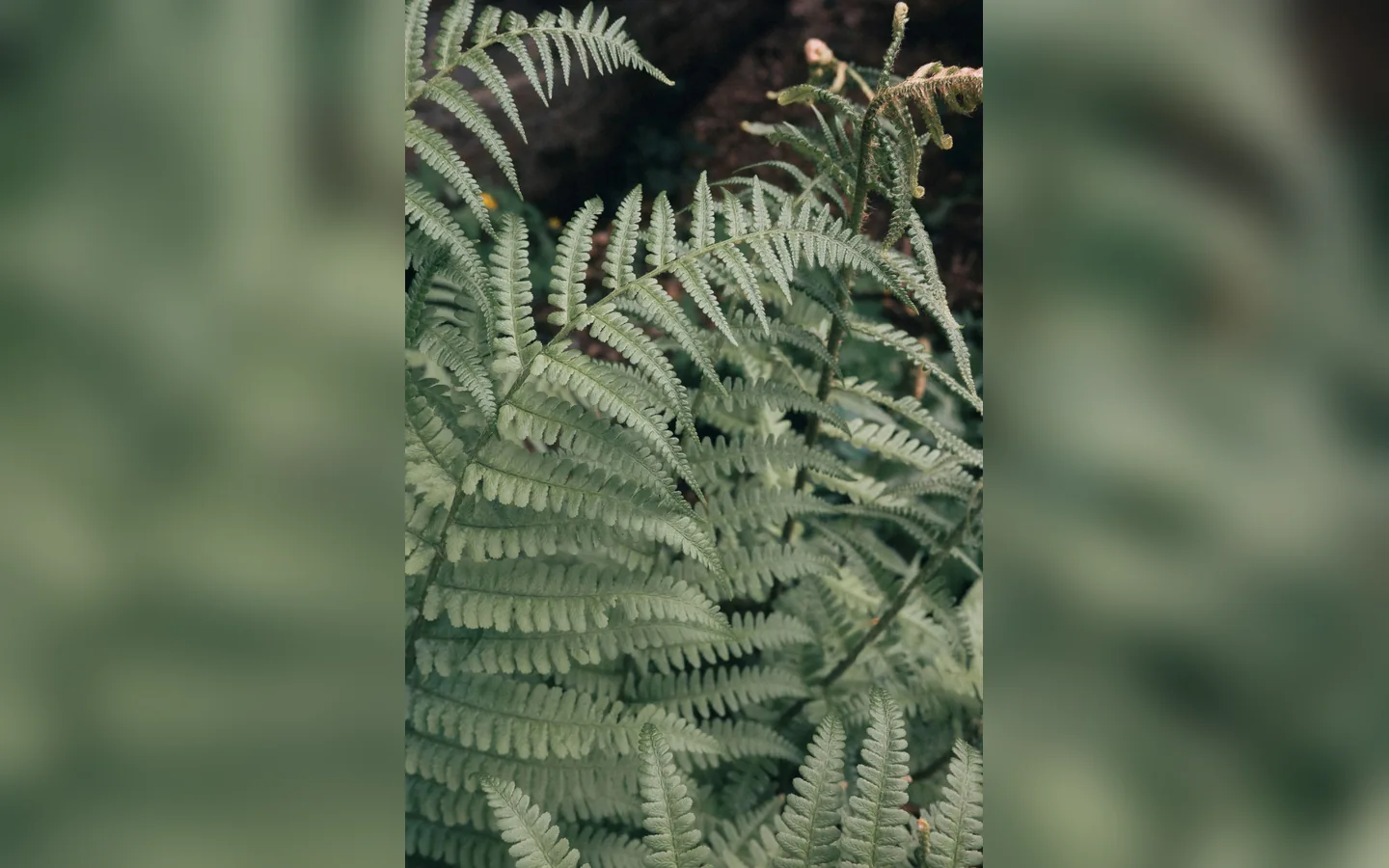
Yes, but only some. Many ferns associated with woodland require moisture and will struggle in dusty soil beneath mature conifers.
Check the exact fern species and its tolerance of summer dryness. For example, some established Dryopteris types cope with tougher conditions than moisture-loving shuttlecock ferns.
A generic packet simply labelled “shade fern” is not a safe purchase for a dry spot.
Preparing dry shade without damaging trees
One of the biggest mistakes is digging out large roots to make room for new planting. Doing so may damage a mature tree and can create an unstable soil pocket.
Instead:
- Remove surface weeds carefully by hand.
- Find spaces between roots without cutting major roots.
- Improve the soil surface modestly with suitable well-rotted organic matter.
- Plant smaller specimens rather than oversized rootballs requiring huge holes.
- Set each at its previous depth and firm gently.
- Add a suitable mulch, leaving the tree trunk and new crowns clear.
- Water thoroughly and regularly during establishment.
Never pile deep new soil over the base of a mature tree. It can harm roots and bury the root flare.
Our soil improvement guide explains how to address poor structure, but tree-root preservation must come first.
How to water plants in dry shade
Rain may never reach a narrow strip beneath a roof. Water directly into the root zone during dry spells, giving enough to reach deeper roots.
Check rather than assuming a shaded bed stays damp. A soaker hose may be useful in an accessible area, provided it is installed without damaging important roots.
Mulch helps slow evaporation and reduce weed competition; it doesn't create water where no rain or irrigation ever reaches the soil.
What if nothing will grow beneath a tree?
Extremely dense evergreen shade and root competition may be too severe for conventional border planting.
Options include planting at the edge of the canopy where light and rain are better, adding carefully positioned containers or using a simple mulched area rather than forcing unsuitable plants into it.
For a container in shade, choose sufficient growing-medium volume. Our pot compost calculator can help size one.
Avoid building raised planters directly around a mature tree trunk or covering its existing roots with deep soil.
A simple dry-shade planting plan
For a moderately dry area beneath a deciduous tree, repeat clumps of suitable epimedium near the front and Geranium macrorrhizum farther out. Add one appropriately sized aucuba where there is room.
Keep the most drought-sensitive plants nearer the edge of the canopy, not in the driest centre.
Choose a restrained mix of two or three proven species rather than one of everything. The effect can become more natural as ground cover spreads.
Mistakes that cause repeated failures
- Buying moisture-loving astilbes for a dry rain-shadow.
- Planting into pure compacted dust without improving conditions.
- Cutting large tree roots to make a planting hole.
- Expecting new “drought tolerant” plants to survive with no water.
- Using tiny moisture-hungry pots beneath an overhang.
- Letting ivy cover gutters or a vulnerable wall without control.
Does dry shade need watering?
New plants usually do. Established drought-tolerant specimens may cope with much less supplementary water, but prolonged severe drought still matters.
Will hydrangeas grow in dry shade?
Most common hydrangeas need appreciable moisture. A very dry root-filled position is usually unsuitable without regular watering.
What is the best evergreen for dry shade?
Aucuba is a strong option for many gardens, but check mature size and avoid persistently wet soil.