
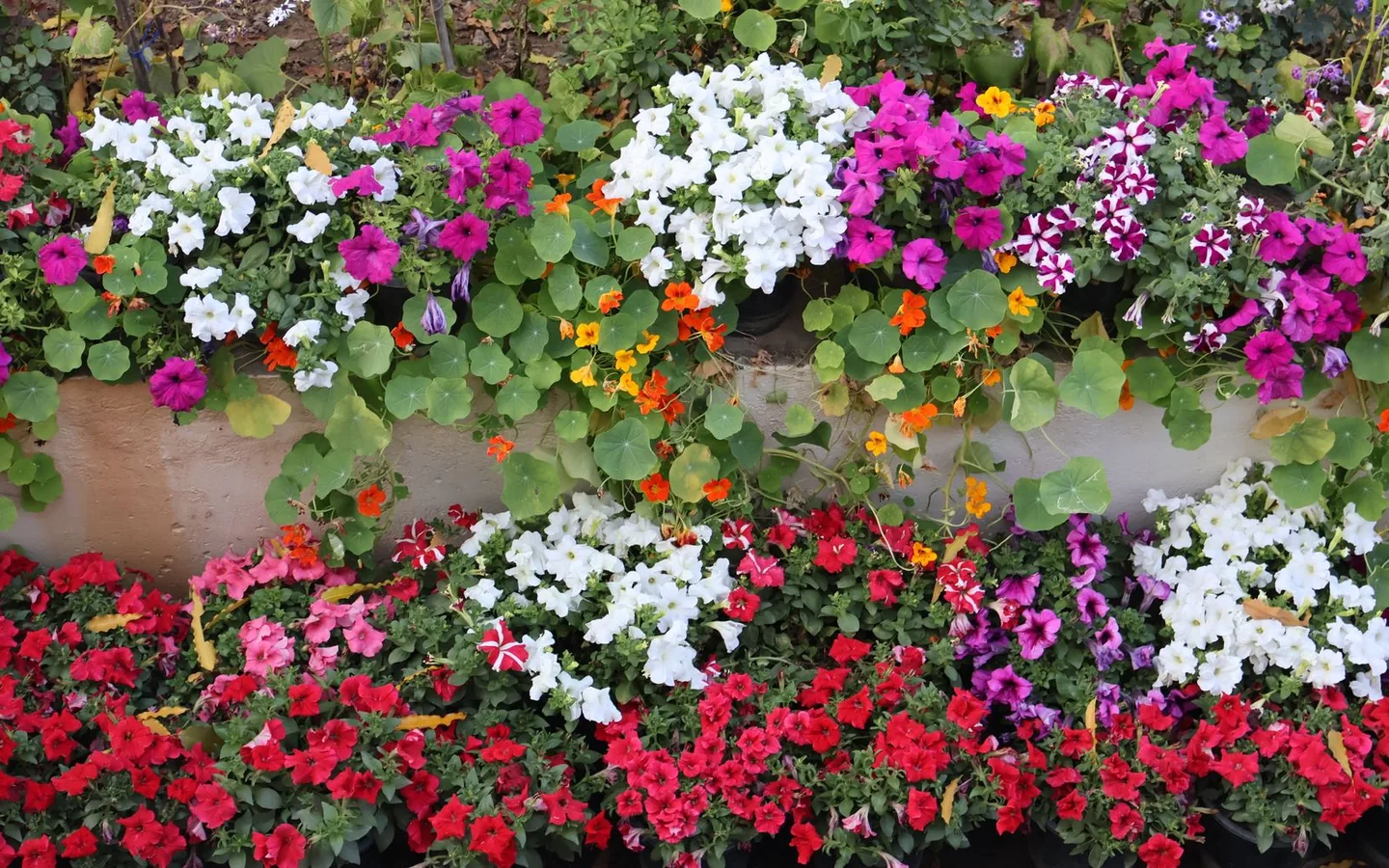
By July the UK garden is either rewarding you with flowers and vegetables or testing you with heat, weeds and plants that have outgrown their supports. There is no need to overhaul everything: regular harvests, sensible watering and a few well-timed cuts usually matter more than major renovation.
The priorities change with the weather. A cool wet July needs more disease checks and less irrigation; a heatwave brings containers and new plantings to the top of the list.
July jobs to prioritise
| Garden area | Main July job | Mistake to avoid |
|---|---|---|
| Vegetable plot | Harvest crops regularly; thin and support | Letting beans and courgettes grow oversized |
| Flower borders | Deadhead repeat bloomers | Cutting flowers wanted for seedheads or hips |
| Pots and baskets | Check water and feeding needs daily in hot spells | Flooding saturated containers |
| Fruit trees | Check ties, fruit load and suitable summer pruning | Pruning all tree types alike |
| Greenhouse | Ventilate and shade where needed | Leaving a closed greenhouse in hot sun |
| Lawn | Adjust mowing to growth and drought | Scalping brown stressed turf |
| Ponds | Check water levels and wildlife access | Topping up rapidly with unsuitable water |
| Paths and supports | Repair unstable canes, ties and edging | Overlooking trip hazards |
This is an order of work, not a demand to spend money on treatments.
Harvest vegetables before they become too large
Pick runner beans and French beans regularly while pods are young and tender. Oversized pods may become stringy, and leaving them can reduce further cropping.
Harvest courgettes at a useful size rather than allowing several plants to produce giant marrows.
Lift early potatoes according to variety and crop development, and remove finished pea or broad-bean plants.
If space opens up, consider a suitable fast follow-on crop, but make sure it has time to mature in your region.
Water where the roots actually are
Newly planted shrubs, seedling trays, growbags and hanging baskets can dry out rapidly.
Established deep-rooted plants often need far less attention. Check soil at root depth rather than giving every bed the same five-minute spray.
Early morning or evening usually limits evaporation, but water a severely drought-stressed container immediately if necessary.
Our garden irrigation planning guide explains how to prioritise water and choose useful delivery methods.
Deadhead summer flowers selectively
Remove spent flowers from repeat-flowering roses, many bedding annuals and suitable perennials to encourage a longer display.
Leave flowers you want for ornamental seedheads, seed collection or wildlife food. Removing every fading bloom isn't always desirable.
Snip back to a suitable bud or leaf and avoid removing more healthy foliage than necessary.
Inspect plants for disease or pests while you're working through the border.
Support tall plants before strong winds
Delphiniums, dahlias, hollyhocks and vigorous climbers can become top-heavy as flowers open.
Check ties and stakes; use soft material with enough slack for growing stems.
A support that's adequate in May may be unstable under the weight of a rain-soaked July flowerhead.
Do not hammer new large stakes through established root balls if another safe support arrangement is possible.
Summer-prune the right fruit trees
July can be suitable for some plum and cherry work, especially established trees and trained forms during appropriate dry weather.
Trained pears may be ready for light summer pruning towards late July when new shoot bases have matured; trained apples are often handled later in August.
Free-standing apples and pears generally receive their main structural prune in winter.
Our live when to prune plum trees guide explains why stone fruit should not be treated like apples.
Check fruit and tree supports
A heavy fruit crop can strain thin branches.
Inspect tree ties for constriction and support particularly overloaded branches safely where necessary.
Remove broken, diseased or clearly spoiled fruit according to the crop. Avoid indiscriminate thinning once the correct fruit-development stage has passed.
Check young trees for drought stress and water over their rooting area rather than one narrow spot against the trunk.
Greenhouse jobs in July
Open vents and doors as required and use suitable shading in prolonged heat.
Keep cordon tomatoes trained and remove sideshoots where appropriate, but leave bush tomatoes' sideshoots unless their cultivar requires different treatment.
Check fruiting crops for root-zone moisture and humidity problems.
Our greenhouse ventilation in winter guide covers air-exchange basics, though July often needs much more aggressive ventilation.
Watch for tomato and potato blight
Warm wet conditions can favour late blight. Inspect tomato leaves, stems and fruit for rapid water-soaked brown lesions.
Remove confirmed infected material promptly, cleaning supports and tools as needed.
Not every yellow or curled leaf is blight; nutrient stress and hot weather can cause other symptoms.
Do not use homemade sprays as if they are proven cures.
Lawn care during July
If grass is growing actively, mow at an appropriate height and avoid removing too much leaf in one pass.
During prolonged drought, raise cutting height or postpone mowing entirely. A brown dormant lawn may recover after rainfall.
Don't scarify or apply a strong feed to heat-stressed turf.
If you prefer a wildlife-friendly lawn, allow suitable areas to flower while retaining a mown path for access.
Keep ponds safe in hot weather
Evaporation can lower water levels. Top up carefully using appropriate water, ideally rainwater where safe and available.
Avoid draining the pond for cosmetic cleaning when wildlife is present.
Check that animals have a way to leave the water and that pumps and filters, if fitted, are functioning.
Don't treat every patch of algae with chemicals without considering nutrients, light and pond balance.
July watering for baskets and pots
Hanging baskets may require moisture checks daily during summer, particularly on exposed walls.
Use the weight of the basket and the feel of the growing medium to judge demand.
Remove spent bedding flowers and apply suitable feed when the plant and compost need it.
Our pot and container compost calculator can help if you decide to repot overcrowded plants rather than simply watering them more.
Keep weeds from seeding
Warm soil allows many annual weeds to grow fast.
Pull small weeds before they flower or seed, preferably when the soil is slightly moist enough to release roots.
Don't scatter mature weed seedheads into a cool compost heap where seeds may survive.
Persistent perennial weeds need their roots handled, not just the visible top growth cut repeatedly.
What can wait until autumn?
Major shrub moves, heavy renovation of many trees and large lawn reseeding projects are often better done in cooler conditions.
If a healthy established shrub needs less watering than a newly planted one, spend time on the vulnerable plant first.
July isn't a contest to complete every possible garden improvement.
A quick weekly July routine
Twice a week: harvest beans and courgettes, inspect tomato foliage and look for damaged stems.
During hot spells: check containers and new planting moisture daily.
Once weekly: deadhead suitable repeat bloomers, adjust supports and keep weeds from setting seed.
At month end: record what performed well and what struggled, so next year's planting choices improve.
Common July mistakes
- Feeding or watering everything without checking need.
- Letting beans and courgettes become overmature.
- Pruning free-standing apple trees as if they were trained espaliers.
- Ignoring greenhouse heat and condensation.
- Scarifying a drought-dormant lawn.
- Cutting down flowers whose seedheads you wanted for wildlife.
- Leaving weak stakes to fail during heavy rain.
What is the most important garden job in July?
Prioritise watering vulnerable roots, harvesting frequently and checking fast-growing plants for support and disease.
Should I prune fruit trees in July?
Some stone fruit can be pruned in suitable conditions; trained pears may be ready later in July. Free-standing apples generally aren't on a July structural pruning schedule.
Can I seed a lawn in July?
It is usually easier to establish grass in early autumn or spring rather than during hot, dry midsummer weather.