
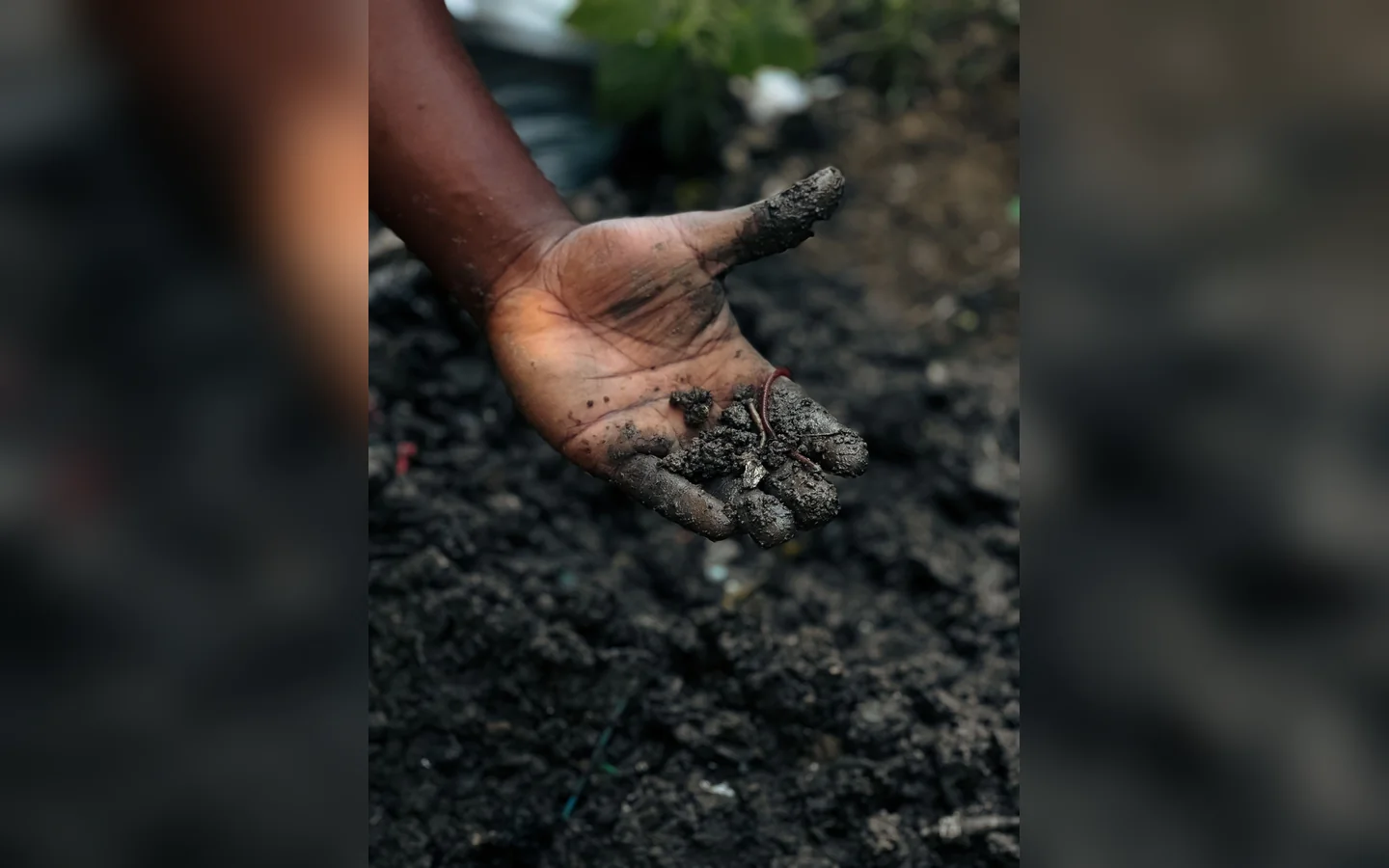
You rarely need to buy earthworms for a garden. What you need is soil they can live in: organic material to feed on, moisture without waterlogging and a habitat that isn't constantly being dug up or chemically disturbed.
Earthworms do more than wriggle through the ground. Different species break down plant litter, move nutrients and create channels that improve the way air and water move through soil.
Why earthworms are worth encouraging
Some earthworms live close to the surface and feed on decomposing plant material. Others live deeper in permanent burrows and draw leaves down into the soil.
As they feed, they mix organic matter with mineral soil and leave nutrient-containing casts. Their tunnels can help rain move into the ground and give plant roots pathways through compacted layers.
That doesn't mean every soil problem is solved by worms. Heavy clay can still become waterlogged, and severe compaction may need other management.
But a lively worm population is usually a welcome sign that the garden is providing a functioning soil habitat.
The best first step: add organic matter
Earthworms feed on decaying plant material and the organisms associated with it. One practical way to support them is to spread mature garden compost or leaf mould over bare soil.
This is particularly effective when applied as a mulch between plants or over vacant beds rather than digging it deeply into the ground every few weeks.
A modest, regular supply is better than burying a thick layer of raw fresh food scraps that attract pests.
Our guide to composting fallen leaves explains how to turn autumn leaves into a useful soil conditioner.
Try no-dig gardening where suitable
Repeated deep digging can cut through burrows and disturb the soil structure earthworms have built.
A no-dig approach uses surface mulch, hand weeding and minimal disturbance once the bed is established. Earthworms then move some of the organic material down naturally.
This doesn't mean you must never use a fork. New beds sometimes need compaction addressed, and perennial weeds may require careful removal.
The useful principle is to avoid unnecessary disturbance: don't dig simply because an empty bed looks untidy.
Keep the soil moist but aerated
Earthworms need moist conditions to move and breathe through their skin. Very dry soil drives some species deeper or into less active states.
Use organic mulch to reduce moisture loss and water plants appropriately through long dry spells.
But waterlogging is not worm-friendly. Saturated soil has less oxygen, and a compacted clay bed can be unsuitable even if it contains plenty of compost.
If water sits on the surface after every shower, investigate drainage and compaction rather than watering in more worms.
See our waterlogged garden guide for broader soil management.
Leave some leaves where they fall
Fallen leaves are food and shelter for many soil organisms. Where practical, leave a thin layer beneath shrubs and hedges rather than removing every leaf from the entire garden.
You can collect excess leaves from lawns or paths and use them to make leaf mould.
Avoid leaving thick wet mats over small alpine plants or crowns that need a dry neck. Work with the plants as well as the soil wildlife.
A mixture of mulched beds, shrubs and quieter corners provides food throughout different seasons.
What to do with lawn worm casts
Worm casts are small piles of fine muddy soil deposited at the surface. They are often more noticeable on closely cut lawns in autumn and spring.
They can be inconvenient on a formal lawn, but they are usually evidence of beneficial worm activity, not a disease.
Let casts dry before brushing them with a soft brush or rake. Smearing wet casts into the turf can create bare patches or muddy surfaces.
Avoid chemical attempts to eradicate worms because of the marks they make. The soil benefits are generally much greater than the cosmetic nuisance.
Avoid inappropriate chemical treatments
Many soil organisms can be harmed by unnecessary or incorrectly used chemicals. Identify plant and soil problems before considering pesticides.
Don't use salt or household cleaning products to kill unwanted vegetation. Such substances can damage soil life and plant roots.
Use fertilisers according to plant needs, not at ever-increasing concentrations. Very high salt levels can harm soil organisms.
In lawns, change management habits where possible rather than treating every natural process as something to suppress.
Are all worms the same?
No. Garden soil earthworms, worms active in litter and specialist composting worms occupy different habitats.
Compost worms, such as tiger worms used in wormeries, prefer very rich decaying organic matter and aren't necessarily suited to living permanently in ordinary mineral garden soil.
Buying wormery worms and tipping them into a dry bed is unlikely to fix its problems.
The better goal is to improve conditions so locally present earthworm species can multiply and move into the area.
Should you introduce earthworms?
Generally there is no need. Earthworms are already widespread and naturally move into suitable soil over time.
Bringing live worms from elsewhere can also move unwanted organisms, and some introduced species are ecologically problematic in places where they aren't native.
Don't empty wormery contents into natural habitats. Manage established compost systems according to their intended use.
If your bed has no visible worms, first address moisture, organic matter and disturbance rather than buying a box of animals.
How to check worm activity
The simplest indicators include visible worm casts, surface burrow openings and worms found when working moist soil.
You can carefully lift a small amount of soil in spring or autumn when conditions are suitable and look for activity. Replace the soil gently.
Counts vary enormously with weather and time of year. On a hot dry summer day you may find few worms at the surface even in healthy ground.
Don't dig a large hole repeatedly just to prove worms exist. Long-term changes in soil structure and plant growth are more useful to watch.
What if the soil is heavy clay?
Clay soil can support plenty of worms, but poor drainage and compaction reduce suitable conditions.
Work on soil structure: avoid walking on wet beds, use paths or boards to distribute weight, and add mature organic matter to the surface.
Where flooding persists, fix the underlying drainage problem before assuming more compost will solve everything.
Our soil preparation guide explains how to judge workable soil without damaging it further.
What if the garden is sandy?
Sandy soil loses water quickly, especially in hot weather. Organic matter helps it retain moisture and provides more food for soil organisms.
Mulch between plants and water deeply when needed. Growing cover crops where appropriate reduces long periods of exposed bare soil.
Don't expect the same worm community as in a moist loamy bed. Different soil types naturally support different populations.
The aim is healthy local soil life, not the largest possible number of visible worms.
Making a worm-friendly raised bed
Raised beds can support earthworms if there is enough food, moisture and contact with the underlying ground.
Open-bottomed beds allow soil organisms to move up from below, whereas a sealed container limits natural colonisation.
Add compost at the surface and avoid letting a raised bed dry out completely in summer.
Our raised-bed soil guide covers building a suitable growing medium and why drainage still matters.
Common mistakes
Adding worms to poor soil without improving it: the conditions that caused the problem remain.
Leaving thick uncomposted kitchen waste in beds: may attract pests and create undesirable rotting pockets.
Digging deeply every few days: destroys burrows and disrupts habitat.
Flooding the soil: worms still need oxygen.
Treating casts as a pest outbreak: ignores the benefits of worm activity.
Expecting many worms in drought: surface activity naturally falls in unfavourable conditions.
Quick answers
Do earthworms damage plant roots? Ordinary garden earthworms feed mainly on decaying material rather than healthy living roots.
Should I add coffee grounds? Small amounts can be composted, but don't pile concentrated grounds around plants expecting instant worm activity.
Are worm casts bad for lawns? Mainly a cosmetic nuisance on fine turf; brush them when dry.
How long before worms increase? It depends on existing populations, organic matter, moisture and season. Expect gradual change, not overnight results.
The best way to attract worms is to improve the soil itself. Feed the soil with mature organic matter, keep it covered, and disturb it only when there is a reason.