
A garden without pesticides isn't a garden without insects. It's one where you notice what is happening early, protect the crops most likely to suffer, and avoid destroying useful wildlife in an attempt to make every leaf perfect.
Most gardeners can significantly reduce their reliance on sprays by combining healthy plants, physical barriers and targeted action. The important distinction is between an insect being present and a plant actually needing help. A few aphids on a mature rose are not the same as a young cabbage being stripped by caterpillars.
Start by identifying the real problem
Before removing anything, look closely at the damage. Ragged holes on brassica leaves suggest a different culprit from sticky, curled shoots or a powdery white coating.
Inspect leaf undersides and the growing point. Check at different times, especially around dusk when slugs and snails become active.
Ask yourself three things:
- Is the plant still growing strongly?
- Is the damage getting worse or staying about the same?
- Can I see the animal or disease responsible?
If the answer is unclear, avoid applying a treatment at random. Some apparently damaged leaves simply show weather scorch, nutrient problems or normal ageing.
Prevention is easier than rescue
Choose varieties suitable for your site and sow them at the recommended time. A plant struggling in cold wet soil often attracts more problems than one growing steadily in the right conditions.
Leave adequate spacing so leaves dry after rain and you can inspect plants. Water the roots consistently, especially for vegetables in pots.
Remove badly diseased material when appropriate, but don't strip healthy leaves in the belief that tidiness automatically prevents pests.
If the soil is poor, improve its structure rather than relying on foliar sprays. Our soil improvement guide explains useful ways to improve growing conditions.
Use insect-proof mesh before damage starts
For cabbage-family vegetables, a well-fitted insect mesh cover can prevent many egg-laying pests reaching the crop.
Install it on hoops or a frame while the plants are small. Secure the edges against the ground, and leave enough headroom that expanding leaves won't touch the mesh.
Cabbage white butterflies can lay eggs through mesh touching leaves. Small gaps also let insects enter and become trapped inside, so inspect the installation.
Different covers serve different purposes:
| Protection | Best use | Watch out for |
|---|---|---|
| Fine insect mesh | Caterpillars, carrot fly and some other flying pests | Gaps and foliage touching fabric |
| Wildlife-safe bird netting | Pigeons damaging established crops | Loose netting that can trap animals |
| Cloches or fleece | Cold snaps and early crop establishment | Overheating and poor ventilation |
| Copper or rough barriers | Sometimes marketed for slugs | Inconsistent real-world results |
Mesh is one of the more reliable non-chemical measures when fitted correctly. Our guide to protecting brassicas from pigeons covers safe bird protection in more detail.
Deal with slugs without relying on folklore
Slugs do real damage to new seedlings, particularly in damp spring and autumn weather. Inspect vulnerable crops in the evening and remove individual pests where appropriate.
Clear unnecessary boards and damp debris immediately beside small plants. Grow tender seedlings on until they are robust enough to tolerate some feeding.
Eggshells, coffee grounds, wool pellets and similar barriers are frequently promoted, but they are not reliably effective in ordinary gardens. Don't depend on a ring of eggshells to protect a valuable tray of seedlings.
If a plant has been eaten down repeatedly, consider a raised container, protected nursery bed or a different planting date.
Aphids: allow predators time to work
Aphids often gather on soft shoots in spring. They can distort leaves, but healthy mature plants may tolerate small numbers.
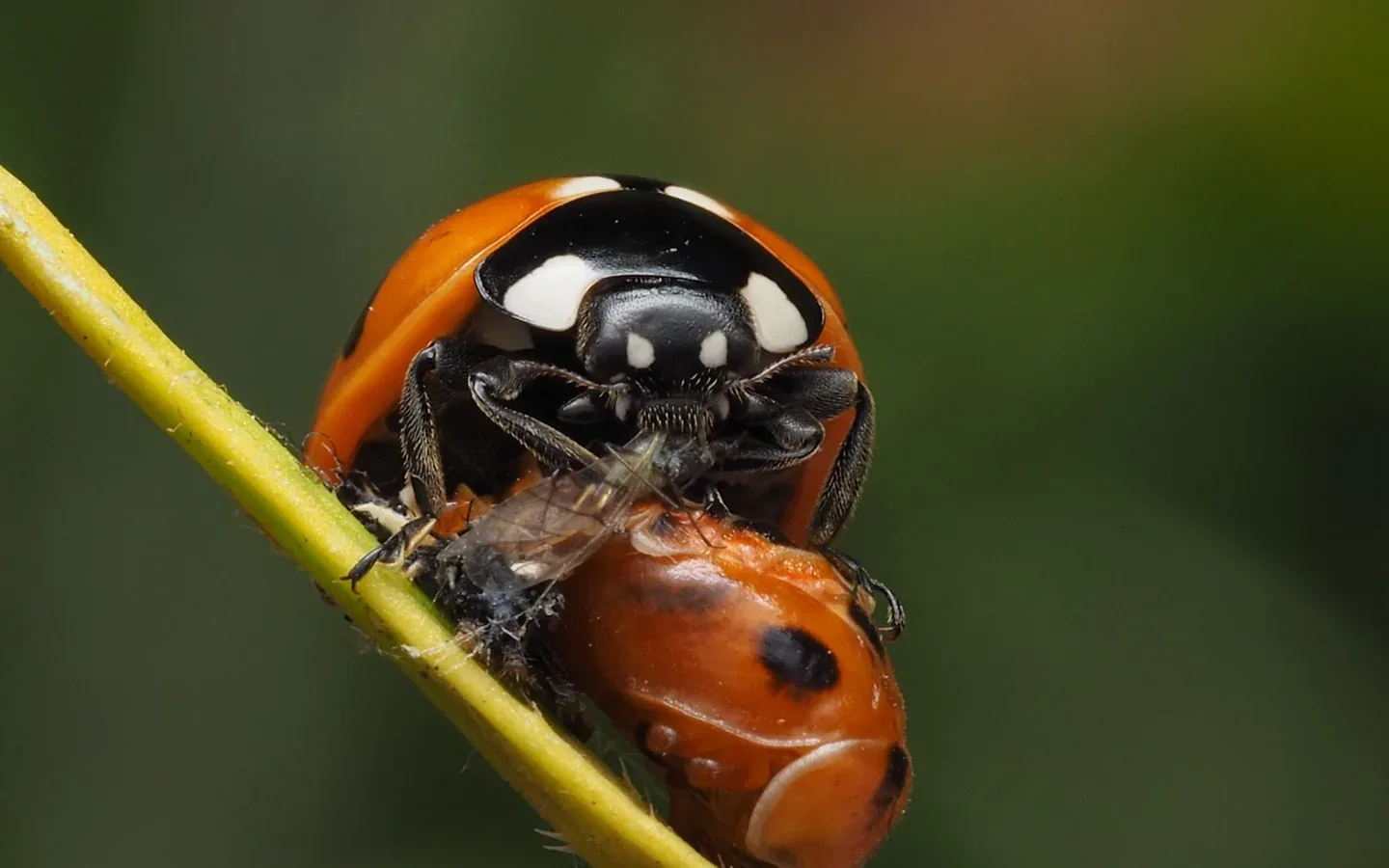
Ladybirds, hoverfly larvae, lacewings and parasitic wasps all help control aphids. A garden sprayed at every sighting can eliminate the predators that would otherwise reduce populations.
On a young plant with serious growth damage, crush aphids gently between fingers or wash them off with a controlled water jet. Avoid blasting delicate stems.
Check again several days later. If natural enemies are present and the plant remains vigorous, doing nothing may be the most effective choice.
Caterpillars: check leaves, not just holes
Cabbage white caterpillars can hide on the undersides of leaves. If you are not using a cover, inspect for egg clusters and small larvae regularly.
Hand removal can be manageable on a handful of plants, but it becomes a lot of work on a larger brassica bed. Prevention with mesh usually wins.
Not every caterpillar is a vegetable pest. Some belong to butterflies or moths that rely on specific host plants; identify them before destroying them.
Where the crop can tolerate feeding, a little leaf damage can support wildlife without reducing your harvest.
Manage mildew and leaf disease without spraying indiscriminately
A white coating on leaves may be powdery mildew, but some plants naturally have pale markings. Confirm the diagnosis before removing foliage.
Good airflow, suitable spacing and avoiding prolonged root drought can help reduce mildew pressure for some crops. Remove badly affected material where appropriate.
Don't put heavily diseased leaves into a cold compost heap if the disease can persist or spread in that waste stream. Follow guidance suited to the specific disease.
Our powdery mildew guide explains how to distinguish common greenhouse symptoms and improve growing conditions.
Rotate crops, but know what rotation can and cannot do
Growing related vegetables in the same place year after year can encourage a build-up of certain pests and soil-borne diseases.
Keep brassicas together in a rotation group, including cabbages, cauliflower, kale and Brussels sprouts. French and runner beans share some issues too.
Rotation does not eliminate every pest. Flying aphids and slugs can travel into a bed regardless of what grew there previously.
Think of rotation as one useful measure among several, not a substitute for inspection and protection.
Make room for beneficial insects
Choose flowers that provide accessible nectar or pollen at different times. Small open flowers are useful to hoverflies and some parasitoid insects, while habitat diversity supports other predators.
Keep an undisturbed leaf-litter corner or small area of dead wood where practical. Don't turn the whole garden into a sterile, repeatedly swept surface.
A wildlife pond can help provide habitat for predators such as frogs and damselflies, but it also needs safe margins and responsible maintenance.
Beneficial insects are not a controllable workforce. Encouraging them improves the odds of natural balance, but it cannot guarantee that no crop will ever suffer.
Biological controls: helpful but specific
Commercial biological controls can be useful, particularly under glass. Examples include certain beneficial nematodes, predatory mites or parasitic wasps used against particular pests.
They work only when you match the organism to the identified target and follow instructions about temperature, moisture, application and timing.
A biological control sold for greenhouse whitefly will not magically solve all insects in the vegetable plot. Some products need repeat releases or protected conditions.
Buy from reputable UK suppliers and follow legal and label requirements. Do not release unidentified non-native predators into the garden.
Protect seedlings when they matter most
A healthy established plant can often lose a few leaves and recover. A tiny emerging seedling may not survive the same level of feeding.
That is why slug protection, fine mesh and early inspections offer a better return than spraying a mature garden indiscriminately.
Sow a modest number of spare seedlings in modules if you regularly lose newly planted crops. The reserves give you flexibility without overplanting the whole bed.
Remove protection as needed for pollination or ventilation, but only after considering whether the crop is still vulnerable.
Should you use homemade sprays?
Garlic, chilli, vinegar, washing-up liquid and other household mixtures circulate widely as supposedly harmless pest remedies.
They are not automatically safe for plants, pollinators, pets or nearby water. Some can burn foliage, and using homemade substances as pesticides may create legal issues.
Do not mix chemicals or assume 'natural' means permitted or effective. If you decide that a registered plant protection product is necessary, use only an appropriate authorised product and follow the label.
The pesticide-free approach works best when you put the effort into prevention and targeted physical management instead.
A simple weekly inspection routine
Walk the garden once or twice a week during active growth. Start with tender crops such as brassicas, beans and greenhouse plants.
Look underneath leaves, feel the soil moisture, check netting edges and remove diseased plant debris selectively.
Write down recurring issues and the weather when they appear. After a season you may learn that one bed is always too damp for seedlings or that a particular variety needs protection from the moment it is planted.
The goal isn't to inspect every square inch daily. It's to notice early enough that a modest action is still useful.
Quick answers
Can vegetables grow without pesticides? Yes. Healthy growing conditions, monitoring and suitable physical barriers are often enough for useful harvests.
Are all insects pests? No. Many feed on other insects or pollinate crops; some cause only cosmetic damage.
Do natural remedies always work? No. Popular barriers and household sprays can be ineffective or harmful.
Is organic gardening completely pest-free? No. It focuses on managing problems with an appropriate range of methods, not removing all garden life.
Start with a healthy plant, prevent the predictable pests and tolerate harmless activity. That's the practical foundation of gardening without pesticide sprays.