
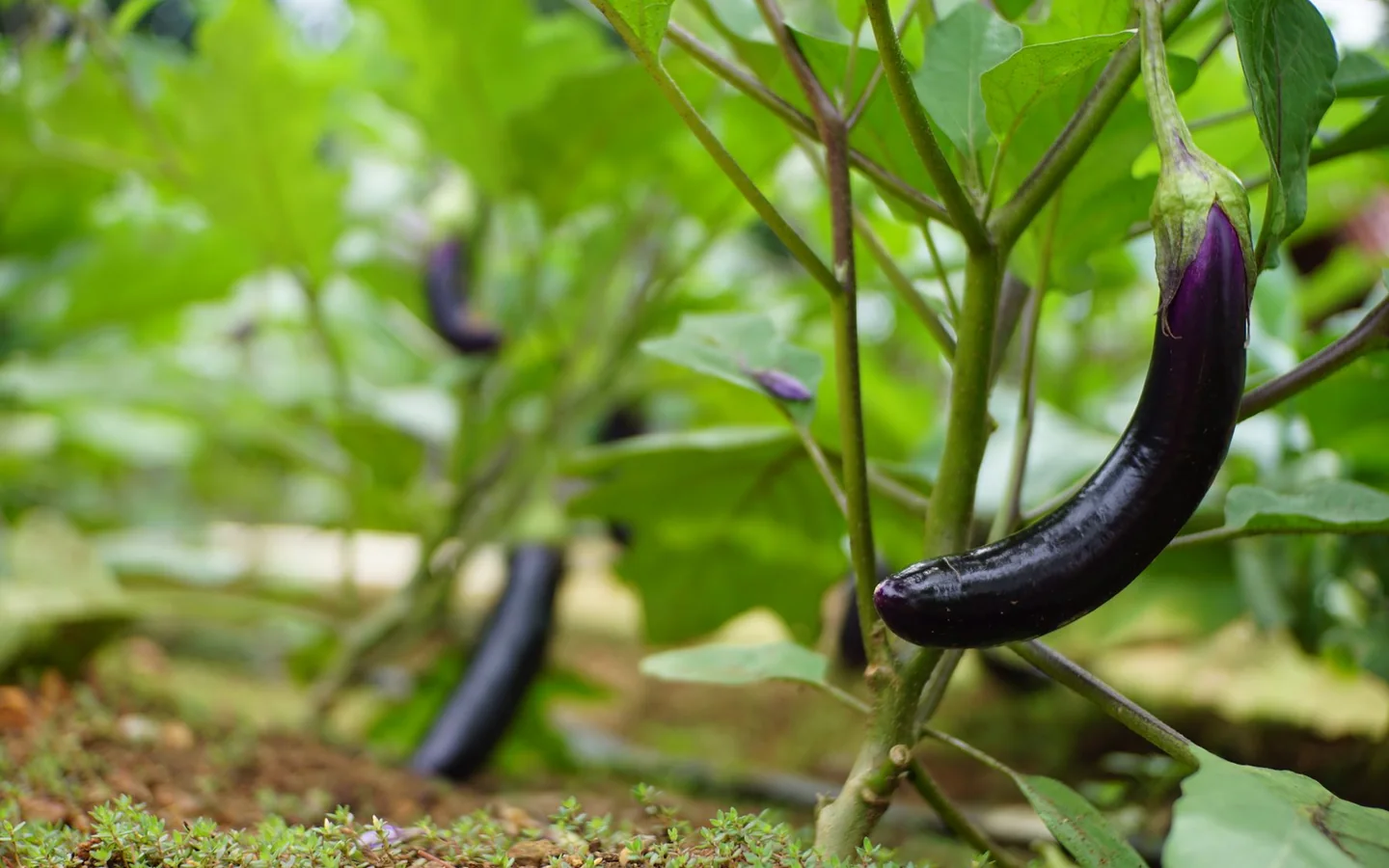
An aubergine plant can look perfectly healthy and still give a disappointing crop. In the UK, the problem is often the length and warmth of the growing season, rather than a mysterious shortage of fertiliser. Aubergines like sustained warmth from germination right through to fruit development.
A greenhouse or polytunnel is the more dependable route in much of Britain. Outside, a sheltered south-facing patio with an early variety is worth trying. The important thing is to plan for the conditions you actually have, not assume an aubergine behaves like a hardy courgette.
Choose a suitable aubergine variety
Traditional glossy purple fruits look impressive, but their size doesn't always suit a short growing season. Some compact varieties produce smaller fruits earlier and can work well in containers.
Look for a variety described as early, compact or suitable for UK greenhouse cultivation. The fruit may be purple, striped, pale or nearly black depending on its genetics. Colour isn't a universal ripeness test.
A plant that will be grown in a small pot needs different expectations from a vigorous variety in a large greenhouse border.
If buying young plants in late spring, inspect the roots and leaves. A small, healthy plant often establishes better than a huge specimen that has been starved in its nursery pot.
When to sow aubergines in Britain
Aubergines need a long season, so seeds are usually sown under cover from February, or from January for a heated greenhouse and genuinely bright growing space. For an outdoor crop, sowing in early March avoids keeping plants indoors too long.
Germination needs warmth—at least around 21°C. A heated propagator is particularly helpful if your windowsills are cold.
Once seedlings appear, remove them from a dark warm cupboard or sealed propagator and give them strong light. Weak, pale, stretched seedlings are a warning that warmth is being provided without enough light.
The exact sowing date is less important than being able to keep plants growing steadily until planting out.
How to sow aubergine seed
- Fill small pots or modules with fresh peat-free seed compost.
- Moisten the compost before sowing.
- Sow seeds at the depth advised on the packet, usually under a light covering.
- Keep at a steady warm germination temperature and check moisture regularly.
- When seedlings emerge, move into bright light while maintaining a comfortable indoor temperature.
- Pot into individual 7.5cm containers once the first true leaves have formed.
- Repot gradually as roots fill each pot; do not jump immediately to a massive waterlogged container.
Aubergines dislike being chilled. If the room temperature repeatedly drops very low at night, plants may stop growing even though they survive.
Our seed-starting guide helps plan space and light before sowing a tray of warm-season crops.
Greenhouse or outdoors: where will they crop best?
| Growing position | Main advantage | Main drawback |
|---|---|---|
| Heated greenhouse | Longest, warmest season | Energy cost and overheating risk |
| Unheated greenhouse or polytunnel | More dependable than exposed outdoors | Ventilation and humidity must be managed |
| Sunny sheltered patio | No greenhouse needed | Cool summers may reduce fruiting |
| Exposed vegetable bed | Plenty of soil space | Often too cold and windy |
In a warm greenhouse, plants can be moved to their final growing area in April if conditions are genuinely heated. An unheated greenhouse is usually suitable from early May. For outdoor planting, wait until after the last frost, generally late May or early June.
A sunny wall stores some warmth and reduces wind exposure. Don't mistake a bright but cold site for a warm one.
Planting out and spacing
Harden plants off gradually before moving them outdoors or into an unheated greenhouse. Abrupt temperature changes can stop growth just when the plants should be accelerating.
Plant into a fertile, free-draining bed improved with garden compost, usually at about 60cm apart, or put one plant into a container at least 30cm in diameter. Larger pots often hold moisture more steadily.
Set the rootball at about the depth it occupied in the original pot. Water thoroughly and insert a cane early, before the roots spread. Mature fruits can be surprisingly heavy.
Check the soil beneath the surface rather than watering by rote. Constant wetness is no better than drought.
For container quantities, our pot compost calculator provides a useful starting estimate.
Watering and feeding aubergine plants
Aubergines need consistent water, especially when flowers are opening and fruits are swelling. Water the compost or soil directly, taking care not to leave the plants standing in stagnant water.
A container on a hot patio may need checking every day in summer. A plant in a greenhouse border usually has a larger rooting area and may not require such frequent watering.
Use a balanced fertiliser while plants establish if the growing medium needs it. Once fruit starts forming, a suitable high-potassium feed at the product's recommended rate can support cropping.
More feed is not always better. Lush leaves with few fruits can come from too much nitrogen, inadequate warmth or poor pollination.
Flowers and setting fruit
Aubergine flowers are usually self-fertile, but movement from insects or gentle vibration can help transfer pollen. In a still greenhouse, lightly tap flowering stems on warm days or use a soft brush if fruit set has been poor.
Open doors and vents in suitable weather to let pollinating insects visit while preventing overheating. Protect plants from cold draughts at night.
A flower falling off doesn't automatically signal a disease. Temperature extremes, cold conditions, dry roots and plant stress can all interfere with fruit set.
If a plant has numerous small developing fruits, allow it to concentrate on a manageable number rather than expecting every flower to produce a large aubergine.
Should you pinch out aubergines?
This depends on the variety and its growing habit. Some vigorous types can have their growing tip pinched out once they reach roughly 30cm, encouraging branching; many compact varieties need little shaping.
Avoid stripping large amounts of healthy foliage. Leaves feed the developing fruits and shade them from scorching sunshine.
Tie main stems loosely to supports as the plant grows. Keep ties away from swelling fruit stems.
In a limited greenhouse season, remove very late flowers that have no realistic chance of maturing, particularly if they are competing with useful fruit.
How to tell when aubergines are ready
Most varieties are harvested while the fruit is fully sized for its type, firm and glossy, before seeds harden. A dull, overgrown fruit with hard seeds is usually past its best eating quality.
Use secateurs or a sharp knife rather than tearing the fruit free. The stem and calyx can be tough or prickly.
A white or striped cultivar won't become the same colour as a dark purple one, so use size, firmness and the variety description as your guide.
Harvest regularly once fruit ripens and use promptly. Aubergines are sensitive to chilling, so avoid keeping them for long periods in an excessively cold refrigerator.
Common aubergine problems
Flowers drop without fruit: check night temperature, very hot greenhouse conditions, watering and pollen transfer.
Leaves are pale or yellow: inspect moisture, roots and nutrient supply rather than adding more fertiliser immediately.
Small holes or sticky leaves: look closely for aphids or other greenhouse pests. Treat the cause, not the appearance alone.
Whitefly or red spider mite: inspect leaf undersides, particularly in warm protected growing spaces. Early identification helps avoid a large outbreak.
Fruit has dull or bitter flesh: harvest at the correct stage and don't leave fruits swelling indefinitely.
Plant stops growing after planting out: outdoor temperatures may still be too low. A fleece cover for the first week or two can help if it is ventilated and doesn't damage flowers.
Growing aubergines in containers
A large, stable pot often warms faster than soil, which can help in a sunny UK garden. It also dries faster, which is the trade-off.
Use peat-free multipurpose compost with good drainage, a substantial cane and a warm sheltered position. Move the plant under cover if nights become cold, where practical.
A small container with lots of feed will not outperform a large healthy rooting area. Check water availability first.
Our greenhouse irrigation planning guide can help you organise summer watering for protected crops and containers alike.
Quick answers
Can aubergines grow outside in the UK? Yes in warm, sheltered sites, but a greenhouse gives more reliable crops in many districts.
Do aubergines need two plants to pollinate? No. Flowers are generally self-fertile, although movement and suitable conditions help set fruit.
Why are my aubergines still green? Some are naturally pale or striped; others have not reached their mature colour. Check the variety.
How many fruits will a plant give? The number varies widely with variety, warmth, plant size and growing season.
If there's one lesson worth remembering, it's this: start warm, keep plants growing without cold setbacks, and don't expect a chilly outdoor summer to deliver the same crop as a heated greenhouse.