
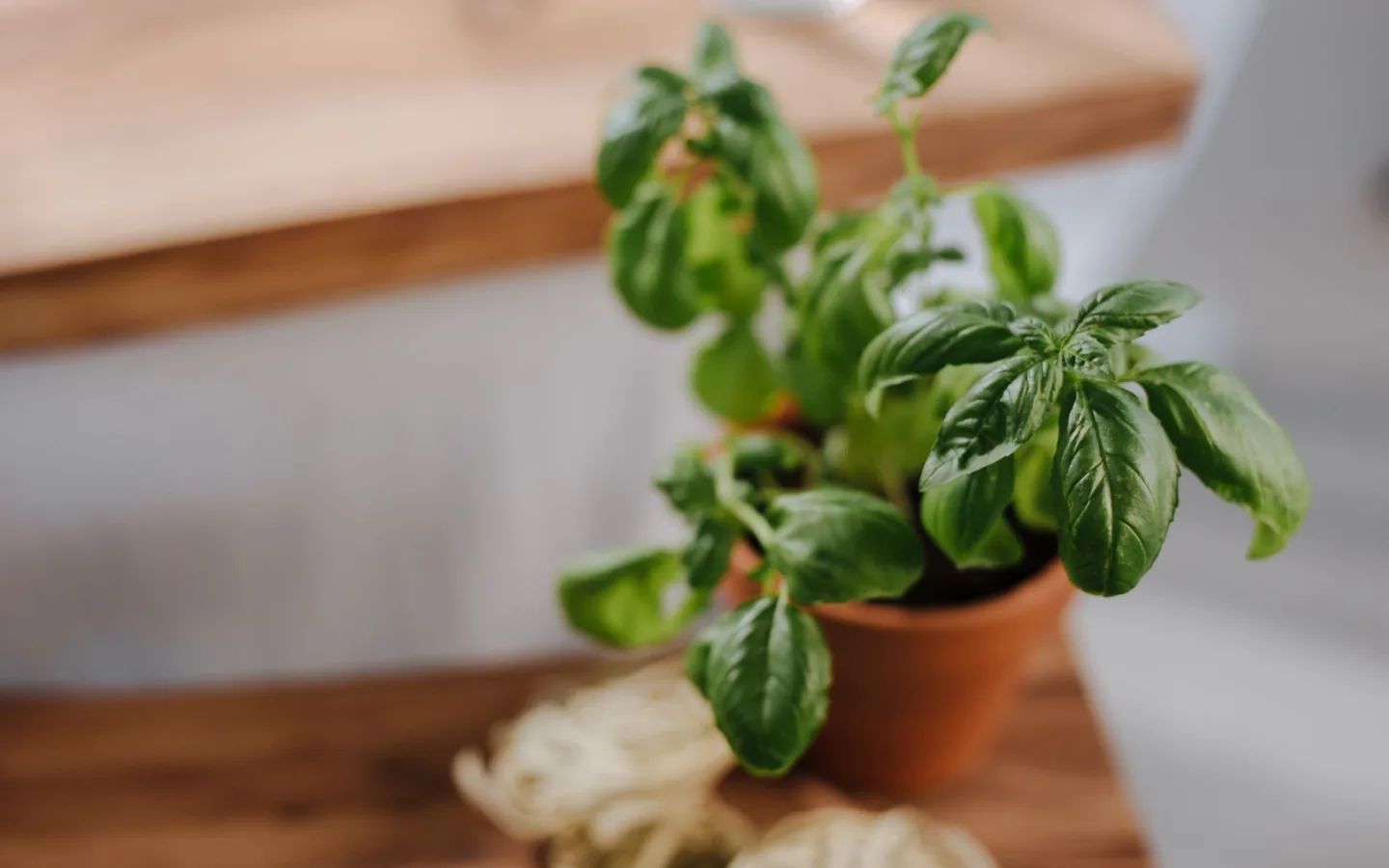
Basil is one of the easiest herbs to enjoy in summer and one of the quickest to sulk in a cold UK spring. It wants warmth, light and enough water to keep the roots active — without sitting in sodden compost.
A pot is often the best way to grow it here. You can start seedlings indoors, move them into shelter as needed and keep the leaves close to the kitchen.
When should you sow basil in the UK?
Start seeds indoors in spring, when you can provide warmth and good light. Basil germinates reliably in roughly 20°C conditions; germination slows in a cold room.
For outdoor pots, wait until frost risk has passed and night temperatures are consistently mild. Basil is tender and can suffer when nights dip close to 10°C, so don't rush a plant out simply because one afternoon is sunny.
If you want leaves over a long period, sow a small batch every few weeks during spring and summer rather than all the seeds at once.
Choosing a pot and compost
A container around 20cm or more in width and depth is a useful starting point for a healthy bushy plant or a small grouping. Bigger containers hold moisture more steadily in warm weather; tiny decorative pots dry out rapidly.
- Choose a pot with drainage holes.
- Use a peat-free multi-purpose potting compost.
- Leave a little room below the rim to water without washing compost out.
- Avoid squeezing too many mature plants into one small pot.
- Set the pot in warmth and sunshine, with shelter from cold wind.
You don't need to fill the base with stones. The potting mix itself needs to drain well; a layer of gravel doesn't fix poor drainage.
For larger mixed containers, our pot compost calculator helps estimate how much mix to buy.
How to sow basil seeds in a pot
- Fill a seed tray or small pot with moist, fine seed compost and gently level it.
- Sow the seeds thinly across the surface, following the packet's depth guidance for the variety.
- Keep the compost evenly moist but not waterlogged.
- Place in a warm, bright position, such as a suitable windowsill or heated propagator.
- Once seedlings have several true leaves, transplant carefully into small individual pots or a larger container.
Don't leave dozens of seedlings packed together for weeks. They compete for light and moisture, become leggy and can be prone to damping off.
If the seedlings will eventually go outdoors, harden them off gradually over several days rather than moving them straight from a warm kitchen to a windy patio.
Can you grow supermarket basil in a pot?
Yes, but a supermarket "plant" is often many seedlings crammed into one container for a quick harvest. That is why it can collapse after being left on the windowsill for a fortnight.
Turn it out gently, separate the root mass into a few small clumps if possible, and repot each into fresh compost. Give the new plants bright warmth and time to recover. Not every clump will survive, especially if roots were badly tangled.
If the supermarket basil has been grown under very controlled conditions, acclimatise it before putting it outside.
Where should the pot go?
Basil enjoys a sunny, sheltered spot in summer. A patio near a warm wall often works well, while a windy, exposed corner can check growth.
Indoors, a bright windowsill may be enough from late spring through summer. In December, however, a typical UK windowsill often has too little light for a productive crop without supplemental lighting.
Keep leaves away from icy window glass and hot radiators. Warmth without adequate light produces weak, elongated growth.
How much water does basil need?
Basil wants consistent moisture while actively growing. Check the compost regularly in warm spells and water thoroughly when the upper layer is beginning to dry, allowing excess to escape.
Don't leave the pot standing in a deep saucer of water. Equally, repeatedly drying it until the stems wilt can reduce growth and lead to early flowering.
Morning watering is convenient: the plant has moisture available during the day, and foliage can dry if you accidentally wet it. Avoid soaking leaves late in a cool evening, especially in a crowded greenhouse.
Pinching and harvesting for bushier basil
Once the young plant has several pairs of true leaves, snip just above a leaf pair. The buds at that node can grow into side shoots, giving you a fuller plant.
Harvest the tips regularly instead of stripping every lower leaf from a tall stem. Leave enough foliage for the plant to keep growing. Remove developing flowers if your priority is a steady supply of tender leaves.
Basil flowers are edible, but flowering generally shifts energy away from fresh leafy growth and the leaves can become less tender.
Feeding and common problems
In fresh potting compost, young basil usually has nutrients to get established. In a container cropped regularly over many weeks, a modest liquid feed according to the label may help. Too much nitrogen can produce soft, lush growth that is not necessarily more flavourful.
Yellow lower leaves: first check crowding, watering, root health and light.
Blackened leaves after a cold night: suspect low temperature. Move surviving plants somewhere warm; dead tissue will not recover.
Leggy stems: increase light and pinch back healthy growing tips, rather than burying the stems deeper without need.
Whitefly or aphids: inspect tender new growth and the undersides of leaves. Avoid letting plants become crowded and stressed.
Slugs: protect outdoor seedlings and young pot plants; a raised pot is not always out of reach.
Can basil survive winter in Britain?
Common sweet basil is usually grown as an annual here. You can keep it going longer in a warm, bright room or under suitable grow lights, but a windowsill alone rarely produces a heavy winter harvest.
For a reliable supply, sow fresh plants when conditions improve or use a proper indoor lighting setup. Other crops, such as salad leaves, can sometimes suit cool-season indoor growing better; see our indoor salad-leaf guide.
Does basil prefer full sun?
In the UK it generally thrives with plenty of direct light and warmth, provided water is available. Newly moved indoor plants should be acclimatised to strong outdoor sun.
Should you take basil leaves from the top or bottom?
Harvest the growing tips above leaf pairs to encourage branching. Taking all the large lower leaves at once weakens a young plant.
Why does potted basil die so quickly?
Cold, insufficient light, overcrowded supermarket seedlings and inconsistent watering are common reasons. Check these before assuming it needs fertiliser.