
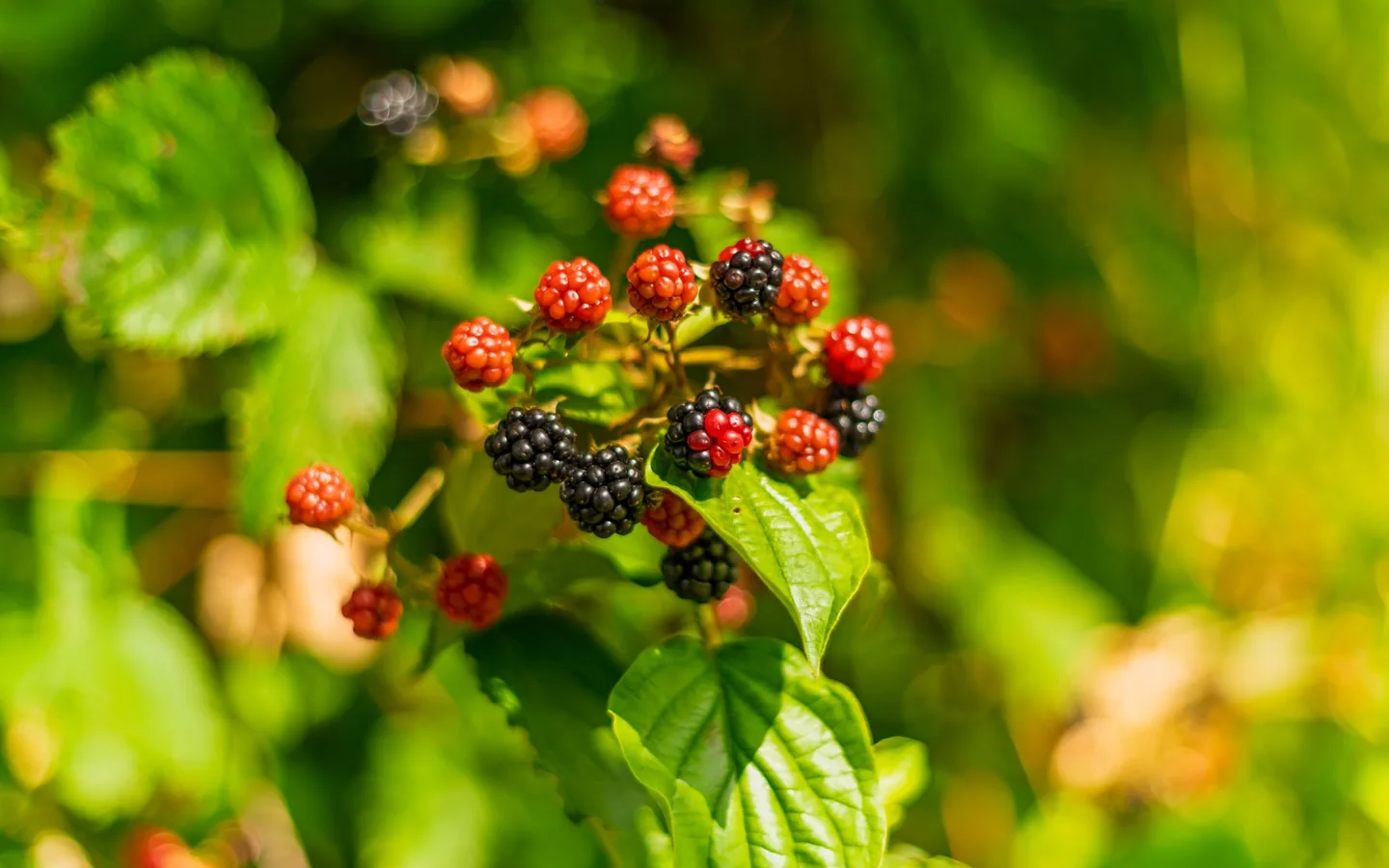
Blackberries are vigorous fruiting plants that can give you large harvests with relatively little ground space when trained properly. Leave them to wander, though, and you'll soon have a tangled bramble patch that's awkward to pick and harder to prune.
The best starting point is a named garden variety with a planned support. Thornless or relatively compact forms are easier to manage near paths, and the right pruning routine keeps one year's fruiting canes separate from the next.
Wild brambles or cultivated blackberries?
Wild blackberries can be delicious but their growth is unpredictable and often very thorny. Named garden blackberries are bred for traits such as flavour, fruit size, cropping season, thornlessness or manageable vigour.
Some are strongly trailing, others more upright or semi-erect. Even a thornless variety can develop long canes several metres in length, so read the cultivar description rather than assuming “thornless” means “small”.
Most familiar varieties fruit on canes grown the previous year; a few primocane-fruiting cultivars bear fruit on current-season canes and need different pruning.
Where do blackberries grow best?
A sunny, reasonably sheltered position often produces the sweetest fruit, though some varieties tolerate partial shade. Deep shade gives weaker crops and can make foliage more prone to remaining damp.
They appreciate fertile soil that retains moisture but drains adequately. Many are vigorous once established, but newly planted roots need regular watering.
A boundary fence can be a good support area if you can access both sides for picking and pruning. Avoid planting directly against the driest part of a wall where roots receive no rain.
When should you plant a blackberry?
Bare-root plants are commonly planted from late autumn to early spring while dormant, excluding frozen or waterlogged conditions.
Container-grown plants can be planted in suitable conditions more widely through the year. If planting in summer, watering during establishment is especially important.
Don't move a tangled wild bramble into a small garden without identifying its growth habit. Buying a suitable disease-free nursery plant is generally the more manageable start.
How to plant a blackberry bush
- Install a strong trellis or prepare horizontal wires before the plant develops long shoots.
- Clear perennial weeds from the planting strip.
- Dig a generous hole to accommodate the roots comfortably.
- Plant at the depth recommended for that variety, generally close to the previous growing level.
- Backfill and firm gently, then water thoroughly.
- Apply a surface mulch, keeping it clear of the crown.
- Guide the young canes towards the support as they grow.
Spacing varies greatly by cultivar. Some vigorous blackberries need 2.5–3m or more between plants, whereas compact types can be closer. Always follow mature spread and training advice on the label.
For a planned row, our plant spacing calculator can help you estimate numbers.
A support that makes harvesting easier
Two or three strong horizontal wires on reliable posts can support long canes. A permanent fence trellis can also work if it is sturdy and accessible.
Tie stems loosely and spread them out rather than bundling everything together. The goal is good airflow and a clear view of both ripening berries and young replacement canes.
A common method is to train fruiting canes on one side and new canes on the other. This makes end-of-season pruning much easier.
Understand the two-year cane cycle
For most summer-fruiting blackberries:
- Year one: a new cane grows from the base, often vigorously, but usually carries no main crop.
- Year two: that cane develops flowering side shoots and produces berries.
- After harvest: the old fruited cane is removed, and the new canes are kept for next year's fruit.
This is the point many new growers miss. Cutting every healthy new cane down in autumn may remove next year's harvest.
How and when to prune ordinary blackberries
After harvesting finishes in late summer or autumn, identify the canes that actually fruited. Cut those old canes back to ground level with clean secateurs or loppers.
Leave the strong new canes produced during the season and tie them onto the wires. Remove weak, damaged or unwanted shoots so the plant doesn't become overcrowded.
Wear protective gloves even around some allegedly thornless varieties, and don't pull rigid old canes through soft new growth if it will break them.
Primocane-fruiting blackberries are an exception: those varieties can fruit on current-season canes and may follow a winter cutting system more like autumn-fruiting raspberries. Confirm the label before pruning.
Watering and feeding for good berries
Established blackberries have substantial roots, but prolonged drought during flowering and fruit swelling can give smaller fruit or cause poor development.
Water newly planted bushes in dry spells. In a fruiting season, apply water to the root area rather than splashing leaves at night.
A spring mulch of well-rotted organic matter can help retain moisture and suppress weeds. Excess nitrogen fertiliser encourages cane growth without necessarily improving fruiting, so feed only as needed.
For improving poor ground before planting, see our soil improvement guide.
When are blackberries ready to pick?
Most cultivated blackberries ripen from mid- or late summer into early autumn, depending on variety and region.
Choose berries that are fully coloured, plump and come away with gentle pressure. A berry that is black but still hard and sharp-tasting may need more time.
Pick every few days during peak harvest. Fruit can deteriorate rapidly after picking, so use or freeze it promptly.
Don't harvest berries from roadside or public land where spraying, contamination or legal access is uncertain. For home-grown bushes, wash fruit before eating.
Problems with blackberry bushes
Lots of leaves but few berries: check whether you cut away last year's replacement canes, whether the plant gets enough sun and whether flowers were affected by cold weather.
Small or dry berries: drought during fruiting or severe overcrowding may be involved.
Mouldy berries: prolonged wet weather, poor airflow or fruit left overripe can contribute. Remove affected fruit rather than leaving it among healthy berries.
Uneven ripening: some berries develop red or pale sections, sometimes associated with hot sun or other physiological problems. Don't assume every colour change is a disease.
Sprawling canes rooted at their tips: some varieties naturally propagate this way. Remove unwanted rooted tips promptly to control spread.
Growing blackberries in pots
Compact cultivars can be grown in very large, deep containers with strong supports, but vigorous types become challenging quickly.
Use a stable pot with drainage holes and suitable peat-free compost. Monitor water carefully during fruiting and replenish nutrients appropriately over time.
Our pot compost calculator can help estimate the amount of compost needed.
A blackberry calendar
Winter: plant bare-root bushes when soil is workable and check supports.
Spring: mulch, tie developing new growth and protect flowers where severe late frost is expected.
Summer: water during drought, harvest ripe fruit and keep old and new canes separated.
Autumn: remove spent fruiting canes for ordinary floricane varieties; tie in strong replacements.
Are blackberries safe for wildlife?
Flowers support pollinators, and berries feed birds and other animals. If you want an easy harvest, however, a cultivated bramble needs its own bounded space; allow wildlife access without letting canes spread into neighbouring gardens.
Do blackberry bushes produce fruit every year?
Yes, once established, provided suitable fruiting canes are retained and conditions allow flowers and fruit to develop.
Can you grow blackberries in shade?
Partial shade is possible, but full sun generally gives better growth and sweeter crops. Deep shade can reduce yield.
Are thornless blackberries truly easy to maintain?
They are easier to pick and train, but many still produce long vigorous canes that require annual pruning.