
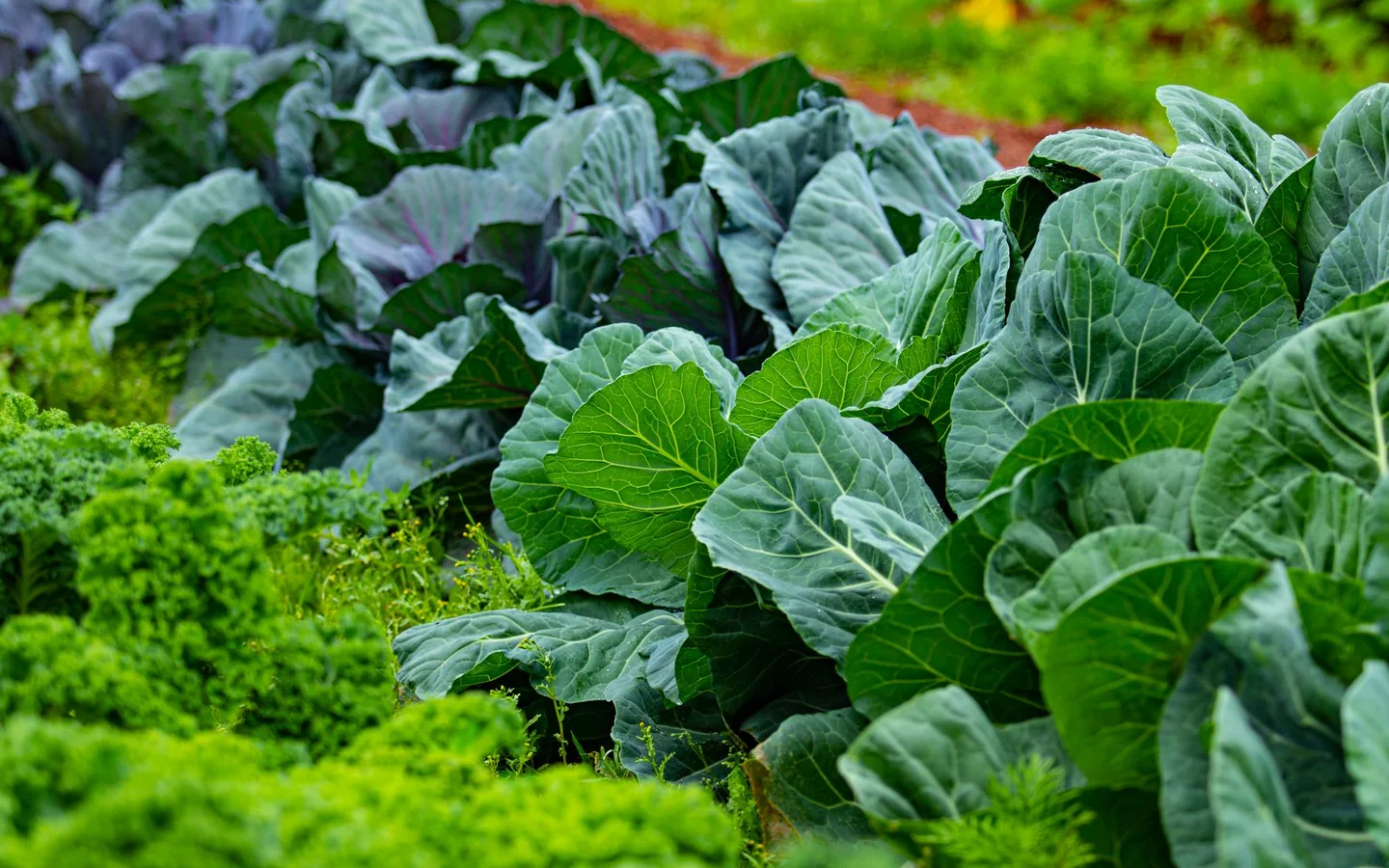
Cabbage is a useful crop because there are varieties for almost every season. One planting won't give a year-round supply, though. The job is to choose the right type, sow it at the right time and protect the leaves long before the head begins to form.
An unprotected cabbage is a favourite of caterpillars and pigeons. A few sturdy plants under well-fitted mesh usually beat an ambitious bed left open to wildlife.
Choose cabbage by harvest season
The four broad groups describe when you want to harvest, not completely different species.
| Group | Typical sowing | Main harvest |
|---|---|---|
| Spring cabbage | Summer, commonly July | Spring to early summer the following year |
| Summer cabbage | Late winter to mid-spring | Mid- to late summer |
| Autumn cabbage | Mid-spring to early summer | Autumn |
| Winter cabbage | Late spring to early summer | Winter and sometimes early spring |
Packet dates vary between cultivars, so use this as a planning guide rather than a substitute for the variety instructions.
You can choose pointed, round, red, savoy or compact heads. A huge winter cabbage may be a poor fit for a small household; a compact summer type is often more practical.
Where should cabbage grow?
Choose a sunny site with firm, fertile, well-drained soil. Brassicas generally do better in ground that hasn't just been dug into a loose, airy mound.
Remove weeds and improve poor soil with well-rotted compost. If you've recently grown cabbages, kale, sprouts or cauliflower in that position, consider a different bed.
Those crops are related and share pests and soil-borne diseases, including clubroot. Rotation isn't a cure for infected soil, but it reduces unnecessary repeated pressure.
Check our soil preparation guide before you prepare a new vegetable bed.
Sow cabbage seeds in modules or a seedbed
You can sow indoors or in an outdoor nursery seedbed. Modules are useful when the final bed is still occupied.
Sow seeds shallowly according to the packet in peat-free seed compost, water gently and give emerging plants strong light.
Outdoor seedbeds should be fine, firm and weed-free. Thin crowded seedlings rather than allowing them to form a dense row of weak stems.
Protect seedlings from flea beetles, slugs and birds. A cabbage can recover from a little cosmetic leaf damage, but a tiny plant whose growing point has been eaten may be lost.
Transplant at the right stage
Move seedlings into their final space when they are strong plants, often around 10–15cm tall with five or six true leaves.
Harden off indoor-raised plants first. Our hardening-off guide covers the process.
Water before lifting. Set seedlings into a planting hole so their lowest leaves are close to the soil surface, firm the ground well and water again.
Firm planting matters. A loose transplant rocks in wind, damaging the roots and causing poor establishment.
For general planning, compact cabbage may fit at about 30cm spacing while larger types need roughly 45cm or more. The packet is the final guide; see also our plant spacing guide.
Protect cabbage plants before caterpillars arrive
Cover plants with fine insect-proof mesh on hoops or a well-anchored frame. Secure every edge so adult cabbage white butterflies cannot slip underneath.
Don't let foliage press against the mesh. Butterflies may still lay eggs through fabric touching leaves.
Inspect undersides regularly for eggs and caterpillars, especially when removing covers for weeding. Damage often begins on outer leaves and progresses into forming heads.
Pigeons can strip foliage during winter when butterfly activity is low. Wildlife-safe, taut netting helps, but avoid loose mesh that can trap birds or hedgehogs.
Watering cabbage through the growing season
Cabbages need steady moisture to form good leaves and heads. Dry spells during rapid growth may produce smaller crops or stress the plants.
Water deeply when the soil is drying at root level, especially after transplanting. Mulch with mature compost once plants are growing well.
Avoid alternate drought and saturation. The aim is moist soil with enough air around roots.
Our garden irrigation planning guide can help allocate water sensibly when several crops need attention.
Feeding without overdoing it
Good fertile soil is more useful than repeated strong doses of fertiliser. If your ground has been improved and crops are growing steadily, extra feeding may not be needed.
Very poor soil may need an appropriate balanced fertiliser according to soil condition and product instructions.
Yellow leaves don't automatically prove a lack of nitrogen. Check whether leaves are simply old, whether roots are waterlogged and whether pests have damaged the plant.
Excessive fast growth isn't a substitute for a sound root system and suitable spacing.
Growing cabbage in pots
It is possible, particularly with compact types. Use a large, deep pot with drainage holes and a quality peat-free growing medium.
A pot about 30cm wide may hold one compact cabbage; much larger containers can support more if there's appropriate spacing.
Pots require closer watering and feeding attention than garden soil. Place them in a sunny position but protect from strong wind and severe drying.
Our pot compost calculator can help you estimate how many bags are needed.
When is cabbage ready to harvest?
Pick a head when it is firm and large enough for your needs. The mature size differs widely, so don't wait for every cabbage to become a giant supermarket head.
Use a clean, sharp knife to cut the stem just above ground. Check for caterpillars hidden between outer leaves before taking it into the kitchen.
Some spring and summer cabbages may produce a small second head if the stump is scored and left to regrow, but this isn't guaranteed.
After the crop is finished, remove stumps and decaying leaves. Leaving infected brassica roots in place can contribute to future soil problems.
What causes cabbage heads to split?
Splitting can occur when mature heads take up water rapidly after a dry spell, or when a mature cabbage is left in the ground too long.
Keeping moisture reasonably even and harvesting when heads are ready helps. Some varieties resist splitting better than others.
A split head may still have usable sound portions if harvested promptly, but discard any tissue showing rot.
Recognising common cabbage problems
Small holes in leaves: check for flea beetles, especially on young plants.
Large chewed patches or droppings: inspect for cabbage white caterpillars.
Grey-blue leaves and weak growth: root problems, water stress and nutrient issues are possible; investigate the soil.
Swollen distorted roots: clubroot is a serious concern. Don't move suspect soil to other brassica beds.
Rotting heads: poor airflow, damage and wet conditions can contribute. Remove decaying material promptly and avoid overhead watering late in the day where possible.
Spring, summer and winter maintenance
Spring cabbage must survive winter as an established plant, not a tender seedling left out too late.
Summer cabbage needs watering and caterpillar protection during warm periods. Autumn varieties benefit from regular checks for slug damage as heads tighten.
Winter cabbage is hardy but can still be badly damaged by birds or wind. Firm the base of loosened plants and check covers after storms.
This seasonal pattern is why choosing the correct packet matters as much as the actual sowing.
Quick answers
How long does cabbage take to grow? Many varieties need roughly four to six months, but spring crops may overwinter for longer.
Can I grow cabbage every year in the same spot? It's better to rotate brassicas and reduce the build-up of pests and diseases.
Should I remove the outside leaves? Only badly damaged or diseased leaves as needed. Healthy outer leaves support the developing head.
Do all cabbages need netting? Protection is strongly recommended where caterpillars or pigeons are common.
Grow a few well-spaced plants of the right seasonal varieties, protect them from the beginning and harvest heads before they become overmature. That is a far more dependable approach than planting a crowded row and hoping for the best.