
Cauliflower is a rewarding crop, but it can be less forgiving than cabbage. If growth stops during a dry spell, seedlings sit in cold soil, or roots are disturbed too severely, the plant may make a tiny head instead of the full curd you hoped for.
The trick is steady growth from seedling to harvest. Pick a variety suited to your season, protect it early and keep moisture reasonably consistent as the head develops.
Choose cauliflower by harvesting season
Cauliflowers are sold as summer, autumn and winter types, with sowing dates that vary significantly between cultivars.
| Crop type | Typical sowing period | Likely harvest |
|---|---|---|
| Early summer types | Late winter to early spring under cover | Summer |
| Autumn types | Spring to early summer | Autumn |
| Overwintering types | Spring to early summer depending on variety | Winter or following spring |
Read the packet carefully. A cauliflower bred for mild winter conditions may not be dependable outdoors in an exposed northern garden.
White heads are common, but there are purple, orange and green varieties. Colour is a varietal feature, not automatically evidence of poor growing conditions.
The difference between cauliflower and broccoli
Both belong to the cabbage family, but you generally harvest one main curd from a cauliflower plant. Many types of broccoli can produce side shoots after the main head is taken.
Cauliflower curds are compact clusters of developing flower buds. Once they begin to separate or flower, the eating quality falls.
Don't expect a cut cauliflower to keep producing substantial heads indefinitely. Plan multiple sowings or choose a range of varieties for a longer harvest.
Pick the right planting site
Cauliflower grows best in fertile, moisture-retentive soil that drains well. A reasonably sunny, sheltered position is ideal.
Unlike some root crops, brassicas benefit from fairly firm soil. If the bed has just been dug deeply, settle and firm the planting area before transplanting.
Work in well-rotted compost before planting if the soil needs it, but avoid burying fresh manure immediately under young roots.
Because cauliflower is a brassica, rotate it with cabbages, kale, Brussels sprouts and other relatives where possible. These crops share some pests and diseases.
See our soil preparation guide if your bed has compacted over winter.
Start seeds in modules
Use peat-free seed compost and sow seeds in small modules at the depth recommended on the packet, usually around 1–2cm.
Water gently, maintain suitable temperatures for the season and provide bright light as soon as seedlings emerge.
Thin to one strong plant per cell. Don't leave multiple plants competing until their roots are hopelessly tangled.
A single sturdy seedling in a module is better than a tray of tall, pale plants grown too warm in weak light.
Sowing outdoors in a seedbed
Where conditions are suitable, you can raise cauliflower seedlings in a separate weed-free seedbed.
Sow thinly, keep the surface moist until germination and protect the rows against slugs, flea beetles and other early pests.
Thin seedlings so they have room to develop a strong root system before moving to the main bed.
The benefit of a nursery bed is that the final growing area can continue producing another crop until cauliflowers need their space.
Transplant without checking growth
Young plants are normally moved while they are still compact and healthy, before becoming pot-bound.
Harden off indoor-raised seedlings gradually. Our hardening-off guide explains how to avoid a sudden cold shock.
Water plants before moving. Lift them carefully, plant with the lowest leaves close to the surface, firm the soil around each rootball and water again.
Give them space according to the variety. Many full-sized cauliflowers need 45–60cm between plants; compact cultivars can be closer.
For a mixed vegetable bed, use our plant spacing guide rather than trying to squeeze mature cauliflowers between tiny salad crops.
Watering is crucial when heads are forming
Cauliflower needs moisture for steady leaf growth and curd development. Alternating drought and heavy watering can result in poor quality or small heads.
Check moisture beneath the surface, especially during summer weather. Water thoroughly at root level when dry rather than scattering a light spray across the leaves.
An organic mulch around established plants helps reduce evaporation. Keep it clear of the stem base to discourage rotting.
Potted cauliflowers dry quickly and need particularly close attention.
Feeding cauliflower
A fertile bed improved with garden compost usually provides a sound start. Where soil is poor, a suitable balanced fertiliser may help, used at the manufacturer's rate.
Too much nitrogen is not a reliable shortcut to bigger curds. Very leafy growth without heads can reflect variety, season, heat or developmental stress.
If growth is poor, examine roots, moisture and pest damage before feeding again.
A soil pH test is worthwhile if brassicas have repeatedly struggled or clubroot is suspected. Cauliflowers generally favour soil around neutral to slightly alkaline rather than very acidic conditions.
Protect against cabbage whites and pigeons
Fine insect mesh installed over hoops helps keep cabbage white butterflies from laying eggs on the leaves.
Ensure mesh doesn't rest directly on foliage and seal gaps along the ground. Inspect regularly for caterpillars that may have been present before covering.
Pigeons can shred leaves in cooler months, slowing growth and exposing young curds. Safe netting can help.
See our guide to pigeon protection for brassicas for fitting covers without trapping wildlife.
Should you cover white cauliflower curds?
Some white varieties benefit from folding a few outer leaves loosely over the forming curd, to reduce yellowing or sun scorch.
This is sometimes called blanching, although the term doesn't mean boiling the vegetable.
Not every cultivar needs it: many modern self-blanching cauliflowers naturally protect the head with surrounding leaves.
Do not tie leaves so tightly that water is trapped and decay develops. Check the curd regularly as it grows.
When to harvest cauliflower
Cauliflowers can be ready several months after sowing, with timing varying widely by variety and weather.
Harvest when the head is firm, compact and an appropriate size, before its surface begins to loosen or separate into small florets.
Use a clean, sharp knife to cut below the head, leaving a few protecting leaves attached if practical.
A huge head is not necessarily a better one. It is often wiser to harvest slightly early rather than let it become coarse and overmature.
Why is my cauliflower head tiny?
A button-sized head can be caused by growth checks: plants kept too long in modules, transplant shock, drought, poor nutrition or unsuitable temperatures.
Once a tiny premature head forms, it usually will not develop into a large normal curd. Harvest what is usable and review the growing conditions next season.
This problem isn't solved by feeding the plant heavily after the event. Cauliflower quality is largely decided by how consistently it grew beforehand.
Other cauliflower problems
Leaves have holes: check for caterpillars, flea beetles and slugs.
Roots are swollen or distorted: suspect clubroot and avoid transferring potentially contaminated soil.
Head is yellowing: sunlight, age or variety may be responsible; check whether the curd remains firm.
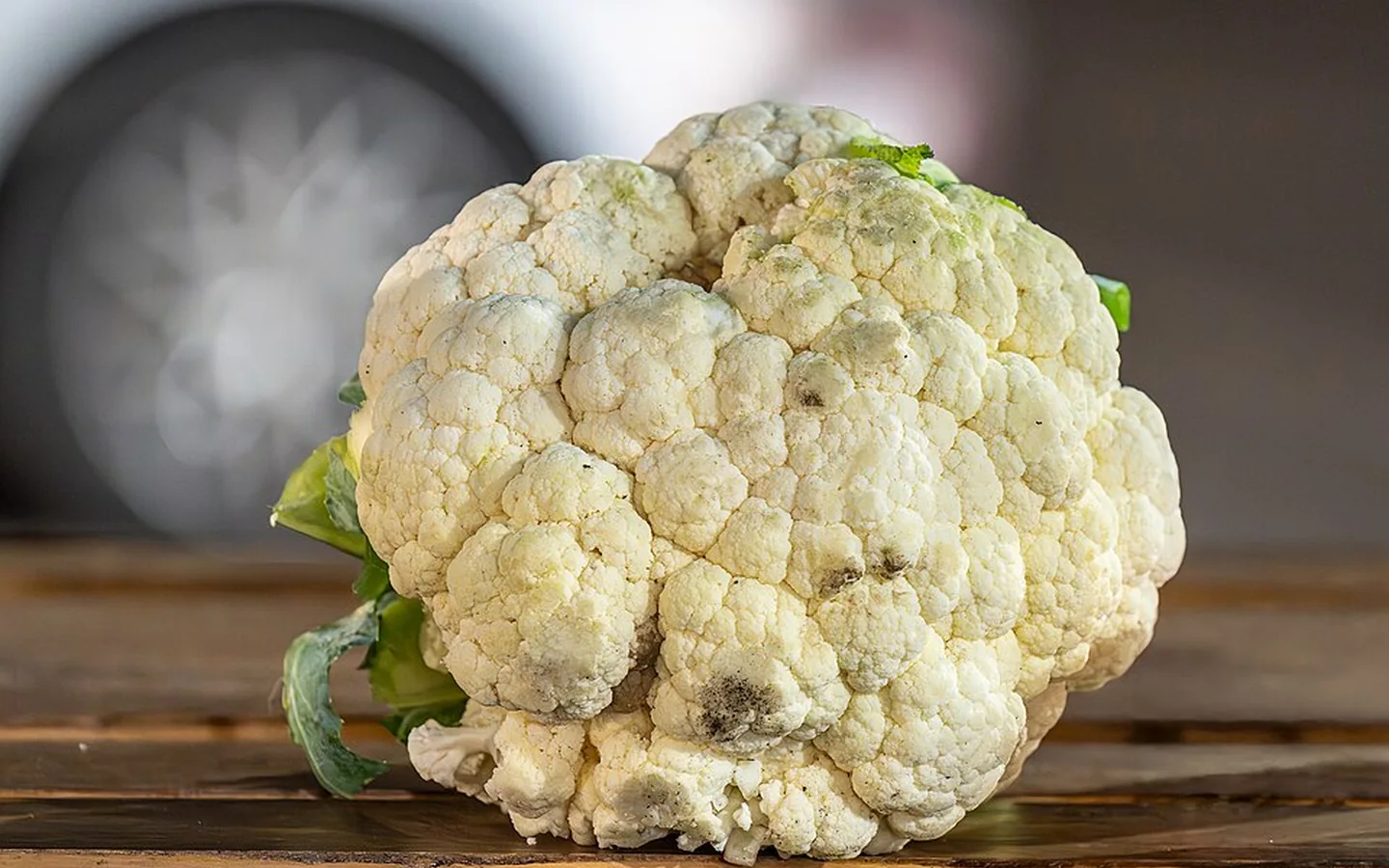
Brown spots or decay: remove affected material and investigate wet conditions, injury and disease. Discard badly rotting produce.
Curd becomes loose or rice-like: heat or growth stresses can contribute; harvest promptly if still sound.
Growing cauliflower in a container
Choose a compact type and a large, stable container with drainage holes. One plant in a 30–45cm-wide pot may be realistic for a suitable cultivar, though larger is easier to water consistently.
Use fertile peat-free compost and a sheltered sunny position. Feed according to the compost and crop needs.
Avoid crowding several plants into one small tub. Container cauliflowers still need room for a large leaf rosette.
Our pot compost calculator helps estimate compost volume.
Quick answers
Can you grow cauliflower in winter? Certain varieties are grown through winter for late winter or spring harvest, subject to local climate.
Why is it all leaves? The plant may not yet be at its heading stage, or growing conditions may have disrupted development.
How many heads per plant? Generally one main cauliflower head.
Can you eat cauliflower leaves? Sound outer leaves are edible when properly washed and cooked, although texture varies.
Start with the right seasonal variety and protect uninterrupted growth. With cauliflower, consistent care usually matters more than clever feeding tricks.