
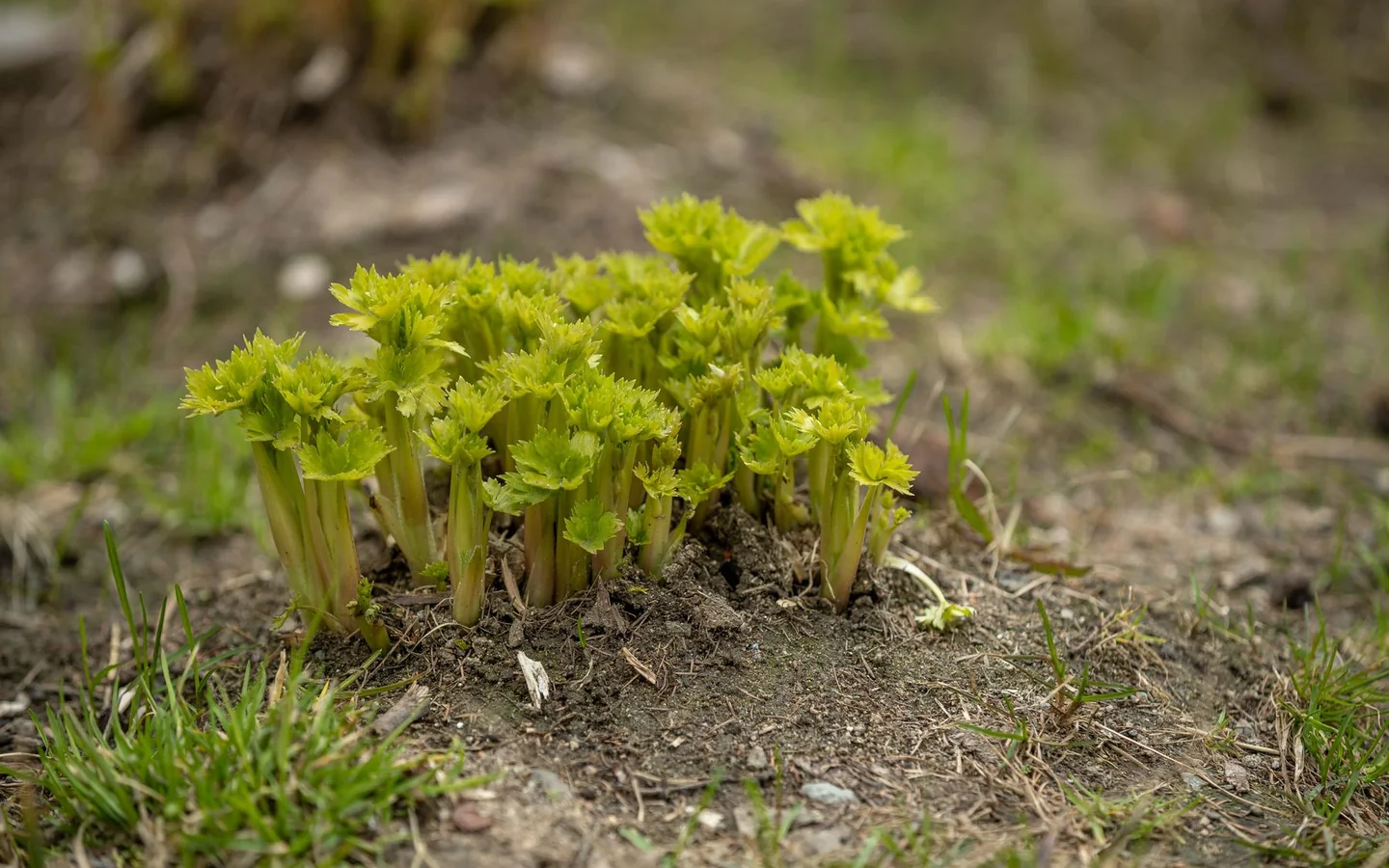
Celery has a reputation for being fussy, and there's a good reason: it needs a long growing season and soil that stays consistently moist. If the bed dries out repeatedly, the stems can become stringy, small or bitter.
Most home gardeners don't need a traditional trench system. Choose a modern self-blanching or green variety, start it indoors and give it a sunny, moisture-retentive planting site.
What type of celery should you buy?
Most readily available seed is for self-blanching or green celery. These types are usually grown in closely spaced blocks, where plants shade each other's stems.
Traditional trench celery is less common. It's often earthed up or wrapped to exclude light, a process called blanching that produces paler, milder stems.
Check the seed packet rather than assuming every celery plant needs the same treatment. Leaf celery, celeriac and stem celery aren't interchangeable crops: celeriac is grown primarily for a swollen root-like stem base, not crunchy celery sticks.
For a first attempt, choose a reliable stem-celery variety suited to the UK climate.
Does celery suit your garden?
Celery needs fertile soil that retains moisture but drains freely. A slightly damp, sunny bed is far better than a dry raised mound that bakes in July.
If you have light sandy soil, work in mature compost to improve water retention. If heavy soil becomes waterlogged, improve structure rather than keeping the roots permanently underwater.
Avoid exposed, cold planting positions. Chilling of young plants can trigger premature flowering, called bolting, later in the season.
Celery can be grown in pots, but they require close attention to watering. A hot container that dries out each afternoon is a difficult place to produce juicy stems.
When to sow celery in the UK
Celery is normally started indoors in late winter or early spring because its seed is small and slow to germinate.
The seed needs warmth and moisture. Follow the packet's directions for sowing depth: many celery varieties need light for germination and are sown on or close to the surface, not deeply buried.
Use a tray of fine, damp peat-free seed compost. Scatter the seeds thinly, press them gently into contact and cover the tray loosely to retain humidity without allowing it to become stagnant.
Germination can take up to three weeks. If nothing appears after a few days, don't churn the compost looking for seed.
Keep seedlings growing steadily
Once seedlings emerge, give them plenty of light. Crowded, shaded celery seedlings become spindly and difficult to handle.
Keep compost evenly damp, not saturated. Prick out or thin to a strong plant per cell when seedlings are large enough to manage.
Avoid prolonged chilling. Young celery is sensitive to temperatures below about 10°C, which can encourage it to flower prematurely after planting.
Use our seed-starting guide to plan a warm, bright position rather than starting every packet on the same cold windowsill.
When to plant celery outside
Plant out only after frost risk has passed and the soil has warmed—often late May or early June in many UK gardens.
Harden seedlings off gradually, keeping them protected during cold nights. For a method that doesn't shock the plants, use our hardening-off guide.
Prepare the bed ahead of time, water both the plants and planting holes, then transplant without burying the central growing point.
Modern self-blanching celery is commonly planted in a block at about 23cm between plants in each direction. The close arrangement shades stems; it isn't a reason to pack plants so tightly that air can't circulate.
Watering: the job that matters most
Celery grows best when water availability is steady from transplanting to harvest. Its roots do not tolerate long dry spells followed by occasional drenchings as well as many other vegetables.
Check the soil beneath the top crust. If it's drying at root depth, give the bed a proper soak. Apply water to the ground rather than spraying leaves in the sun.
Mulch around established plants with well-rotted compost to limit evaporation. Keep mulch clear of the central stems and crown to avoid trapping unnecessary wetness.
If watering several vegetable beds, celery should be high on your priority list in dry weather. Our garden irrigation planning guide can help organise that routine.
Feeding celery
Celery needs fertile ground, but throwing concentrated fertiliser at stressed plants can make matters worse. Start with good soil and use a balanced feed only when needed or as recommended for containers.
When celery grows in pots, nutrients wash out faster and a balanced liquid fertiliser at appropriate intervals can be useful.
Check watering first if leaves look dull and stems stop growing. Fertiliser can't compensate for roots repeatedly running dry.
Never apply more feed simply because a plant has begun to flower: bolting is a developmental response, not an empty fertiliser tank.
How to blanch celery
Blanching means excluding light from the edible stems so they become paler and less strongly flavoured.
Self-blanching types need less work because they shade each other in a block. You may still wrap the outside stems with corrugated cardboard or clean paper later in summer if you want a milder crop.
Leave the upper leaves exposed so the plant can keep growing. Check occasionally for slugs or trapped dampness inside the wrapper.
With traditional trench celery, gardeners gradually mound soil around stems. Don't start heaping soil onto modern self-blanching varieties without a reason; the method is unnecessary for many.
Growing celery in pots
Choose a large, deep pot or trough with reliable drainage holes and fertile peat-free compost. Put it where it receives sun but won't bake dry beside a south-facing brick wall.
Small containers dry out rapidly and can produce tough stalks. If several plants are grown together, leave enough room for each crown to develop.
Water consistently throughout summer, and feed as necessary for the compost used. Our pot compost calculator helps plan the volume before buying bags.
When and how to harvest celery
Most self-blanching and green celery is harvested from mid-summer into autumn, depending on sowing date and variety.
You can cut mature outer stems as needed where the variety allows, or cut the whole plant at its base when the stems are useful size. Avoid tearing the heart apart.
Harvest before stems become old, yellowed and excessively stringy. Many modern types aren't reliably frost hardy, so finish the crop before damaging frosts unless you're growing a suitably protected, hardy variety.
Trim, wash and refrigerate stems promptly.
Why does celery go to seed?
Flowering in the first growing season is called bolting. A common trigger is a period of cold conditions while plants are young, even if the weather becomes warm later.
The best prevention is warm seedling care, timely hardening off, and planting only when conditions are suitable. Dryness and poor growth can aggravate problems.
Once a plant has bolted, you cannot turn it back into a full crop of tender stalks. You may still use some sound young stems, but start again with suitable planting conditions next season.
Common celery problems
Hollow or stringy stems: water stress, growing conditions and age can all contribute. Harvest at the correct stage and maintain moisture.
Slugs damage the heart: inspect at dusk and reduce damp hiding places immediately around the crown.
Brown or spotted leaves: identify the pattern before treating it. Leaf spot diseases may require improved spacing, hygiene and removal of badly affected material.
Pale weak seedlings: insufficient light is common indoors. Move them to a brighter position rather than increasing fertiliser.
Slow growth after planting: cold soil, damaged roots or drought can check young plants. Give them time and suitable care.
Quick answers
Is celery easy to grow? It's manageable if you can provide warm seedling conditions and dependable summer watering.
Does celery need a trench? Usually not for modern self-blanching varieties.
Can you grow celery from a supermarket base? A cut base may sprout some leaves in water, but it won't reliably replace growing a vigorous mature celery crop from seed.
Can celery survive winter? Most standard stem celery is harvested before frost; hardiness depends on the variety and protection.
If you can maintain one moisture-loving corner of your vegetable plot, celery is a worthwhile crop. Its success is less about clever tricks than about avoiding cold setbacks and repeated drought.