
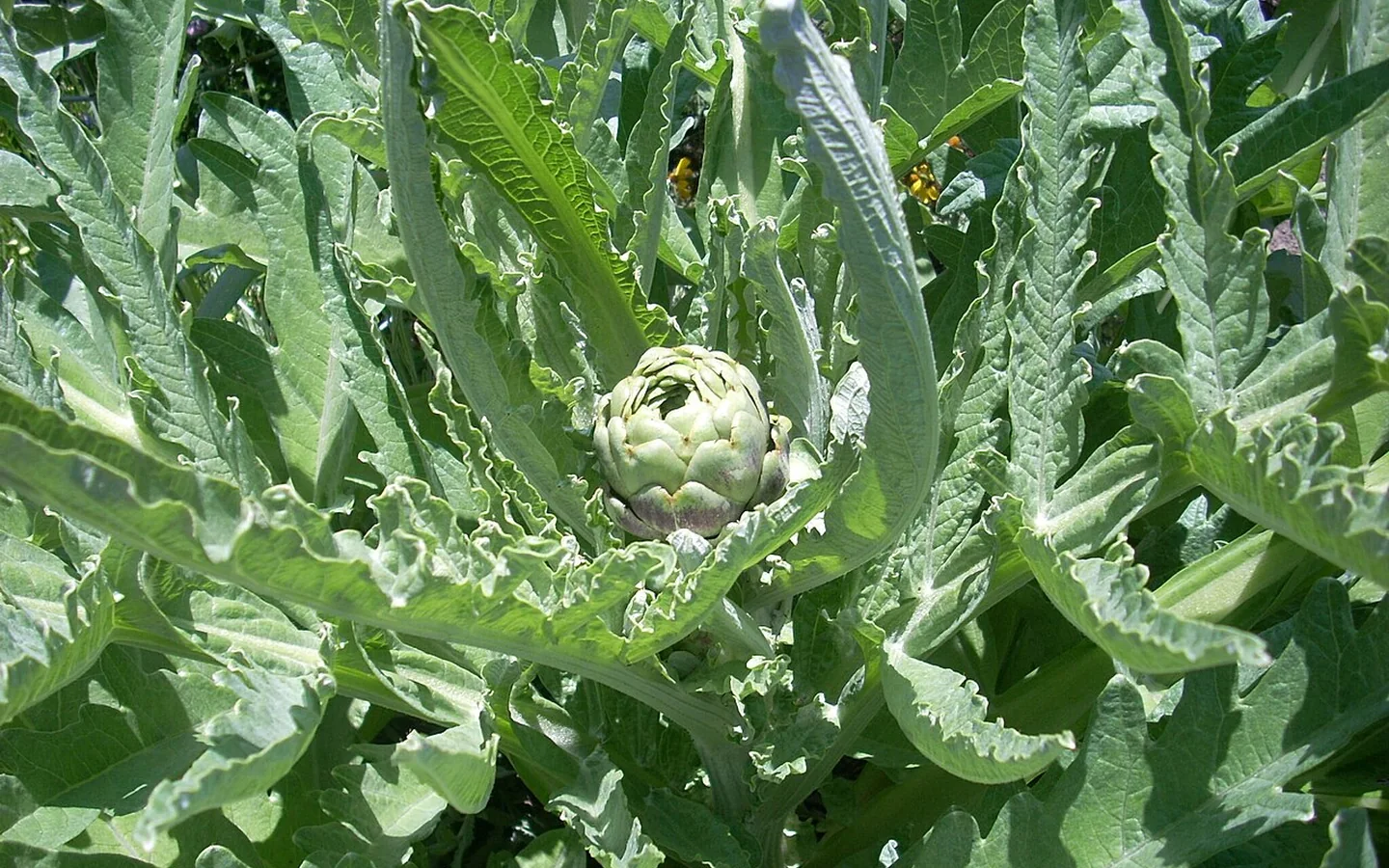
A globe artichoke is one of those vegetables that looks at home in a flower border. Its deeply cut silver-green leaves are ornamental, and the edible flower buds can be harvested for cooking before they open.
These plants are perennials rather than one-season vegetables, so choose the planting site carefully. A healthy clump can supply buds for several years, though it eventually benefits from division.
Globe artichoke or Jerusalem artichoke?
They are completely different crops.
A globe artichoke (Cynara cardunculus, Scolymus Group) is grown for large unopened flower buds. The edible parts include the fleshy lower portions of the bud scales and the heart.
A Jerusalem artichoke (Helianthus tuberosus) is a tall sunflower relative grown mainly for underground tubers.
This guide covers globe artichokes. Don't buy Jerusalem artichoke tubers expecting them to grow the flower buds served in Mediterranean dishes.
Choose a variety suited to your climate
Globe artichokes vary in bud size, colour and cold tolerance. Traditional green types and purple-budded varieties are available.
In much of Britain, a reasonably hardy cultivar planted in a sheltered position is the safest starting point.
Less hardy Mediterranean cultivars may succeed in mild southern gardens but struggle through cold wet winters farther north.
Check eventual mature size. Plants often reach 1–1.5m tall and can spread around a metre, far larger than their first-year nursery pots suggest.
Where to plant artichokes
Choose full sun and soil that drains freely. Globe artichokes tolerate a degree of summer dryness once established, but they dislike roots sitting in cold water through winter.
A warm south-facing border or open vegetable plot can work well. Shelter from strong wind is useful because mature leaves are large and can catch gusts.
On heavy clay, consider improving drainage or planting in a suitable raised position. Simply burying the crown in rich wet compost can make matters worse.
Allow space for airflow and harvesting access. Our plant spacing guide helps you avoid overcrowding nearby crops.
When can artichokes be planted in the UK?
Young plants are usually put in the ground from spring, once severe frost and saturated soil are less likely.
If you buy a small plant early, grow it on under protection rather than rushing into a cold exposed border.
Rooted offsets or divided plants are normally moved in spring as new growth begins.
It's worth waiting for suitable weather, because a chilled or waterlogged young crown may never establish properly.
Growing globe artichokes from seed
You can sow indoors from February or March, using individual pots or modules with peat-free seed compost.
Give seeds moderate warmth and plenty of light after germination. Pot seedlings on as necessary without damaging roots.
Harden off thoroughly before moving outdoors. A rapid switch from warm windowsill to cold ground can check growth.
Seed-grown plants may vary from named cultivars. If you want the exact characteristics of a particular variety, plants propagated from offsets are more reliable.
Our seed-starting guide can help plan a warm but well-lit sowing space.
Plant out step by step
- Remove perennial weeds from a sunny, well-drained site.
- Improve poor soil with well-rotted compost if needed.
- Dig a hole comfortably larger than the rootball.
- Place the plant at about the depth it grew in its pot.
- Firm the soil gently without burying the central growing point.
- Water thoroughly and mulch the surrounding soil, keeping mulch away from the crown.
- Allow roughly 90cm to 1m for each mature plant, or follow the cultivar's guidance.
- Label the position so dormant crowns aren't accidentally dug up in winter.
Artichokes aren't suitable for a crowded narrow row where every large leaf gets folded against another plant.
Care during the first season
The first year is about root establishment, not maximising the harvest.
Water regularly while the plant is young, especially after planting in spring. Keep weeds from competing around the crown.
If flower stalks appear in the first summer, removing them can help the plant put energy into growth and winter survival.
Once established, plants usually need less routine watering than new seedlings, but still benefit from a thorough soak during exceptional drought.
Feeding and mulching
Apply mature garden compost as a spring mulch to improve the soil over time and reduce water loss.
Avoid piling wet mulch directly into the crown. That can encourage rot during cool conditions.
On fertile ground, additional feed may not be needed. Very poor soil can be improved with appropriate balanced fertiliser, following product instructions.
If leaves suddenly wilt in saturated soil, check roots before watering again.
When will an artichoke produce edible buds?
Established plants usually begin producing buds in early to midsummer, with the main crop continuing according to variety and weather.
Many gardeners remove flower stalks during the first growing season and begin harvesting in the second year.
A healthy mature plant makes one main large bud and smaller secondary buds. These are not miniature bulbs; they are the flowerheads before opening.
Leaving a few buds to open produces large purple thistle-like flowers that attract visiting insects, but those open flowers are no longer suitable for the usual artichoke-heart harvest.
Harvest artichokes at the right stage
Pick buds when they are plump, firm and tightly closed, before the scales spread apart and the central flower becomes fibrous.
Cut the stalk below the bud with secateurs or a sharp knife, leaving a short length of stem.
The main central bud is often the largest. Smaller side buds can follow and are worth checking frequently.
Don't wait for every bud to reach supermarket size. A smaller, tender bud is often more useful than a huge overmature one.
Preparing globe artichokes for the kitchen
Wash the bud, trim tough outer sections as appropriate and remove the fibrous choke from larger mature buds before eating the heart.
Smaller immature buds may be cooked and eaten more extensively, depending on the cultivar and preparation method.
Use a trustworthy recipe and handle sharp leaf tips carefully.
Never assume every part of the mature flowerhead is edible. The tough outer scales and fibrous centre are generally discarded.
Winter protection in colder districts
The main danger is often cold combined with wet soil.
As top growth fades in autumn, cover the crown with a generous layer of dry, insulating material such as straw, plus suitable fleece or a cloche during severe spells if needed.
Protect young crowns especially carefully in their first winter. Keep coverings breathable and remove or ventilate them in mild wet weather to prevent trapped moisture.
Some older leaves can be laid over the centre to provide temporary insulation.
Our frost protection guide covers breathable covers and common mistakes.
How to divide an old artichoke plant
Clumps tend to become crowded and less vigorous after several years. Division every four or five years can rejuvenate them.
In spring, identify healthy shoots around the outside of the clump. Lift or cut off an offset with a good section of roots attached.
Replant immediately into prepared soil and water well while it establishes.
Avoid removing so many shoots from the parent plant that you leave it weak. Division is a method of propagation, not a reason to dismantle a healthy young plant.
Can globe artichokes grow in pots?
Possible, but not ideal in tiny containers. Choose a large, deep, frost-resistant pot with good drainage and enough room for a sizeable perennial root system.
Use a suitable peat-free growing medium and water regularly in summer.
Protect the container against winter freezing and waterlogging; roots in pots experience temperature swings more readily than those in the ground.
Our pot compost calculator helps estimate compost for a genuinely large tub.
Common problems
Plant dies in winter: prolonged wet cold may have damaged the crown. Improve drainage and protection next season.
No flower buds: immature plants, poor light or insufficient establishment may be involved.
Leaves are eaten: inspect for slugs, snails and other pests, especially on young growth.
Aphids gather on buds: look for natural predators and assess whether the infestation is causing actual damage.
Plant grows huge but isn't productive: check age, cultivar, site light and overcrowding rather than feeding repeatedly.
Quick answers
Are globe artichokes perennial? Yes, they can persist for years if the crown survives winter.
Can you start them from seed? Yes, although seedlings may vary and need time to mature.
When should you pick the buds? When they're full-sized for the variety but still tightly closed.
Are artichoke flowers good for bees? The open purple flowerheads can attract pollinators, but buds left to flower are not harvested for the same tender eating stage.
Give globe artichokes a permanent sunny space, protect the crown against winter wet and resist overharvesting young plants. They will reward you with both architectural foliage and edible buds.