
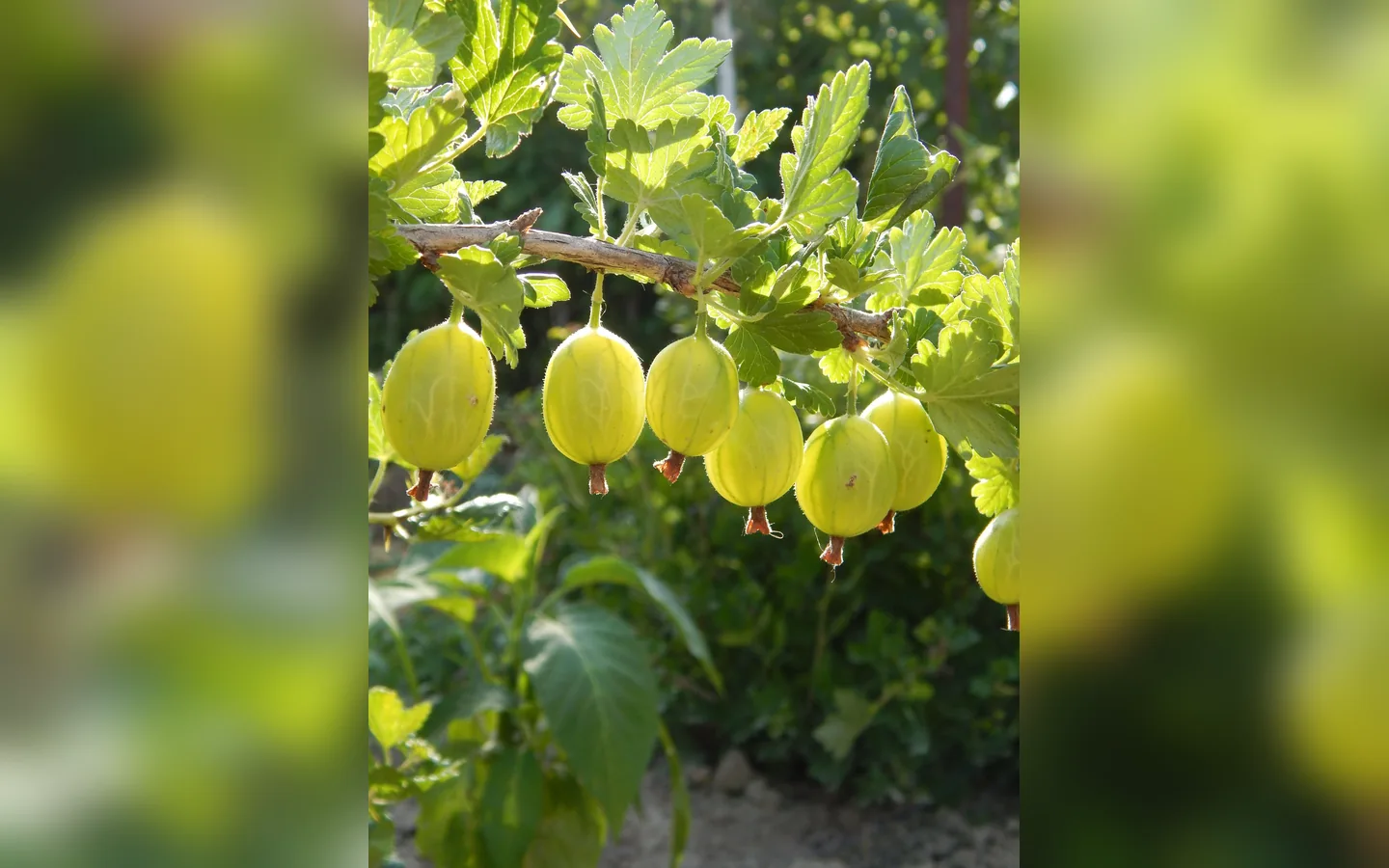
Gooseberries can be among the most reliable fruits in a British garden. They tolerate cooler conditions than some summer berries and don't require a huge orchard to crop well. You do, however, need to give the bush room for picking and pruning.
The main jobs are to keep the centre open, protect young fruit and harvest at the right stage. A neglected thorny thicket can be difficult to reach and more vulnerable to fungal problems.
Which type of gooseberry should you grow?
Gooseberries (Ribes uva-crispa) come in green, yellow and red-fruited cultivars. Some are best for cooking while still firm; others are sweet enough for fresh eating once fully ripe.
Choose a named cultivar with good resistance to American gooseberry mildew, especially if your garden has had the disease before.
Some varieties have fewer thorns, but truly thorn-free bushes are uncommon. Consider access when choosing a planting site.
Most gooseberry varieties are self-fertile, so one bush can fruit without a second variety.
Where do gooseberries grow best?
Gooseberries can crop in full sun or partial shade. In warmer exposed places, a little afternoon shade can reduce scorch, but deep shade produces weaker crops.
They prefer fertile, moisture-retentive but well-drained soil. Prolonged waterlogging damages roots, while repeated summer drought reduces fruit size.
Avoid cramped corners between fences where airflow is poor and harvesting is awkward. A position with enough space to walk around the bush makes pruning and picking much easier.
When should you plant gooseberries?
Bare-root bushes are best planted during the dormant season, roughly November to March, when the ground is workable and not frozen or waterlogged.
Container-grown plants can be planted at other suitable times, but water reliably during dry weather while roots establish.
Choose healthy nursery stock with strong shoots and no obvious mildew. Check cultivar size so the bush doesn't grow directly across a path.
Plant a gooseberry bush step by step
- Clear weeds and prepare a planting area comfortably wider than the rootball.
- Improve soil texture where necessary with suitable organic matter.
- Keep bare roots moist until planting and loosen tightly circling roots of container stock gently.
- Plant at approximately the nursery level, following any variety-specific instructions.
- Backfill, firm gently and water thoroughly.
- Mulch the surrounding soil to reduce moisture loss, leaving the stems clear.
- Provide enough room for access on all sides.
A typical bush may need around 1.2–1.5m of spacing, depending on vigour and training. A cordon-trained gooseberry can occupy less width but requires a support and regular pruning.
Our plant spacing calculator helps plan a row once you've checked the mature size.
Bush or cordon: which is easier?
A bush develops a permanent framework of branches and is a straightforward choice where space permits.
A cordon is trained with a small number of upright stems, often one, along a sturdy support. It can be useful for small plots and makes fruit easier to reach, but requires consistent seasonal pruning.
For most beginners, a well-spaced bush is simpler than starting several complicated trained forms at once.
Watering and feeding
Newly planted gooseberries benefit from thorough watering during dry spells. Established bushes have a broader root system but may still need water while berries are swelling.
Apply a suitable spring mulch of organic matter to conserve moisture. Avoid deep digging close to the roots.
Feed only when soil fertility or plant growth indicates a need. Excess nitrogen can produce soft crowded growth that is more prone to some diseases.
For difficult soil, see how to improve garden soil naturally.
Pruning gooseberries without losing the crop
Gooseberries fruit mainly on short spurs along older wood and on suitable younger growth. An open framework makes picking easier and helps leaves dry after rain.
Prune established bushes during winter dormancy, removing damaged, weak or inward-growing shoots and maintaining a balanced structure. Summer trimming can help limit overly long side growth on trained plants.
Avoid cutting every shoot to the base; that can remove much of the fruiting wood.
Our gooseberry pruning guide covers the detailed timing and cutting decisions separately from this growing overview.
Protecting gooseberries from mildew
American gooseberry mildew can leave a white powdery coating on young shoots, leaves and fruit. Later, the growth may turn brown and felty.
Some cultivars have improved resistance, making variety selection the best long-term starting point.
Give bushes room for airflow, avoid heavy nitrogen feeding and remove badly affected material appropriately. Don't use household treatments at arbitrary concentrations.
Pesticide use should follow current approvals and label instructions, and unnecessary spraying near harvest should be avoided.
Sawfly damage: why leaves disappear overnight
Gooseberry sawfly larvae can strip foliage rapidly, often beginning in the centre or lower part of the bush.
Inspect leaves from early spring onward, including undersides. Remove small groups of larvae by hand where practical before they spread through the plant.
Bare stems in early summer aren't always caused by drought or disease. Look for caterpillar-like larvae before deciding how to respond.
When are gooseberries ready to pick?
Gooseberries are often harvested from early to midsummer, with timing varying by cultivar and conditions.
For cooking, fruit may be picked while firm and tart. For eating fresh, leave suitable dessert cultivars to develop their full colour and sweetness, protecting them from birds.
Pick carefully because thorns and fragile berries can make the job fiddly. A well-pruned open bush is much easier to harvest than a tangled one.
Can you grow gooseberries in pots?
Yes, particularly compact or trained varieties. Choose a large stable draining pot, good soil-based peat-free compost and a position protected from extreme drying.
Container plants require more frequent watering and eventually need compost renewal. Don't assume a bush producing heavy fruit can remain permanently healthy in a tiny nursery pot.
Use our pot compost calculator to estimate the filling volume.
Problems worth checking early
| Symptom | First thing to investigate |
|---|---|
| White powder on leaves and berries | American gooseberry mildew |
| Leaves suddenly stripped | Gooseberry sawfly larvae |
| Small shrivelled berries | Drought, damaged roots or poor set |
| Weak growth and yellow leaves | Moisture, soil condition and pests |
| Fruits disappear before ripening | Birds or other garden wildlife |
Care through the year
Winter: plant bare-root stock, prune established bushes and clear accumulated debris.
Spring: apply mulch, watch for sawfly and maintain moisture as flowers and fruit form.
Summer: harvest berries, water in dry weather and inspect for mildew.
Autumn: tidy weeds, check supports and prepare the ground for new plants.
Do gooseberries need two plants to crop?
No. Most garden gooseberries are self-fertile and one healthy bush can produce fruit.
Are gooseberries easy for beginners?
They can be, especially with a disease-resistant variety and room to prune and harvest.
Will gooseberries grow in shade?
Partial shade is often suitable; deep shade tends to produce fewer berries.