
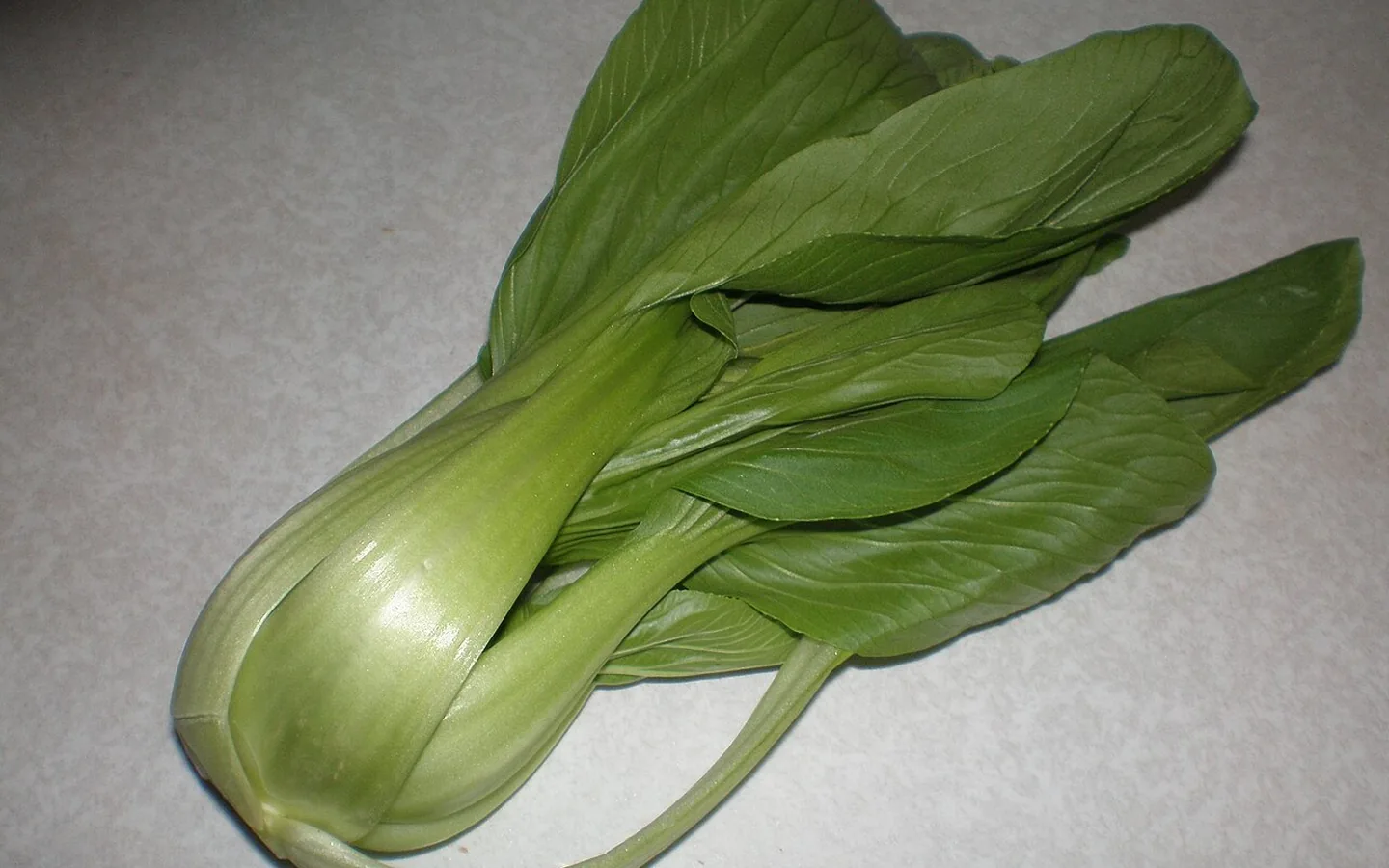
Pak choi is one of the quickest vegetables you can grow for stir-fries. Baby leaves can be picked in a few weeks, while fuller upright rosettes need longer to develop their thick, juicy stems.
The secret is cool but not freezing weather and reliable moisture. Hot dry conditions encourage bolting, so pak choi often grows better in spring and late summer than during the hottest part of a British summer.
What is pak choi?
Pak choi, also called bok choy, is a member of the cabbage family. Mature plants have smooth green or purple-tinged leaves and broad pale or green leaf stalks.
Unlike heading cabbage, pak choi forms an open upright rosette rather than a tight round head.
You can buy varieties bred for baby leaves, compact heads or larger mature plants. Some purple cultivars are ornamental as well as edible.
Check the seed packet's intended harvest size. Spacing for baby leaves is different from spacing for a full-sized pak choi rosette.
When to sow pak choi in the UK
Pak choi generally does well in spring and late summer to early autumn, when soil is moist and temperatures are moderate.
The exact months depend on variety and your local climate. In many districts, March to May and July to September are practical outdoor periods, with protection for cold starts.
In the height of summer, hot days and long daylight hours can increase bolting, especially if roots also dry out.
Choose a bolt-resistant variety if you intend to grow heads during warmer months.
For baby leaves, small repeat sowings are usually more useful than one long row that becomes ready all at once.
Why does pak choi bolt?
Bolting means the plant starts forming a flower stem instead of developing the leaves and stems you want to eat.
Both hot dry weather and certain cold stresses can encourage premature flowering. Prolonged root restriction or rough transplanting can add to the problem.
Once flower stalks appear, the leaves often become less tender and the crop begins to deteriorate.
You can't reliably reverse the process with fertiliser. The practical response is to harvest usable plants promptly and choose a better seasonal sowing window next time.
Choose the right growing site
Pak choi likes fertile soil that holds moisture but does not sit permanently waterlogged.
A sunny bed is good in cool spring weather. Light shade can help reduce stress during warmer conditions.
Weed the bed thoroughly and work in well-rotted compost where necessary. Fine, firm soil helps direct-sown seedlings emerge evenly.
Keep the crop within easy reach of a path; frequent inspection makes it easier to catch slug damage and harvest at the right stage.
How to sow pak choi seed outdoors
- Prepare a fine, weed-free seedbed.
- Mark a shallow drill, commonly around 1cm deep.
- Water the base if soil is dry.
- Sow thinly to avoid a dense row of seedlings.
- Cover lightly and firm the soil gently.
- Keep the surface moist until germination.
- Thin according to whether you want baby leaves or mature heads.
For full-sized plants, allow around 15–30cm between plants, depending on the cultivar. Baby-leaf crops can be closer because you harvest them early.
Don't leave a thick carpet of plants and expect all of them to form well-shaped rosettes.
Use our plant spacing guide if pak choi is filling gaps in a mixed vegetable bed.
Starting pak choi in modules
Module sowing can help where soil is too wet or slugs repeatedly damage tiny seedlings.
Use fresh peat-free seed compost, one strong plant per cell, and enough light to prevent weak stems.
Move plants outdoors while they are still young and compact. Avoid letting roots spiral around the module.
Harden off indoor-grown seedlings gently, especially after a very warm growing period. Our hardening-off guide covers the basic method.
For pak choi, a modest head start is useful; a large, stressed plant stuck in a small pot is not.
Can pak choi grow in pots?
Yes. Pak choi is well suited to troughs and broad containers, particularly compact varieties and baby leaves.
Choose a pot or trough with drainage holes and enough depth for an undisturbed root system. Fill with peat-free multipurpose compost.
A wide container is easier to plant correctly than a very small decorative pot.
Keep the compost evenly moist through warm spells. Check more often than you would for a plant in open soil.
Our pot compost calculator helps estimate growing medium for a set of patio containers.
Watering pak choi
Pak choi grows quickly and needs consistent moisture for good leaf quality.
Water at root level whenever the top soil is drying and there is a genuine need below the surface. Don't let small seedlings repeatedly wilt.
A light mulch can help in longer-season mature crops, but heavy mulch isn't normally necessary around baby leaves.
Avoid saturating small containers and leaving them in trays full of stagnant water. Roots still need oxygen.
Feeding and soil fertility
On fertile ground, pak choi usually grows fast without excessive feeding. A modest amount of well-rotted compost before sowing is often enough.
Container crops in used or exhausted compost may need a suitable balanced liquid feed at label rates.
If plants grow poorly, inspect soil moisture, cold weather and root crowding before assuming fertiliser is the answer.
Too much nitrogen can encourage lush growth but won't prevent heat-induced bolting.
Flea beetles and caterpillars
Small round holes in leaves are commonly caused by flea beetles. This can make baby-leaf crops look untidy even when the plants remain healthy.
Fine insect mesh installed early can help protect leaves. Secure it well and prevent fabric from lying directly on the growing foliage.
Pak choi belongs to the brassica family, so cabbage white caterpillars and other related pests may also feed on it.
Protect tender seedlings against slugs and snails, particularly in damp weather. Check at dusk rather than relying on unproven barrier tricks.
When and how to harvest
For baby leaves, harvest when the crop is tender and useful, often four weeks or so after sowing in favourable conditions.
For larger rosettes, expect approximately eight to ten weeks depending on variety, season and growing conditions.
You can remove outer leaves carefully while preserving the centre, or cut the entire plant just above soil level for a whole-head harvest.
Don't delay picking until flower stalks have fully developed. Pak choi is at its best while stems remain crisp and leaves are healthy.
Wash all leaves thoroughly, especially close to the base where soil may collect.
Pak choi in autumn and winter
Late-summer sowings often grow well as temperatures fall, provided seedlings have time to establish before severe cold.
In mild conditions, crops may continue producing in an unheated greenhouse or under a suitable low tunnel.
Protect against hard frost while maintaining ventilation. A sealed cover that traps condensation and heat on mild days may do more harm than good.
Our frost protection guide covers fleece and tunnel use for tender and hardy crops.
Common problems
Flower stems appear early: weather stress or root restriction may have caused bolting.
Leaves have tiny holes: investigate flea beetles.
Slugs eat seedlings: protect young plants early and remove hiding places.
Stems are small: overcrowding, short growing season or poor moisture may be involved.
Leaves yellow or rot: check stagnant water, damaged roots and decaying foliage.
Plants taste bitter: age, bolting and stress can reduce quality; harvest younger and grow in a cooler window.
Is pak choi the same as Chinese cabbage?
They are related but not identical garden crops. Chinese or napa cabbage forms an elongated head, while pak choi has separate upright leaf stalks.
Names in seed catalogues can be confusing, so check a photograph and the botanical description rather than relying only on the label 'Chinese greens'.
Other fast Asian brassicas such as mizuna and tatsoi can be grown with similar attention to moisture and seasonal timing, but they have their own growth habits.
Quick answers
Can pak choi grow in shade? Light shade is fine, particularly in warm weather; deep shade slows growth.
Can you harvest it more than once? Yes, if you take outer leaves and leave a healthy growing centre, although whole-head harvests finish the plant.
Is pak choi frost hardy? Some varieties tolerate cool weather, but severe cold can damage or check the crop.
How do you stop bolting? Choose a suitable variety and sow in cooler, more reliable growing periods while keeping roots evenly moist.
Pak choi is easiest when you work with its short cool-season growth cycle. Sow small batches, water steadily and pick while the stems are crisp.