
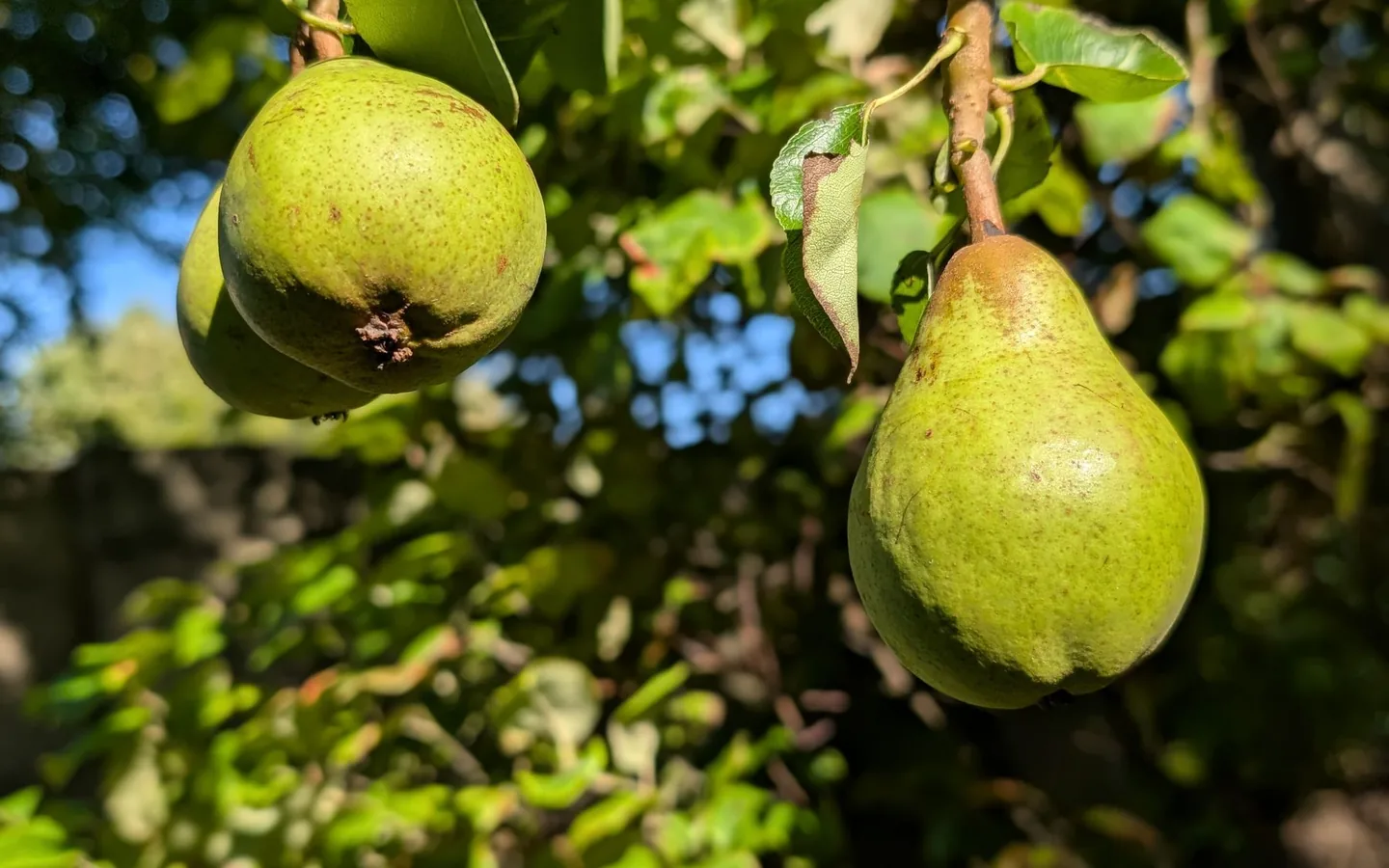
A home-grown pear picked at the right time can be excellent, but pears aren't quite as forgiving as apples in exposed gardens. They flower in spring, need enough warmth to develop fruit and often require another compatible pear variety for good pollination.
Before buying a tree, choose its mature size, rootstock and pollination requirements. Those decisions are much harder to change later than where you put the watering can.
What type of pear tree is best for a UK garden?
Pear trees are usually grafted, with the named fruiting variety joined to a rootstock that affects eventual vigour.
For a smaller space, look for an appropriate compact rootstock and trained form rather than trying to keep a full-size tree tiny through severe pruning.
| Tree form | Typical use | Points to check |
|---|---|---|
| Bush tree | General garden orchard or lawn edge | Room for canopy and access |
| Dwarf or compact tree | Smaller garden or large container | Exact rootstock and need for support |
| Cordon | Narrow sunny boundary | Annual training and summer pruning |
| Espalier | Fence or wall with horizontal arms | Strong wires, ongoing pruning |
| Fan-trained pear | Suitable warm wall | Careful framework and support |
A tree labelled “dwarf” still has roots, branches and a mature size. Ask the supplier about the rootstock and expected dimensions rather than relying on the label alone.
Which pear varieties are suitable?
‘Conference’ is a familiar reliable UK variety with some self-fertility, though a suitable partner can improve crops.
‘Concorde’ is a relatively compact, productive choice in suitable conditions. ‘Beth’ is earlier and may suit some cooler gardens, while ‘Doyenné du Comice’ is prized for flavour but benefits from a warm sheltered site.
No variety will crop equally well everywhere. Check regional performance, flowering period, pollination group and disease susceptibility with the nursery.
Does a pear tree need a pollination partner?
Most pears crop best with a compatible variety flowering at the same time. Some are self-fertile or partly self-fertile, but even these can benefit from cross-pollination.
A pear in a neighbouring garden may provide suitable pollen if it flowers at the right time and insects can move between the trees. Don't assume every pear tree is compatible with every other.
Check the labelled pollination group, not just whether the variety produces edible fruit. Some varieties are poor pollinators themselves.
Where you have room for only one tree, a verified self-fertile or partly self-fertile variety may be the more practical choice.
Where should you plant a pear tree?
Choose a sunny, sheltered site, protected from harsh winds and with enough light for blossom and fruit to develop. Late spring frost can damage flowers, especially in low frost pockets.
Pears appreciate fertile soil that holds moisture but drains. They dislike compacted wet ground and intense drought while newly established.
Keep the mature canopy clear of buildings, overhead wires and garden paths. Roots and branches will expand well beyond the small nursery pot.
When should you plant pears?
Bare-root trees are generally planted during the dormant season, roughly November to March, when the soil isn't frozen or waterlogged.
Container-grown trees can be planted at other suitable times, but spring and summer planting require reliable watering.
A young tree should not spend weeks lying with bare roots exposed to drying wind. If you cannot plant immediately, follow proper short-term heeling-in or storage advice from the supplier.
How to plant a pear tree
- Soak a dry container rootball or keep bare roots damp until planting.
- Remove weeds and prepare the soil over a broad area.
- Dig a hole wide enough to spread roots without bending them sharply.
- Position the tree so its graft union remains above soil level, unless supplier-specific instructions differ.
- Backfill with the excavated soil, firm gently and water.
- Install a suitable stake and flexible tie where needed, allowing natural trunk movement.
- Mulch the soil surface, keeping material clear of the trunk.
Do not plant deeper to make the tree look shorter; burying the graft can defeat the purpose of the rootstock.
For soil structure issues, see how to improve garden soil naturally.
Watering a young pear tree
Water regularly through dry spells in the first growing seasons. Apply enough water to moisten the root zone rather than a quick sprinkle on the lawn.
Established trees usually need less irrigation, though a severe drought during fruit development can affect the crop. Trained pears against a wall may need more attention because the soil at the base can be dry.
Don't apply frequent small amounts directly to the trunk. Water around the rooting area, and maintain a mulch to reduce evaporation.
Pruning and training: know the tree form
Free-standing bush pear trees are generally pruned during winter dormancy to develop an open, balanced framework and maintain productive fruiting wood.
Trained cordons and espaliers often require summer pruning to limit excessive shoots and encourage fruiting spurs.
These are different jobs. Before cutting a young newly planted tree, establish which form you want and where its framework branches should be.
Our guide to pruning pear trees covers the actual seasonal pruning decisions; use it rather than treating every pear as a bush.
Feeding and mulching
A young tree in good garden soil may need little additional feeding. Apply a suitable spring mulch of compost or other organic material to conserve moisture and improve structure.
Where growth is genuinely poor, investigate soil fertility before adding fertiliser. Excess nitrogen can produce vigorous upright shoots without improving fruit set.
Keep grass from competing directly around a new tree's trunk while it establishes.
How and when to harvest pears
Unlike many apples and plums, numerous pear varieties are picked before fully soft on the tree and allowed to finish ripening indoors.
Timing depends heavily on the cultivar. Look for mature fruit size and colour, test whether fruit separates with a gentle lift and follow variety-specific harvest guidance.
Pears ripened on the tree until they become very soft can develop a grainy or poorly textured centre. After picking, ripen a few at room temperature and store the rest as appropriate for the variety.
Harvest carefully rather than shaking branches; bruised pears spoil quickly.
Why is my pear tree not fruiting?
Check whether it flowers. If it does, poor pollination, cold wet weather or late frost may prevent good set.
If it never flowers, the tree may be too young, shaded or growing too vigorously because of pruning or excessive fertiliser.
A heavy crop in one year can sometimes be followed by a smaller one. Thinning excessive clusters may help improve fruit size and balance cropping.
Pear trees in pots
A genuinely compact pear on a suitable rootstock can grow in a very large draining container, but will need careful watering, support and periodic compost renewal.
Ordinary vigorous trees are better in the ground. A small patio pot won't keep a full-size rootstock healthy indefinitely.
Our pot compost calculator estimates compost volume, not the eventual weight or structural loading of a container.
How long before a pear tree produces fruit?
Grafted nursery trees may begin cropping within a few years, depending on age, rootstock and training. Seed-grown pears take far longer and may not match their parent.
Do you need two pear trees?
Not always, but most varieties benefit from a compatible pollinator. Check the named cultivar's pollination group before buying.
Do pears ripen on the tree?
Many dessert pears are best picked mature but still firm, then ripened indoors. Follow the variety's harvesting guidance.