
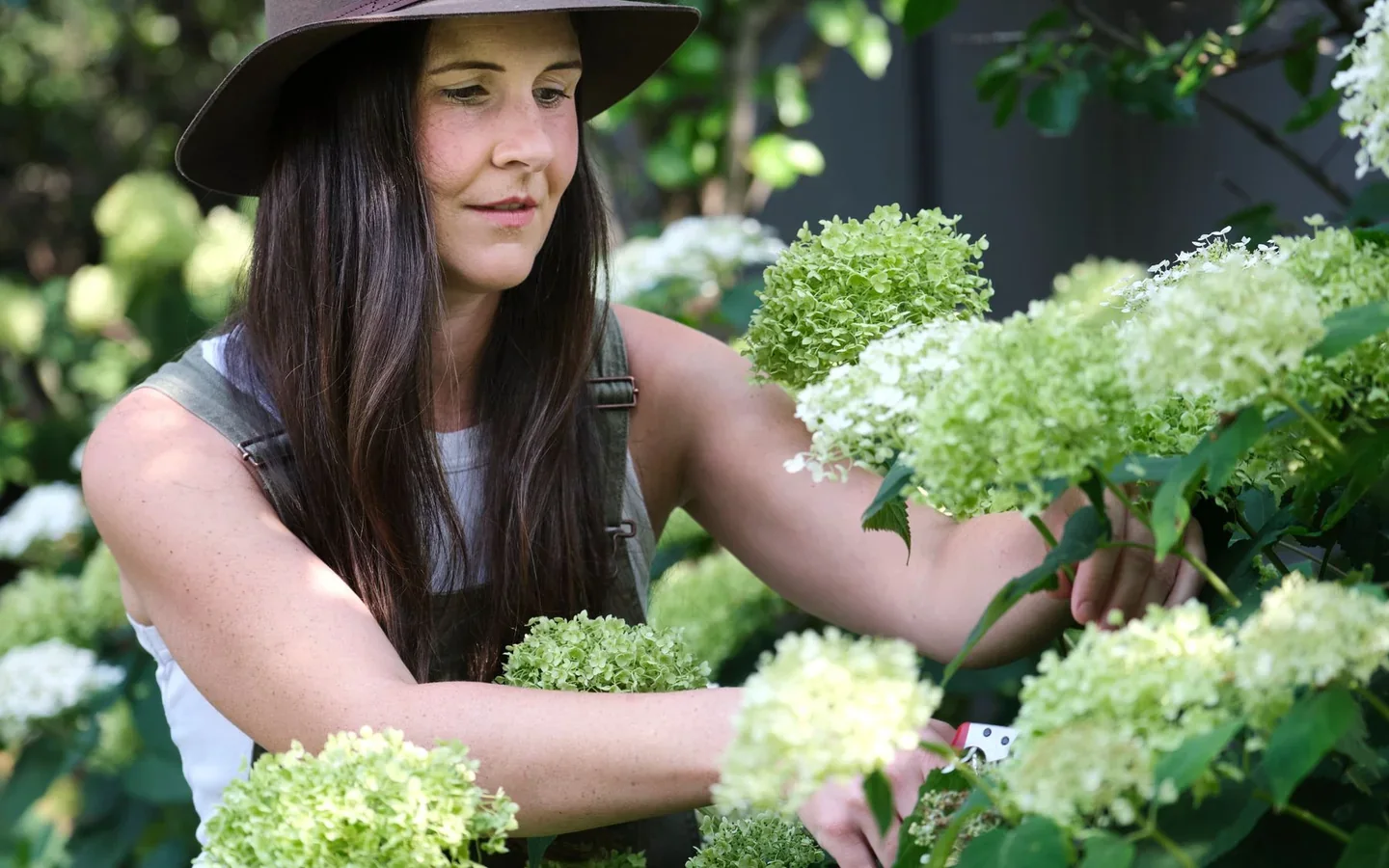
A healthy hydrangea can supply new plants without you needing to divide its roots. Take a small piece of the right stem at the right time, give it humidity and clean compost, and you may end up with a young shrub that flowers like its parent.
The method is straightforward, but the details matter: a non-flowering shoot, a clean cut below a node and protection from drying out. A cutting stuck into a hot sunny pot is more likely to wilt than root.
Which hydrangeas can be propagated?
Common shrubby hydrangeas, including Hydrangea macrophylla and Hydrangea arborescens, can usually be increased from cuttings.
Other types, including climbing hydrangeas, may also be propagated, though layering can be useful for some climbers.
A cutting from a named cultivar normally produces a plant genetically like the parent. Seedlings may be different, so seed isn't the simplest way to copy a particular colour or habit.
Check that the parent plant is healthy. Avoid taking material from stems with scale insects, serious leaf disease or damaged tips.
Best time to take hydrangea cuttings
| Cutting type | UK timing | What the stem looks like |
|---|---|---|
| Softwood | Late spring to early summer, often May–June | Fresh, flexible young growth |
| Semi-ripe | Mid- to late summer | Firming at the base but still growing at the tip |
| Hardwood | During winter dormancy, for suitable types | Mature leafless stem from the season |
Softwood cuttings are the most straightforward option for many home gardeners. They tend to root readily when warmth and humidity are appropriate.
A very late softwood cutting may root but remain too weak before winter. Start early enough that it has time to establish.
Choose the right shoot
Look for a non-flowering stem that has grown this year. A shoot carrying a developing flowerhead is less useful because it is already committed to blooming.
Choose firm, healthy leaves, no visible insects and a stem long enough to cut into a few nodes.
Take material in the morning when the plant is well hydrated. Put stems straight into a clean bag or container and prepare them promptly.
Never leave cut stems lying in direct sunshine while you collect pots and compost.
What equipment do you need?
Use clean secateurs, a sharp blade, pots with drainage holes, peat-free cutting compost and labels.
A transparent propagator lid or a clear bag supported away from the leaves helps maintain humidity during the early rooting period.
A bright windowsill can work if it doesn't receive intense hot sun. A sheltered greenhouse bench is fine if it stays ventilated and doesn't overheat.
Rooting powder is optional. It is not a substitute for clean plant material and suitable moisture.
Hydrangea softwood cuttings: step by step
- Take a healthy non-flowering shoot around 10–15cm long.
- Cut it cleanly just below a leaf joint.
- Remove the lower leaves, leaving a small number at the top.
- If the remaining leaves are very large, reduce their area carefully by cutting across each leaf blade.
- Prepare a hole in moist cutting compost with a dibber.
- Insert the stem so one or more lower nodes are beneath the surface.
- Firm the compost lightly around the stem.
- Label the pot with the cultivar and date.
- Cover to retain humidity without letting plastic touch the leaves.
- Place in bright indirect light and check moisture regularly.
A cutting needs leaves for energy, but too much leaf surface causes water loss. The balance is more important than a decorative-looking pot.
Why cut below a leaf node?
Nodes are the points where leaves join a stem and where many plants can form roots readily.
Making a clean cut below a node and burying a lower node in compost gives the cutting a suitable rooting region.
Don't crush stems with blunt secateurs. A smooth cut is less likely to leave ragged dead tissue.
Avoid planting the leaves themselves into wet compost, where they can decay before the cutting establishes.
The right compost and watering
Use a free-draining, low-nutrient cutting compost suitable for propagation, or a suitable peat-free mix that won't remain waterlogged.
Pre-moisten it so the stem is not inserted into dry powder. After planting, water gently enough that the cutting stays in place.
Check the compost beneath the surface. It should be slightly moist, not wet enough to squeeze out a stream of water.
A closed humid propagator still needs occasional inspection. Mould on leaves or constantly streaming condensation indicates that ventilation may be inadequate.
Where should cuttings be kept?
Bright indirect light is important. A cool shaded shed lacks enough light, while a closed plastic bag in full sun can become dangerously hot.
Maintain warmth appropriate for rooting without rapid swings. If temperatures drop very low, root development slows.
A clear lid with small vents is easier to manage than a plastic bag tied tightly around the pot.
Check for dead leaves and remove them carefully. They can become a starting point for rot if left pressed against healthy cuttings.
How long until hydrangeas root?
Many softwood hydrangea cuttings produce roots in several weeks, sometimes longer depending on the cultivar and conditions.
The appearance of a new leaf is encouraging but doesn't prove there are enough roots to pot on.
Do not keep pulling cuttings out to check. Wait for sustained new growth and gently inspect the rootball when you're confident it is ready.
If one cutting dies, remove it without disturbing the others. Taking several stems makes the outcome less dependent on one plant.
Potting on young hydrangeas
Move rooted cuttings into individual small pots of suitable compost. Handle the rootball as a whole rather than shaking all soil from delicate roots.
Gradually increase ventilation and light. Don't suddenly put a protected young plant outside on a windy hot day.
Keep compost evenly moist while roots develop. A young hydrangea needs more consistent care than a mature shrub with a large root system.
Our pot compost guide explains why drainage and container size matter during establishment.
Can you take hardwood hydrangea cuttings?
Some shrubby types can root from mature dormant stems, but the process is slower.
Use sound mature current-year wood during winter, cut into suitable sections containing several buds, then insert into a well-drained nursery bed or deep pot with most of the stem below the surface.
Mark the upper and lower ends so you don't plant upside down. Protect the rooting area from waterlogging and heavy frost disturbance.
Don't assume hardwood cuttings will sprout promptly in January. Rooting often takes until warmer weather returns.
If your only goal is to increase one common hydrangea, spring softwood propagation is usually simpler.
Protect rooted plants through their first winter
A cutting that rooted in June is still smaller and less resilient than an established garden hydrangea.
Keep young plants in a sheltered, cool but protected place where compost does not stay saturated. Avoid a heated living room with weak winter light if a suitable cold frame is available.
Water only when needed; compost dries slowly in cold weather.
For established shrubs and young plants facing cold weather, our hydrangea frost-protection guide explains sensible protection without sealing plants into damp covers.
When can the new shrub go into the border?
Move it once the root system holds the compost together and top growth is strong enough to withstand normal outdoor conditions.
For many cuttings this means planting in the following growing season rather than immediately after first roots appear.
Choose a site appropriate for the hydrangea type: fertile, moisture-retentive but draining soil, and suitable sun or partial shade.
Don't bury the crown or crowd the young plant between large established shrubs. Our plant spacing guide can help when planning the final position.
Why hydrangea cuttings fail
Leaves wilt immediately: water loss is exceeding uptake; inspect humidity, leaf area and heat.
Stem turns black at the base: rot from wet compost, poor hygiene or damaged material may be responsible.
New shoot appears then dies: the cutting may have used stored energy without building a sufficient root system.
Leaves yellow in intense sun: the covered pot may be overheating.
Roots tear when moved: potting on too soon can undo weeks of progress.
A cutting remains unchanged: some varieties root slowly; keep conditions suitable while checking for decay.
Can you root hydrangeas in water?
It is possible with some stems, but water-grown roots can be delicate and the change into compost may be a setback.
For most gardeners who want a reliable young shrub, clean cutting compost offers a more straightforward route.
You don't need to buy a special device or repeatedly change methods when the plant doesn't root instantly.
Quick answers
Which month is best in Britain? Late spring to early summer is often the easiest period for softwood cuttings.
Should the cutting have a flower? No. Select a healthy non-flowering shoot.
Do cuttings need direct sunshine? No; bright indirect light helps reduce wilting and overheating.
Will a cutting flower next summer? It may take a couple of years before producing a full display.
Take several healthy cuttings during the right season and protect them from drying out. Rooting hydrangeas is mainly about careful preparation and patient aftercare, not complicated equipment.