
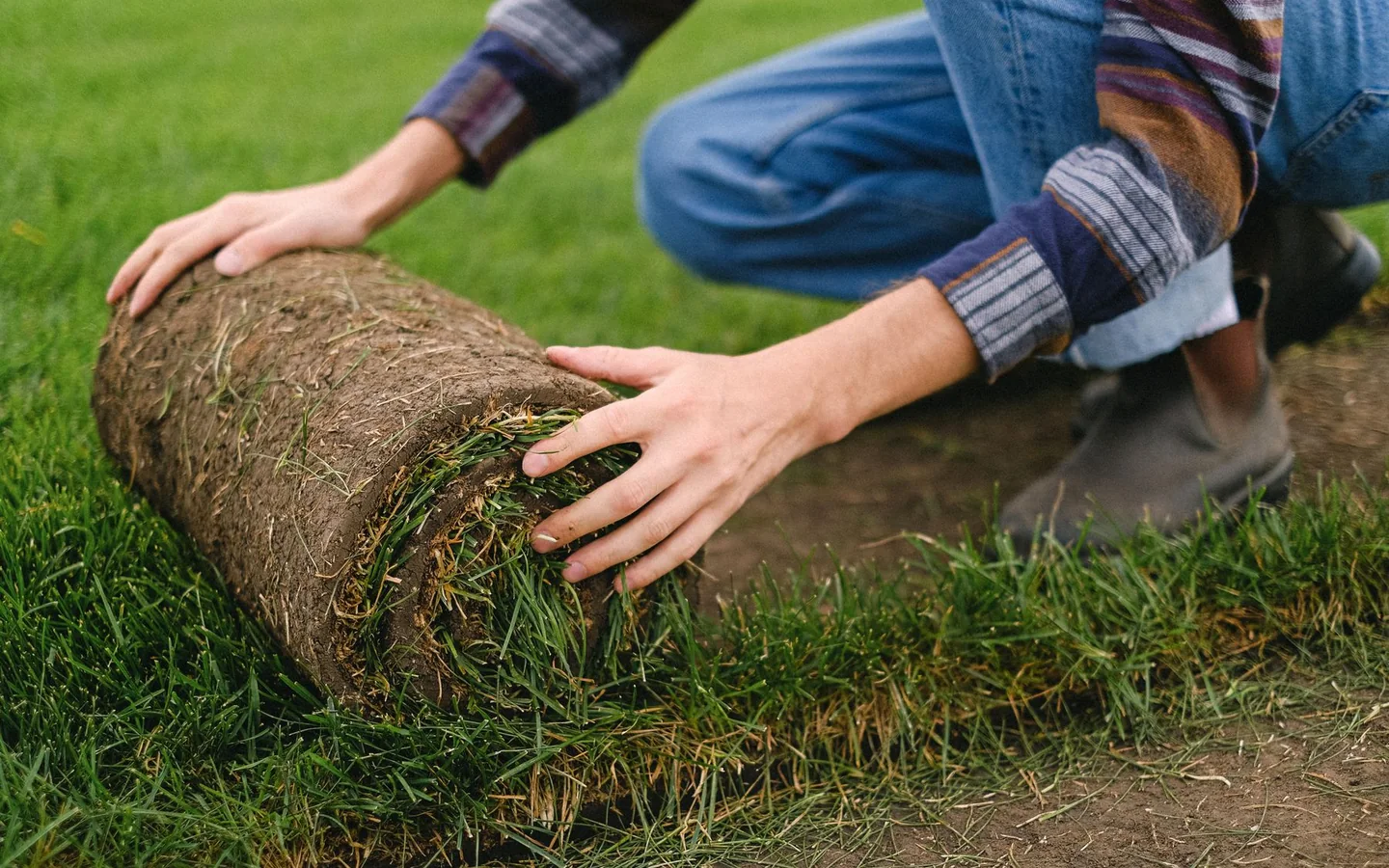
New turf looks like an instant lawn, but it isn't firmly attached to the soil underneath. Until roots grow across that join, even a short dry spell can make the edges shrink, turn brown and lift.
Water deeply enough to reach the soil beneath the turf, then let the weather and rooting stage determine the next application. A universal instruction to run a sprinkler for 20 minutes every day is unreliable: a sprinkler's output, wind, soil and rainfall all vary.
What does freshly laid turf actually need?
There are two surfaces to keep in mind: the turf itself and the prepared soil underneath. Water must penetrate both so the roots grow down rather than lingering in a permanently wet mat.
Immediately after laying, water thoroughly if rain hasn't already done the job. Lift one corner gently and check that the underlying soil is moist, not merely the blades on top.
The first several days are particularly important. If the turf dries out before it starts rooting, the edges can curl and the new lawn may fail.
How often should you water new turf?
| Conditions | Practical approach |
|---|---|
| Mild autumn, damp soil and regular rain | Check moisture; rainfall may do most of the watering |
| Dry, breezy days after laying | Inspect daily and water thoroughly when needed |
| Unexpected warm sunny weather | Watch exposed edges and thin sections closely |
| Cold winter with saturated soil | Do not add water to already waterlogged ground |
| Roots beginning to anchor | Gradually favour deeper, less frequent watering as appropriate |
| Hot summer laying | High-risk timing; frequent checks may be necessary |
The RHS recommends laying turf mainly from mid-autumn to early spring when the soil is workable, precisely because establishment in hot, dry weather needs much more irrigation. The best watering plan starts with choosing a suitable laying season.
How to check underneath the turf
Choose an inconspicuous edge and gently raise it only enough to feel the prepared soil beneath.
If the soil is dry, water until moisture has soaked down through the full turf layer. If the soil is already saturated, stop and consider drainage.
Once the turf begins anchoring, stop lifting it repeatedly. You can then inspect soil moisture at a less-disturbed edge or use a suitable soil probe nearby.
Don't assume dark green blades prove the underlying soil is moist; nor does a damp surface guarantee the deeper rooting zone has enough water.
The best way to water the whole lawn evenly
A sprinkler can help on larger areas if its coverage is tested rather than guessed. Place several straight-sided containers around the area and compare the collected amounts to find dry corners.
On a smaller installation, a hose with a gentle rose or suitable sprinkler attachment may be easier to control.
Avoid a powerful jet that lifts turf edges or washes soil out of joints. Pay particular attention to strips beside paths and sunny exposed corners, which can dry first.
If water runs off immediately, pause and allow it to soak in before applying more. Do not create puddles just to meet an arbitrary time target.
Why the first two or three weeks matter
New roots typically begin gripping the prepared soil over the first few weeks in good conditions. Growth slows in cold weather and when the soil is too wet.
For the first period, protect the surface from heavy foot traffic, children playing and frequent pet use. Walking across wet newly laid turf can press soil down and produce dips.
After roughly three weeks in favourable growing conditions, turf may be sufficiently rooted for an initial gentle mow, but don't rely on the calendar alone. Test whether it still lifts easily. If it does, give it more time.
Can you overwater new turf?
Yes. Waterlogged soil deprives roots of oxygen and can slow establishment. If water sits on the surface or the ground squelches long after irrigation, stop watering and identify the cause.
New turf laid on severely compacted clay is especially vulnerable. It may look dry on top while the soil below remains wet.
Don't try to fix saturated clay by repeatedly spiking newly laid turf. Proper soil preparation and drainage should happen before laying.
Our muddy lawn in winter guide explains why wet traffic and compacted soil can make grass fail.
What about summer heatwaves?
Ideally avoid laying a new lawn in a hot summer unless you can supply reliable water and accept the higher risk of failure.
If turf has already been laid, inspect frequently. Drying edges require prompt attention, but severe midday wilt can also involve heat stress.
Water the root zone when it needs water; morning is convenient, but do not allow new turf to desiccate simply because it is afternoon.
Temporary barriers can stop traffic while the lawn establishes. Don't cover turf with impermeable plastic, which traps heat and damages grass.
How does rain affect the schedule?
A shower may wet the blades without reaching the soil underneath. A sustained rainfall may provide all the moisture necessary for several days.
Measure or check rather than treating every rainfall event as equal. Windy weather can dry the surface faster than expected, even at moderate temperatures.
Once the turf is rooted, established grass normally needs a different watering approach from freshly laid rolls.
What if the edges are going brown?
Lift a small unrooted edge and check the soil. If it is dry, water appropriately. Brown edges can also come from poor soil contact or turf that was stored too long before laying.
Firm loose edges gently into contact with the ground if the soil beneath is sound. Do not repeatedly roll the entire lawn while saturated.
Where a strip is completely dead, a later targeted repair may be necessary. The grass seed calculator can help if you choose to reseed small gaps.
When can you mow newly laid turf?
Wait until the grass is rooted and tall enough for a light cut. Choose a dry enough day that the mower doesn't leave ruts.
Set the blades high, use sharp cutters and avoid tight turns that lift the edges. Don't remove a large amount of leaf length at once.
The first cut should make the lawn neater, not stress the new roots. If the turf still moves underfoot, delay mowing.
Common mistakes
- Watering only the leaves and never checking the soil beneath.
- Running sprinklers every day even when the ground is waterlogged.
- Laying turf during hot weather without a realistic watering plan.
- Walking on wet new turf and compacting the soil.
- Using a high-pressure jet that separates the edges.
- Mowing by calendar date before roots have gripped.
- Assuming one light shower has soaked the whole root zone.
Should I water newly laid turf every day?
Check it regularly, particularly in the first days. Whether it needs daily water depends on rainfall, wind, temperature and the moisture of the soil beneath.
How long can new turf go without water?
There's no reliable fixed number of hours. Unrooted turf can dry rapidly, especially in heat and wind. Prevent the rooting zone from drying.
When do you stop watering new turf so often?
As roots establish and the lawn can draw moisture from the soil beneath, gradually adjust to deeper, less frequent watering when conditions allow.